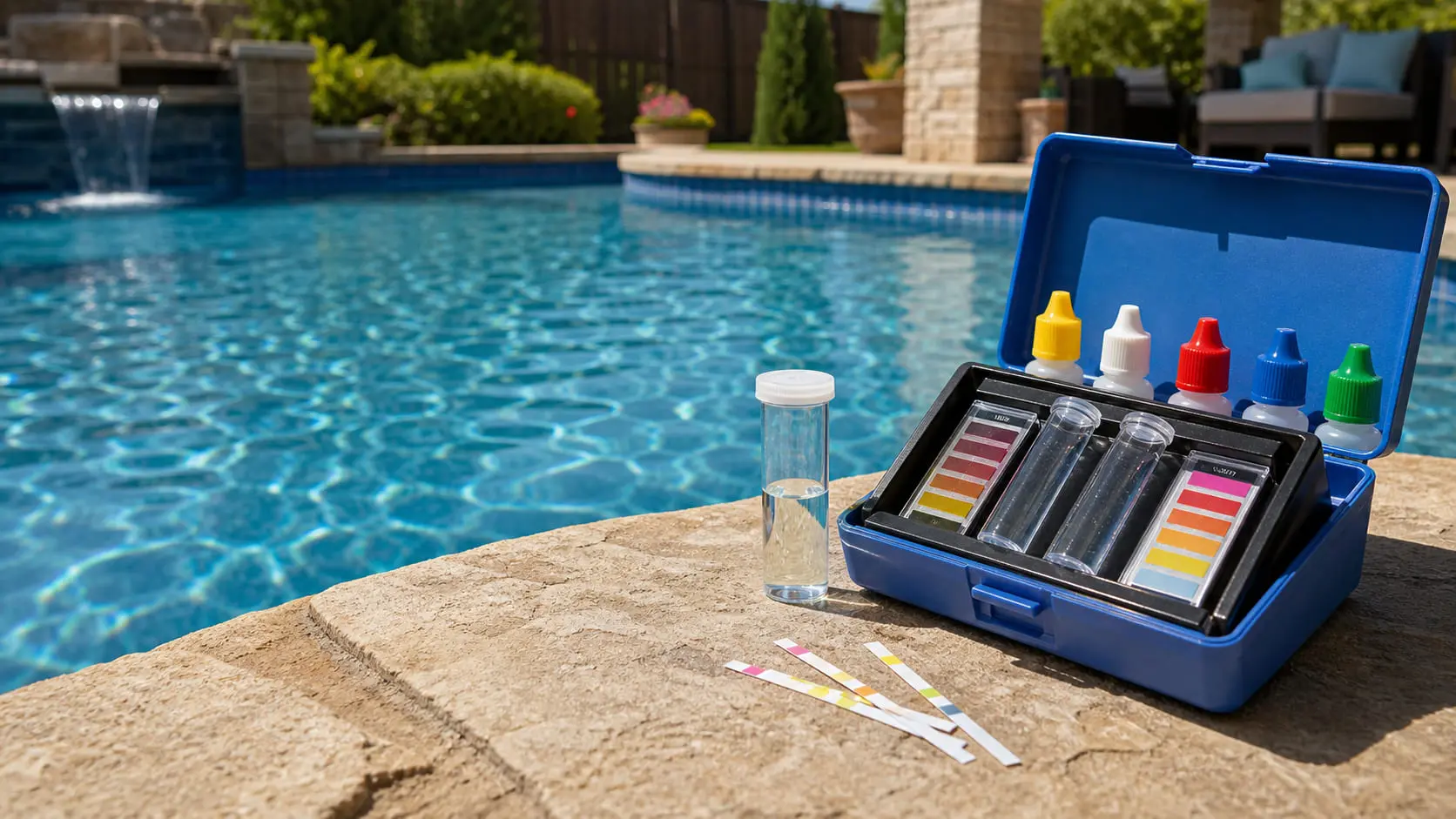
Pool Water Chemistry 101: Ideal Levels for North Texas Pools
Chlorine, pH, alkalinity, calcium, cyanuric acid. Here is what each number should be for a North Texas pool, why our mineral-rich fill water changes the math, and how to keep it balanced.
Track down water loss before it damages your pool or property.
Every pool loses a little water to evaporation, but a real leak wastes water, throws off your chemistry, drives up your bill, and can undermine the soil and equipment around your pool. If your pool is dropping faster than evaporation explains, we help locate the source and advise on the fix.
We start with a bucket test to rule out ordinary evaporation, which in a Texas summer can be significant on its own.
Using pressure testing on the plumbing and dye testing at the shell and fittings, we narrow down where the water is actually escaping.
Once located, we explain the cause and the realistic options so you can decide how to proceed with full information.
True Texan Pools keeps your water swim-ready year-round across Plano and all of DFW. Clear pricing, no contracts, and a photo report after every visit. Austin handles every job personally.
A simple bucket test tells you a lot: float a bucket of pool water on a step and mark both levels. If the pool drops noticeably faster than the bucket over a day or two, you likely have a leak rather than just evaporation.
In the Texas heat, losing up to a quarter inch or so a day to evaporation can be normal. Consistent loss well beyond that, especially if your chemistry keeps drifting or the ground stays wet, points to a leak worth investigating.
We use a combination of bucket testing, pressure testing of the plumbing lines, and dye testing at the shell and fittings to isolate whether the leak is in the structure, the plumbing, or the equipment.

Chlorine, pH, alkalinity, calcium, cyanuric acid. Here is what each number should be for a North Texas pool, why our mineral-rich fill water changes the math, and how to keep it balanced.