True Texan Pools

What you actually get after every visit

Most pool companies leave a door hanger, or nothing. Every visit here ends with a report: photographs of the work, the readings taken that day drawn on their own ranges, everything that went in the water and why, and every task with an honest duration beside it.

Below is a full one, then an explanation of every part of it.

This is a sample.It is rendered by the same components your real report is, so the ranges, task names and chemical amounts are the genuine ones, but the readings belong to no particular household. We are not going to publish somebody’s water chemistry because it makes a good advertisement.

Photo report

Thursday, July 16

Serviced by
Austin Andrews
Pool
Backyard pool
On site
41 min

Photos from the visit

Before the work
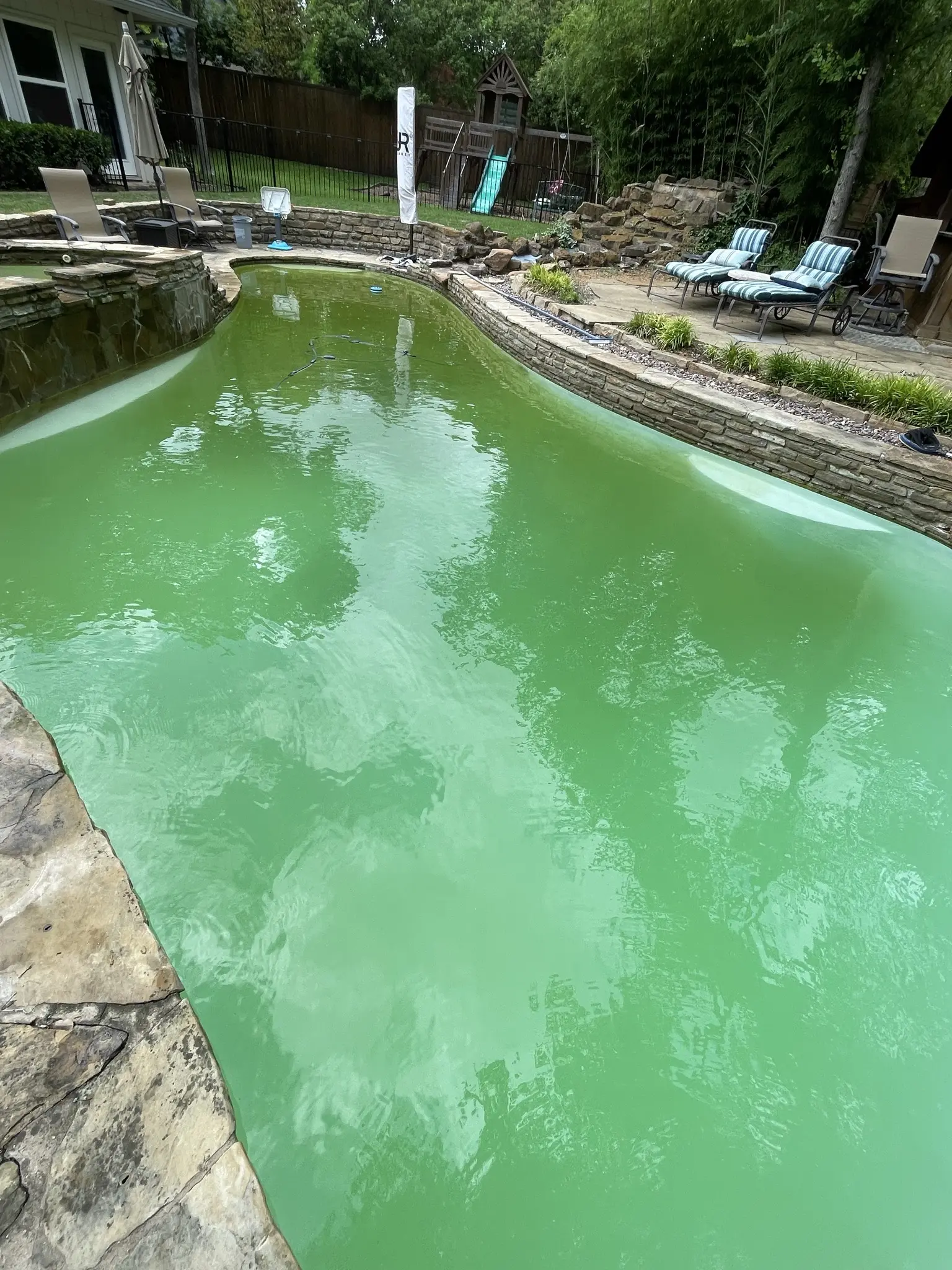
  • The pool at the start of the visit, water green and opaque

How it was left

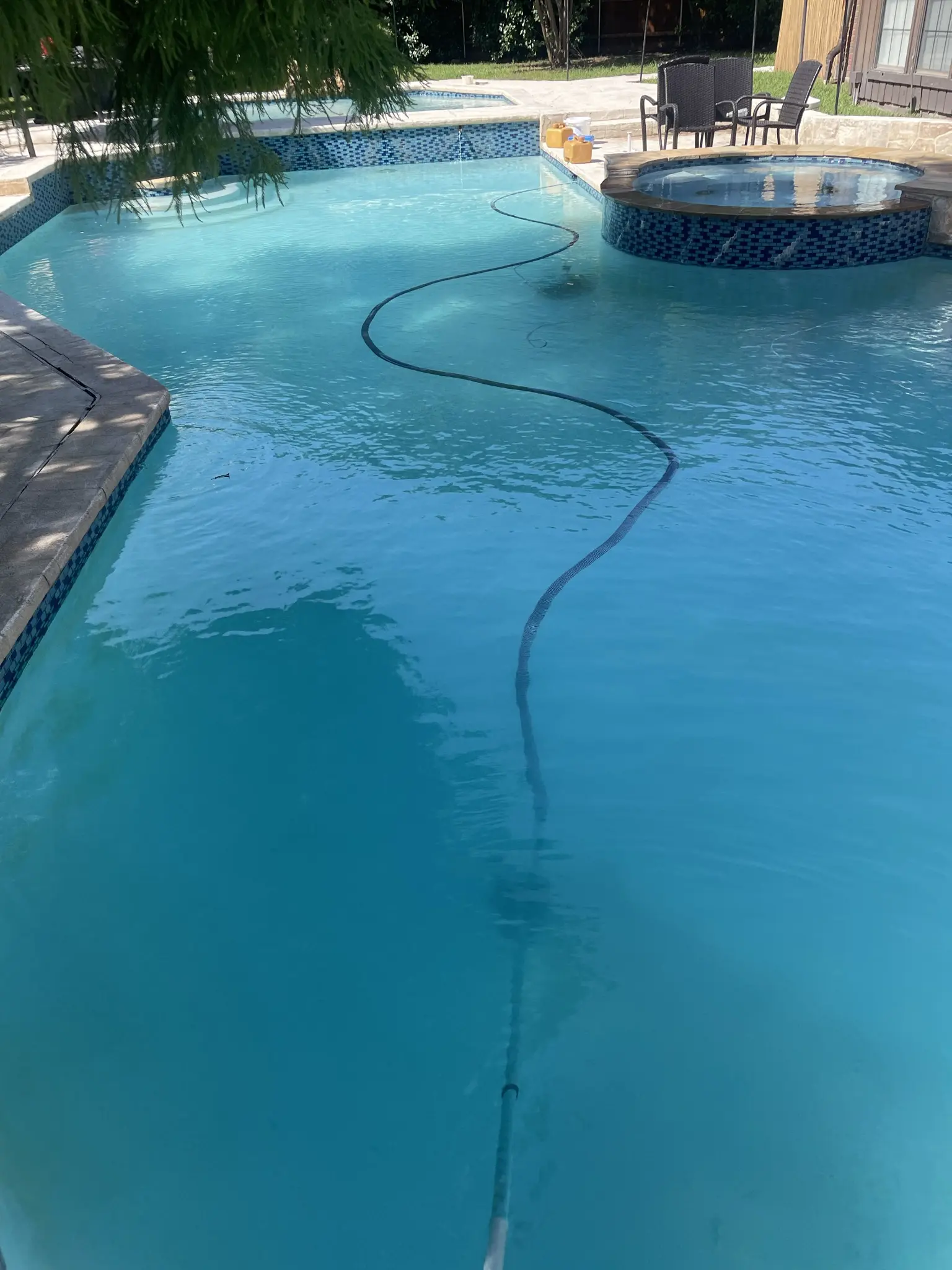
  • The same pool at the end of the visit, water clear and blue
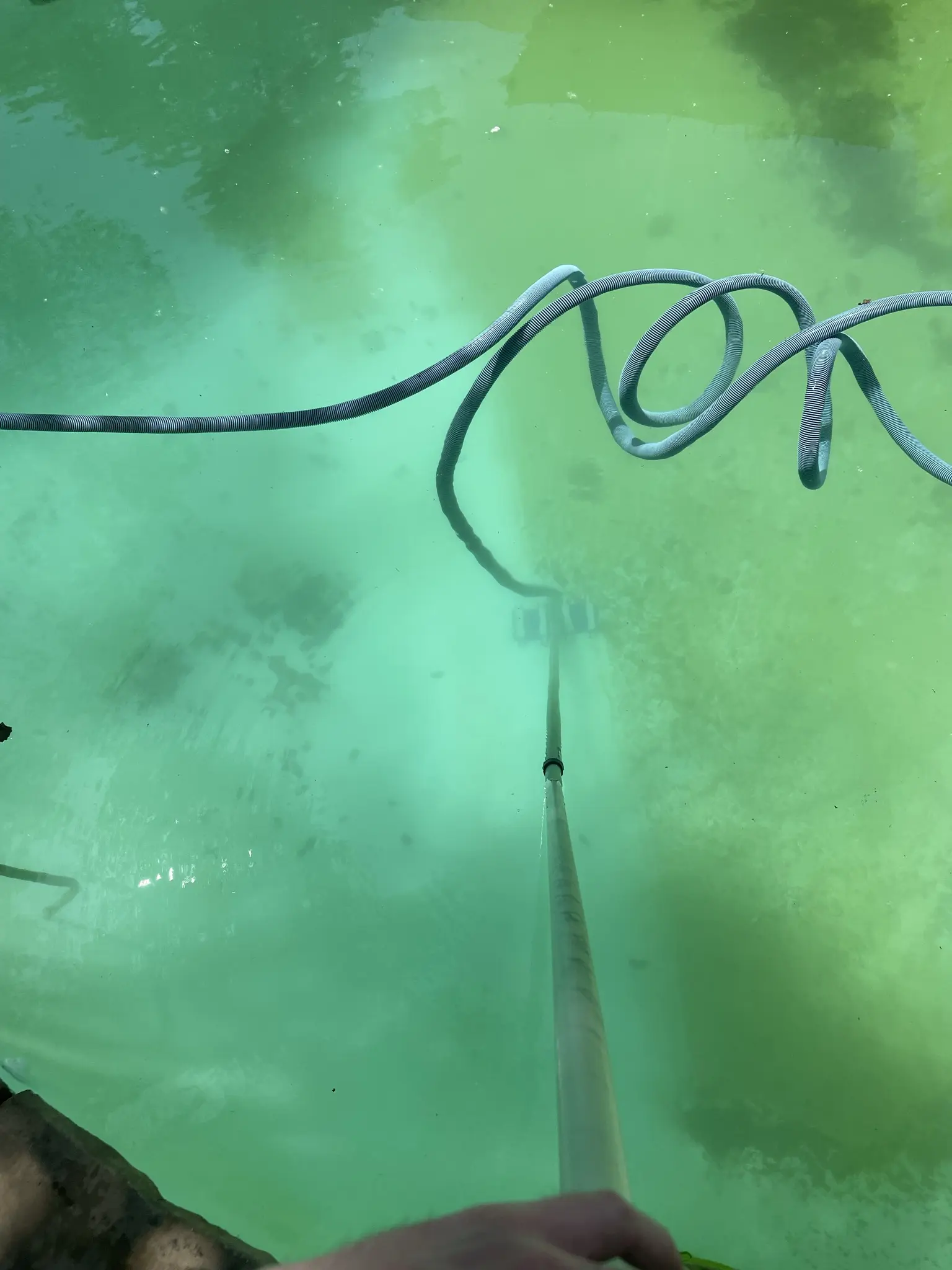
  • Vacuum head lifting settled algae off the pool floor

What this visit found

Salt cell is reading low and needs a clean

Keeping an eye on it

Cell output is down and the plates have scale on them. It will still run, but it is working harder than it should and the chlorine will keep drifting low until it is cleaned. Not urgent this week. Worth doing before August.

The water

Clarity
Clear
Water level
Normal
Filter pressure
18 PSI, 6 over clean
  • Free chlorine

    2.4 ppmIn range

    Ideal 1 to 4 ppm

    The chlorine still available to kill anything that lands in the water. This is the one that keeps the pool safe to swim in.

  • Total chlorine

    2.6 ppm

    Free chlorine plus the chlorine that has already been used up. When it runs well above free chlorine, the pool needs shocking.

  • pH

    7.9High

    Ideal 7.2 to 7.8

    How acidic or basic the water is. Off in either direction and the chlorine stops working properly, eyes sting, and the plaster or the equipment starts paying for it.

  • Total alkalinity

    90 ppmIn range

    Ideal 60 to 100 ppm

    The water's resistance to pH swings. Get this right and pH mostly holds itself steady between visits.

  • Calcium hardness

    340 ppmIn range

    Ideal 200 to 400 ppm

    Dissolved calcium. Too little and the water pulls it out of the plaster; too much and it deposits as scale on the tile and inside the heater.

  • Cyanuric acid

    55 ppmLow

    Ideal 60 to 80 ppm

    Stabilizer. It shields chlorine from the sun, which a Texas summer makes essential, but past about 80 ppm it holds onto the chlorine so tightly that the chlorine stops working.

  • Salt

    3100 ppmIn range

    Ideal 2700 to 3900 ppm

    What the salt cell makes chlorine from. Too low and the cell cannot keep up; too high and it corrodes the hardware around it.

  • Water temperature

    88 °F

    Warm water burns through chlorine faster and scales more readily, so the targets shift with the season.

Minimum chlorine for this pool
4.1 ppm

Stabilizer holds onto chlorine, so the floor rises with it. At 55 ppm of stabilizer, anything under this is not sanitizing regardless of what the strip says.

Combined chlorine
0.2 ppm

Below the 0.5 ppm shock threshold. The chlorine in this pool is doing its job rather than sitting used up.

Water balance (Langelier index)
+0.53scaling

The water is holding more calcium than it can keep dissolved, so it will deposit as scale on the tile line and inside the heater. Balanced is anything between -0.3 and +0.3.

What went in the water

  • Muriatic acid

    pH at 7.9, bringing it back toward 7.6

    24 fl oz (about 3 cups)

  • Stabilizer

    Stabilizer had drifted down with the summer rain

    1.5 oz

What was done

Cleaning

  • Skimmed surface
  • Brushed walls and steps
  • Vacuumed
  • Emptied skimmer baskets
  • Emptied pump basket
  • Cleaned tile line

Chemistry

  • Tested water
  • Balanced chemicals

Equipment

  • Checked equipment
  • Checked filter pressure
  • Inspected salt cell
  • Checked water level

Why each part of it is there

A report is only proof to somebody who can read it. Every one of these answers a question this trade usually leaves open.

Note 1. The date and the time on site

Forty-one minutes, not “a visit”. If somebody is billing you weekly, how long they were actually in your garden is a fact you are entitled to, and it is the first thing that goes missing when a route gets too full. It is recorded by the app when the job is opened and closed, not typed in afterwards.

Note 2. Photographs, taken on the day

Before and after where there is a difference worth showing, and the work itself where there is not. This is the part that makes the rest checkable: you never have to be home, and you never have to take anybody’s word for what the pool looked like.

Note 3. What the visit found, before you ask

Anything noticed goes on the report the same week, with a plain-language note and how urgent it honestly is. “Not urgent this week, worth doing before August” is a real severity, and saying so is what separates a finding from an upsell.

Note 4. Readings drawn on their ranges, and the two boxes under them

A list of numbers is indistinguishable from no report. A pH of 7.9 means nothing unless you already know the band is 7.2 to 7.8, and anybody who knows that is not paying somebody else to test it. So every reading is drawn on its own range, and the verdict is a word rather than a coloured dot, because a green dot with no label is not readable by everyone.

Then look at what the two boxes underneath do to this sample. Free chlorine reads 2.4 ppm and the panel says “in range”, because the band printed on every test kit is 1 to 4. But the minimum for THIS pool is 4.1 ppm, because at 55 ppm of stabilizer the chlorine is held too tightly to sanitize. That water is under-chlorinated, a test strip would have called it fine, and the salt cell finding higher up the report is why. That gap is most of what goes wrong in a Texas pool in August and it is invisible in any reading taken on its own.

Note 5. Filter pressure, against your filter's own baseline

Eighteen PSI is fine on one pool and a service call on another. What matters is how far it has climbed since your filter was last clean, so the number is never shown without that reference. This one is six over, which is a filter clean coming, not today.

Note 6. Everything that went in, and why

Named, measured, and with a reason attached to it. Weekly service includes the chemicals, so this is not an invoice line. It is there so you can see that the dose followed the reading rather than a routine, and so anybody you ask for a second opinion can check it.

Note 7. Every task, including the dull ones

Emptying the baskets and checking the water level are not impressive, and they are exactly the things that get skipped on a route running late. They are listed for that reason.

Questions about the report

Do I get one of these after every visit?
Every visit, by email, whether or not you were home and whether or not anything needed attention. A visit where nothing was wrong still produces a report saying so, with the readings on it.
Is this a real customer's report?
No, and deliberately not. It is a sample, built from the same components the real thing is rendered with so the ranges, the task names and the chemical amounts are genuine, but the readings belong to no particular household. Publishing somebody's water chemistry and photographs of their garden because it was useful to us is not something we would do.
Why show the readings on a range instead of just listing them?
Because a list of numbers is indistinguishable from no report. A pH of 7.9 means nothing unless you already know the band is 7.2 to 7.8, and anybody who knows that is not paying somebody else to test it. Every reading is drawn on its own acceptable range, with the verdict written as a word rather than left to a coloured dot.
What is the filter pressure compared against?
Your filter's own clean baseline, recorded when it was last serviced. Ten PSI is perfectly normal on one pool and a service call on another, so the number is never shown on its own. What matters is how far it has climbed since the filter was clean.
Can I keep these, or forward one?
They are yours. Every report stays in your portal, and the page prints onto a sheet carrying the business name, the date and the pool, so it works as evidence when a builder, a buyer's inspector or an insurer asks what has been done to the pool.

One of these lands in your inbox every week

Published pricing, month to month, and Austin does every job on this route himself. Which is also why the report says who serviced it: there is only one answer.