Pool Water Chemistry 101: Ideal Levels for North Texas Pools
Chlorine, pH, alkalinity, calcium, cyanuric acid. Here is what each number should be for a North Texas pool, why our mineral-rich fill water changes the math, and how to keep it balanced.
Precise water chemistry for safe, clear, comfortable water.
Balanced water is what keeps a pool safe to swim in, easy on your equipment, and clear to look at. Our mineral-rich North Texas fill water and intense summer sun make that a moving target, so we test and adjust every visit rather than guessing. Getting the chemistry right also makes everything else, from algae control to equipment life, far easier.
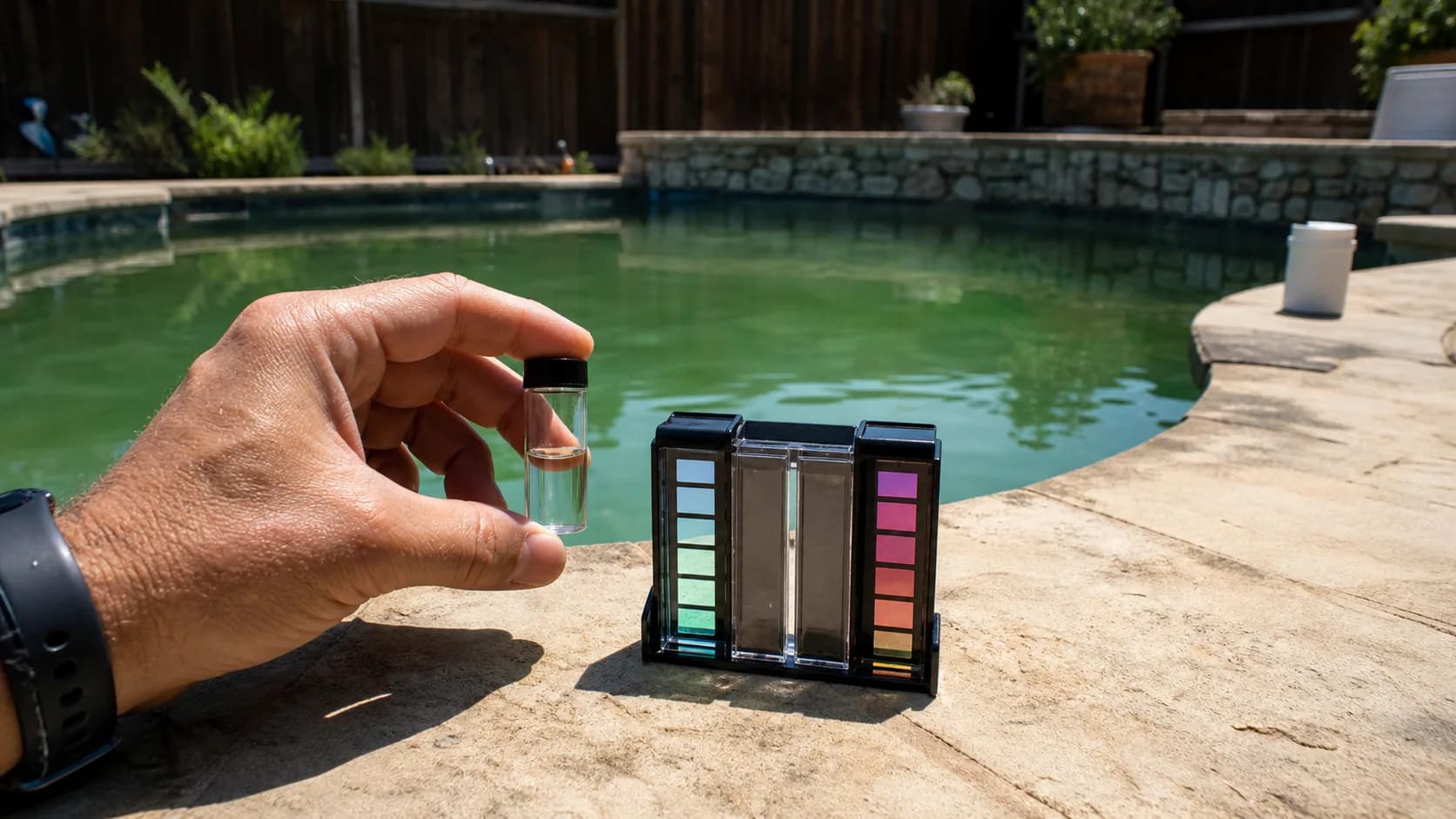
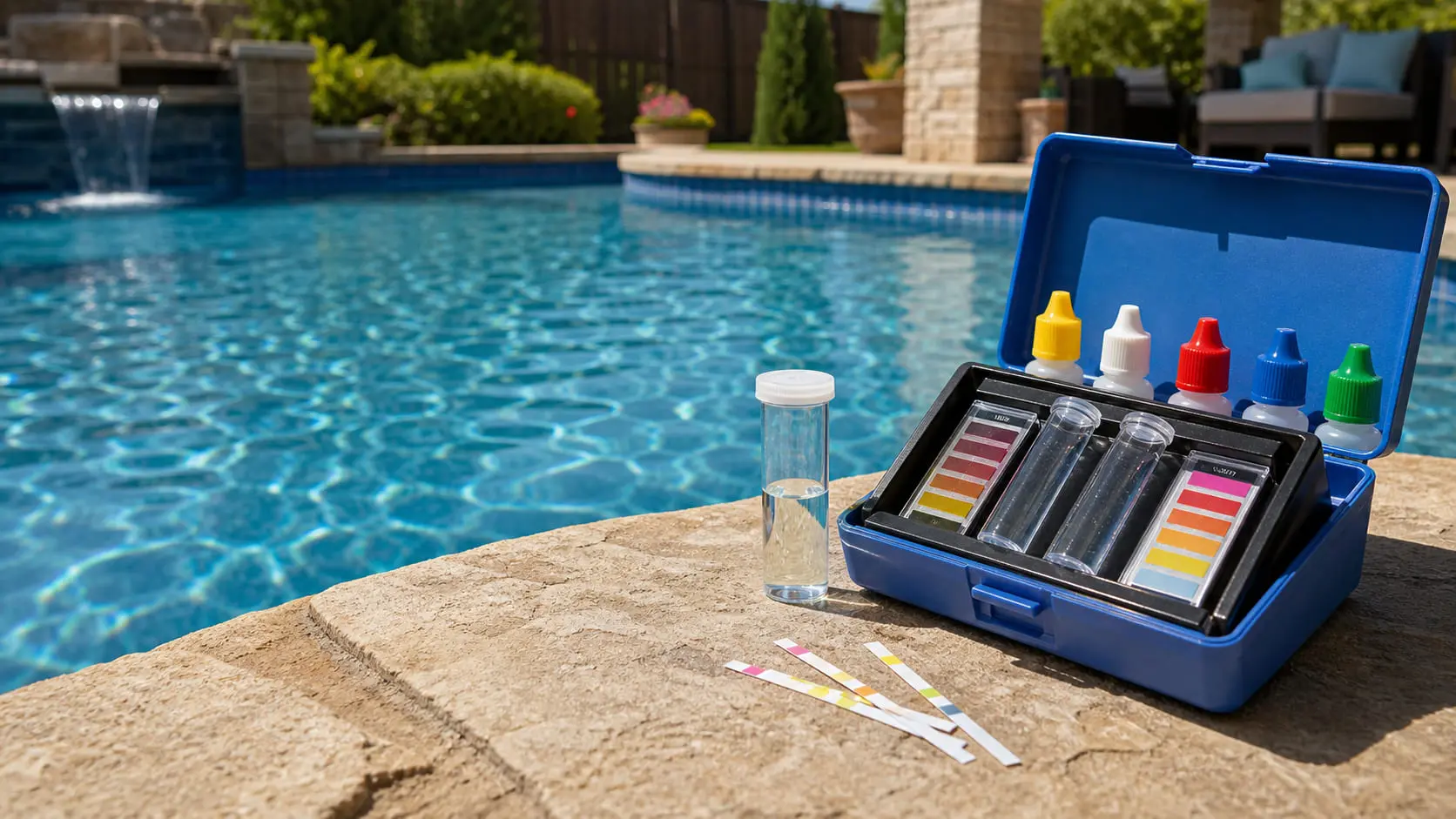
We measure chlorine, pH, alkalinity, calcium, and cyanuric acid rather than just the two easy numbers.
Alkalinity and pH come first so that chlorine works efficiently, then sanitizer and specialty balancers as needed.
We dose for the heat and sun that burn chlorine off fast, and manage calcium so it does not build up and scale your tile.
Every reading is recorded and sent to you, building a clear history of your pool's chemistry.
True Texan Pools keeps your water swim-ready year-round across Plano and all of DFW. Clear pricing, no contracts, and a photo report after every visit. Austin handles every job personally.
Free chlorine should sit between 1 and 3 parts per million and pH between 7.4 and 7.6, with alkalinity, calcium hardness, and cyanuric acid kept in their proper ranges. In peak Texas summer we aim for the higher end of the chlorine range because heat and sun burn it off quickly.
Local fill water is moderately hard, and a pool concentrates it: every top-off after evaporation leaves the calcium behind while the water leaves. When calcium and pH climb too high, those minerals fall out of solution as white scale or cloudiness. Keeping both in range on every visit prevents it.
Yes. Salt pools still need their chemistry monitored and balanced, and the salt cell needs to stay clean, especially once calcium has built up. We check and maintain both as part of service.

Chlorine, pH, alkalinity, calcium, cyanuric acid. Here is what each number should be for a North Texas pool, why our mineral-rich fill water changes the math, and how to keep it balanced.

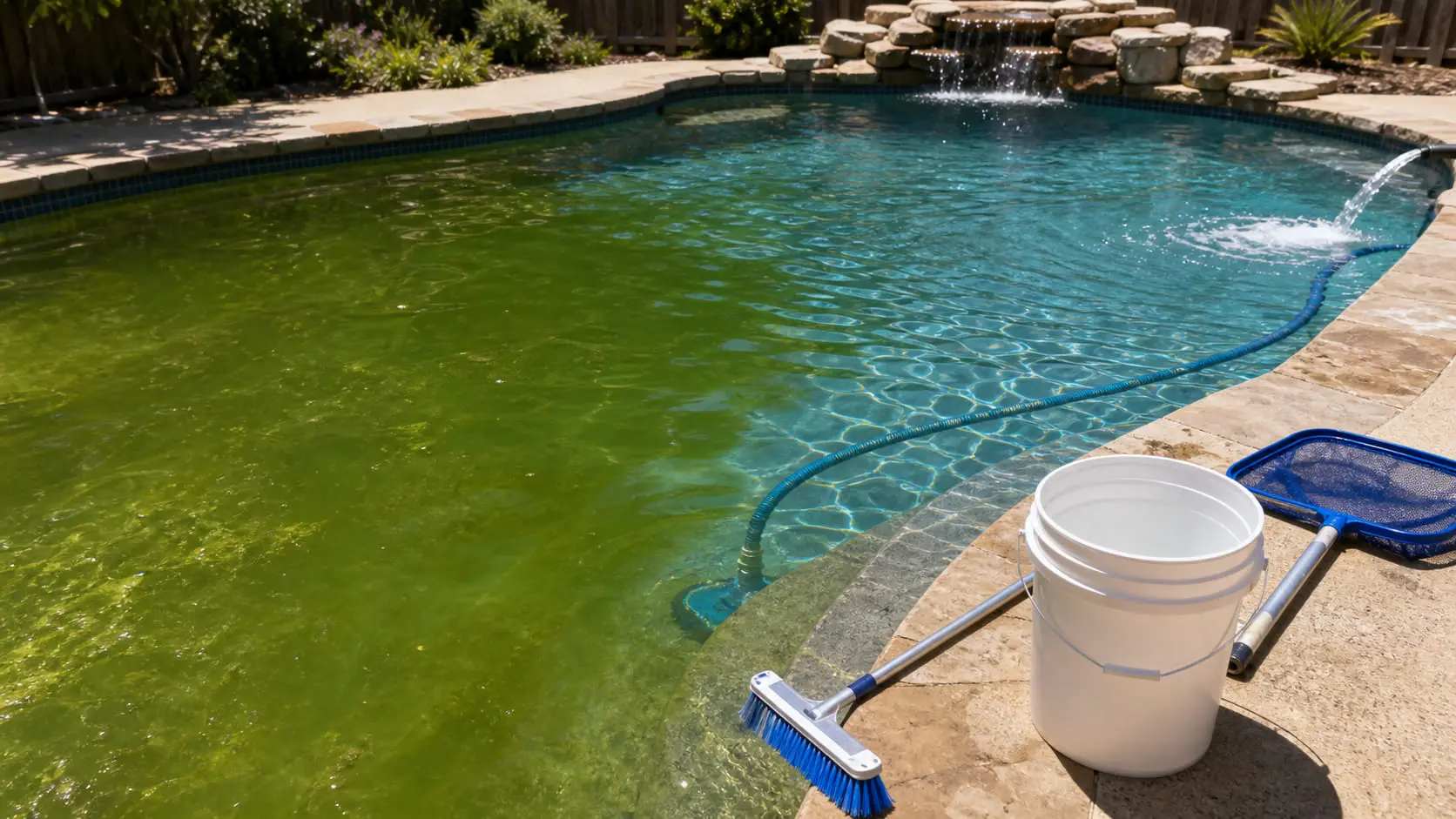
A green pool in July is not a mystery, it is chemistry plus Texas heat. Here is why algae takes over so fast in DFW and the exact steps to clear it back up.