Your Pool Company Stopped Showing Up. Here Is What to Do.

Austin Andrews
Founder, True Texan Pools
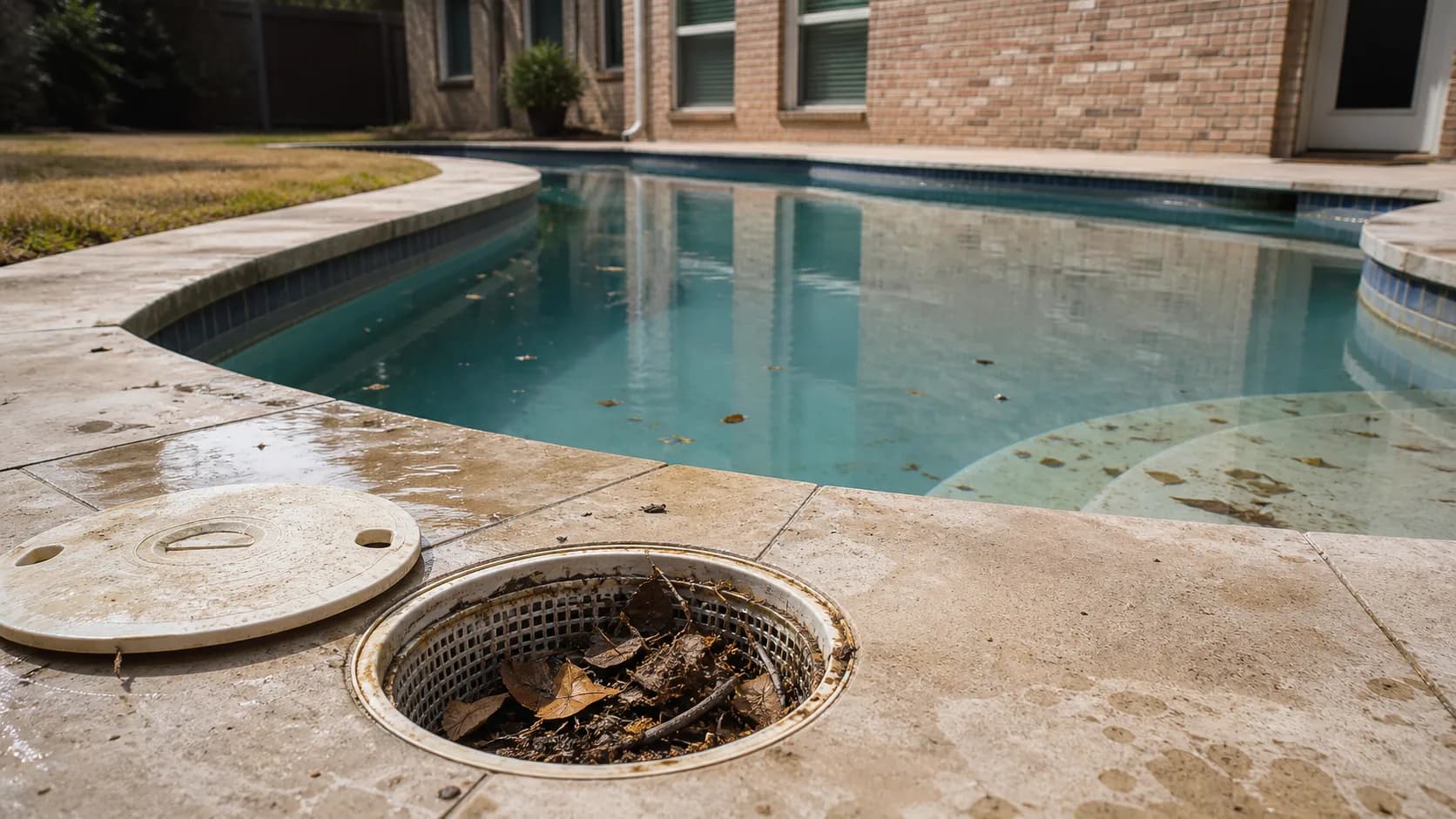
If your pool company has gone quiet, the order of operations is: confirm the visits are actually being missed, document it, give one short written notice, and line up the replacement before you cancel. Do it in that order and you keep both your leverage and your water. Do it backwards, in a Plano August, and you can end up paying for a green pool recovery on top of a month you already paid for.
If the water is already turning, deal with that first
Chemistry does not wait for the paperwork. If the water has gone cloudy or green, get a recovery scheduled now and sort the old company out afterward. Every day of delay adds chlorine demand and filter run time to the bill.
How to tell a skipped visit from a bad one
These are different problems with different remedies, and homeowners mix them up constantly. A bad visit is a service issue you raise and get fixed. A skipped visit that was still billed is a non-performance issue, and it is the one that ends the relationship.
You do not need to be home to tell them apart. A technician who was genuinely at your pool for twenty five minutes leaves a trail:
| What to look at | Somebody came | Nobody came |
|---|---|---|
| Skimmer basket | Empty, lid seated square, maybe a few leaves from since | Packed to the rim, matted and starting to break down |
| Pump basket | Clear, lid reseated, no debris riding on the impeller side | Full, and the pump is running loud or losing prime |
| Waterline tile | Clean band, no dust or oil line | A visible grey scum line all the way round |
| Deck and coping | Splash marks, wet patches, brush drag marks in the dust | Undisturbed dust, spider webs between the pole and the fence |
| Chlorine reading | In range, or at least moved since you last tested | Flat or zero, week after week |
| Chlorinator or floater | Tabs consumed at a normal rate | Same tabs, same level, same position as last week |
| Cleaner or vacuum | Moved, hose repositioned, bag emptied | Sitting exactly where you left it |
The single most reliable tell is the skimmer basket, because emptying it is the first thing anybody does and it takes ten seconds. A basket that is full on a Friday after a Thursday service day is not ambiguous. The second most reliable is the chlorine reading, and it is the one that actually matters, because chlorine is the part of the visit that protects the people swimming. The CDC treats free chlorine and pH as the front line against the germs that spread in pool water, which is worth knowing when you are deciding how urgent this is: their guidance on home pool water treatment and testing is the plain version.
One honest caveat before you accuse anybody
Route days move. Rain, a truck breakdown, a holiday, or a gate that was padlocked can all push a visit by a day or two, and a company that tells you that in advance is doing the job. What you are looking for is a pattern: two or three weeks with no evidence, no photo report, and no message explaining any of it. One missed week with a text about it is not this article.
How to document it, starting today
Documentation is what turns a frustrating month into a short, unarguable conversation. It takes about two minutes a week and you can start mid-dispute.
- Pick a fixed time, the morning after your service day. Same time every week, so the photos are comparable and nobody can claim you checked before the visit.
- Take four photos. The open skimmer basket, the pump basket, the waterline tile, and the whole pool from one corner. Always the same four, always the same angles.
- Test the water and photograph the result. A strip is enough for this purpose. You are recording free chlorine and pH, and you want the reading in the frame with the date visible in the photo metadata.
- Write one line in a note on your phone. Date, what you saw, whether you received a report or a message. Contemporaneous notes carry weight that a reconstruction from memory does not.
- Pull your bank or card statement for the same period. Line up what was charged against what you can prove happened. That side-by-side is the entire case.
Two weeks of this is usually enough. If the company sends photo reports, save those too, and look at the timestamps and the backgrounds. A report is only evidence of a visit if the photos are of your pool, on the day claimed, and show different water each week.
The one conversation worth having
Give them one clear chance, in writing, and keep it short. Text or email, not a phone call, because you want a record and because a written message is harder to talk around. Something close to this:
“I have not seen evidence of service on July 24 or July 31. The skimmer basket was full both times and free chlorine tested at zero on Friday. Both months were charged. Can you confirm whether those visits happened, and how you want to resolve it? I need an answer by Friday.”
That message does three things at once. It states facts rather than feelings, it asks a question that cannot be answered with reassurance, and it sets a deadline. Now watch what comes back.
What a reasonable reply looks like
- They say plainly whether the visits happened, and if they did not, they say why.
- They credit the missed visits without you having to ask twice.
- They come out and correct the chemistry at their cost, because the chemistry drifted on their watch.
- They tell you what changed, whether that is a technician who left or a route that got too long, and what the plan is.
What tells you it is over
- No reply at all inside a week. The most common ending, and the clearest one.
- An argument about whether it happened, with no evidence offered. They have the route records. If they will not produce them, that is the answer.
- A promise with no specifics.“We will take care of you” is not a date, a credit, or a name.
- It happens again the next month. The pattern is the information. A company that missed weeks because it is short-staffed will be short-staffed again in three weeks.
How to cancel cleanly in Texas
Texas does not give you a special statutory right to walk away from a service agreement you have been happily paying for, so the contract governs. That sounds worse than it is: your lever is non-performance, and non-performance is exactly what you have been documenting. Routine residential pool cleaning is also not a licensed trade in Texas, which means there is no state board to file a complaint with. The practical levers are your written cancellation, your bank, and your review.
- Hire the replacement first, and get a start date. This is the step people skip, and it is the expensive one. Cancelling on the first of the month and finding out the next company cannot start for three weeks is how a maintained pool becomes a green pool recovery.
- Cancel in writing, and keep it unemotional. Email or text, effective on a stated date, with a one-line reason: service was not performed on these dates. Do not negotiate, do not list grievances, and do not ask permission. You are informing them.
- Ask for the credit in the same message. Name the dates and the amount. Some companies pay it immediately to close the file quietly.
- Stop the payment at the source. Cancel the recurring authorization with your bank or card issuer rather than trusting the company to stop billing. If you have already been charged for visits you can prove did not happen, that documentation is what a card dispute runs on.
- Change the gate code the same day, and account for the keys. If they hold a physical key or a lock code, change the lock. This is not about suspicion, it is about closing an access you no longer supervise.
- Check the equipment before anyone else touches it. Photograph the pad, the timer or automation schedule, and the filter pressure gauge on the day you cancel, so the next company starts from a documented state rather than an argument.
Leave the review after the dust settles, not during
Write it once you have the outcome, and write it as a record rather than a punishment. Dates, what was billed, what you could prove, how they responded. A factual review is more useful to the next homeowner and far harder for a company to argue with than an angry one, and it does not put you in a fight while they still have your gate code.
What to hand the next company
A pool with a documented history gets a better first visit and a more accurate price. Have these five things ready and you will save yourself a callback and probably some money.
- The last chemistry you have. Any readings from the old reports, plus your own test from this week. Free chlorine, pH, alkalinity, and stabilizer if you have it. Stabilizer matters more than people expect, because a pool carrying high cyanuric acid needs far more chlorine to do the same work, and that changes both the recovery plan and its cost.
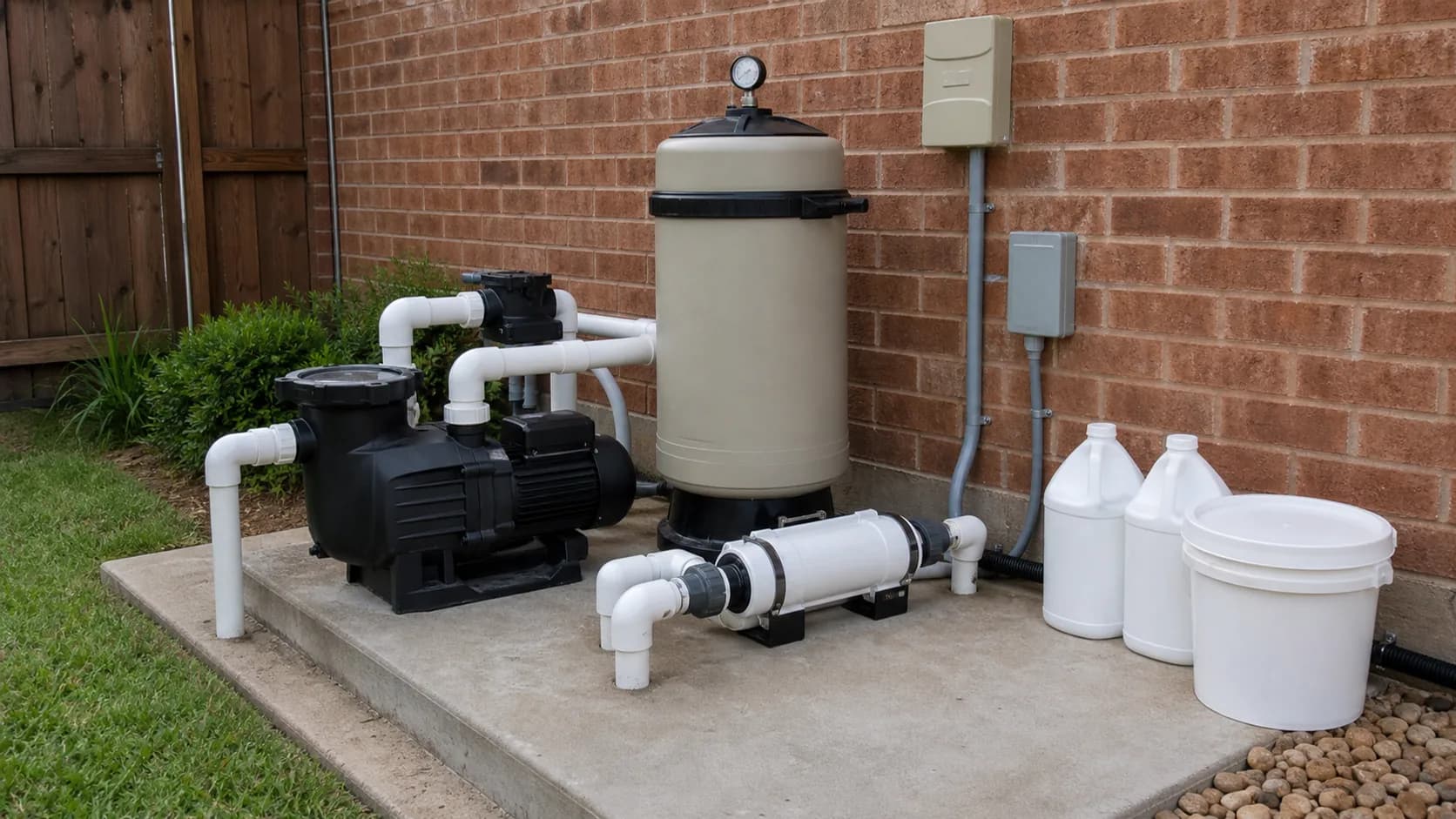
- Equipment brands, models, and rough ages. Photos of the labels on the pump, filter, heater, and salt cell. If you do not know what you are looking at, photograph the whole pad and let the technician sort it out.
- How many weeks the pool actually went unserviced. Be honest about this. It is the main input into whether the first visit is a normal visit or a recovery.
- Whether it went green, and how far. Photos from the worst day, even if it has cleared since. Algae that was killed but never filtered out comes back.
- Any repair that was quoted but never done. Especially anything on the pad. A pending repair the previous company knew about should not become a surprise in October.
What to demand from whoever comes next
The reason you are in this situation is that the arrangement had no way of telling you whether it was working. Fix that in the hiring, not afterward. Four conditions, and all four should be easy for any company that means it.
- Proof of every visit, sent the same day. A dated photo report with the chemical readings on it. Not on request, not monthly, every visit. This is the whole fix: it makes a skipped visit visible within hours instead of weeks.
- A published price you can read before you call. If the number only exists after a form and a callback, you cannot compare it to anything.
- A stated inclusion boundary. In writing: what is in the monthly rate, what is billed separately, and what each of those extras costs. Our guide to what a monthly pool bill covers walks through the four billing models used in this market and how to tell which one you are on from your own invoice.
- No contract, or a contract you can leave in a month. A company confident in its work does not need to lock you in, and you already know what being locked in feels like.
If you want the longer version of that conversation, our guide on how to choose a pool service company in Plano has the ten questions worth asking before you hire, and what actually happens on a weekly visit is the standard to judge the answers against, task by task, including honest durations and what each task leaves behind as evidence.
If your pool has already turned
In a North Texas August this is the normal outcome of two or three missed weeks, not a worst case. Water in the high 80s or low 90s grows algae fast, the sun destroys free chlorine through the afternoon, and a pool with no sanitizer and no brushing can go from clear to visibly green in a couple of days. Nothing about that is unusual and none of it is your fault.
What matters is not paying for it twice. A recovery done properly gets the algae killed, filtered out, and the chemistry stable, and then the pool goes onto a normal weekly schedule. A recovery done cheaply clears the water, leaves the stabilizer sky-high and the filter loaded with dead algae, and turns again in three weeks. Our green pool guide explains the sequence, and the cloudy water article covers the stage right after the green goes, which is the stage most people mistake for failure and start over on.
Where the money actually goes
Weekly service in this area generally runs $120 to $250 a month depending on size and what is included, and a green pool recovery is priced by condition rather than by the month. The arithmetic is not subtle: two missed weeks that end in a recovery cost more than the month you paid for. Our Plano pool cleaning cost guide has the ranges for both, published, with no callback required.
If you want us to pick it up
We take over neglected pools regularly and it is genuinely routine work, so you do not need to apologize for the state of it on the phone. Tell us how many weeks it has been and send a photo, and you will get a real number: either a normal weekly service start, or a green-to-clean recovery first and then weekly service after. Every visit comes with a dated photo report and the readings, which is the thing that would have told you about this two months ago. We cover Plano, Frisco, McKinney, Allen, and the surrounding Metroplex.
One last piece of advice, offered by somebody who has taken over a lot of these pools. Get the start date before you make the call to cancel. Everything else here is recoverable at a known price. Three weeks of nobody at all, in July, is the one thing that turns a billing dispute into a real bill.
Frequently Asked Questions
Can I cancel pool service if they stopped showing up?
Yes. Texas gives no special statutory right to cancel a service agreement, so the written contract governs, but non-performance is your lever and it is a strong one. Cancel in writing, state the specific dates that were missed, and keep the message factual. Documentation of the missed visits is what makes the cancellation clean rather than contested.
Do I owe for months my pool company missed?
Not for work that was not performed. Ask for a credit in writing, naming the dates and the amount. If the charges already went through on autopay and you have dated photos and test readings showing nobody came, that evidence is what a card dispute or chargeback runs on. Cancel the recurring authorization at your bank rather than relying on the company to stop it.
How do I prove my pool guy skipped a visit?
Photograph four things the morning after each service day: the open skimmer basket, the pump basket, the waterline tile, and the whole pool from a fixed corner. Test the water and photograph the result in the same session. Two weeks of dated photos showing a full basket and flat chlorine settles the question, because a visit that happened always empties the baskets.
How fast does an unattended pool go green in a Texas summer?
Roughly two to three days once free chlorine reaches zero. Water in the high 80s or low 90s grows algae quickly, sunlight destroys chlorine through the afternoon, and nothing is brushing the surfaces. Two or three missed weeks in July or August normally means a recovery rather than a normal visit, which costs several times a monthly rate.
Should I tell my old pool company before hiring someone else?
Hire first, then cancel. There is no obligation to give notice before arranging a replacement, and a gap between companies is the expensive outcome here. Once the new start date is confirmed, send the cancellation in writing effective on a stated date, and change the gate code that same day.
Is there a state board I can report a pool company to in Texas?
Routine residential pool cleaning is not a licensed trade in Texas, so there is no state licensing board to complain to the way there is with a plumber or an electrician. The practical levers are your written cancellation, a credit request, a card dispute if you were billed for work that did not happen, and a factual public review once the matter is closed.
Ready to stop thinking about your pool?
True Texan Pools keeps your water swim-ready year-round across Plano and all of DFW. Clear pricing, no contracts, and a photo report after every visit. Austin handles every job personally.
Keep reading

How to Choose a Pool Service Company in Plano (10 Questions)
The pool service market in Plano is full of rotating technicians, vague pricing, and long contracts. Here are the 10 questions that separate a great pool company from a frustrating one.
What Your Monthly Pool Bill Actually Covers, and What It Does Not
Three quotes at $135, $165, and $210 look like a clear decision until you find out they are written in three different billing models. Here is how to compare them properly.