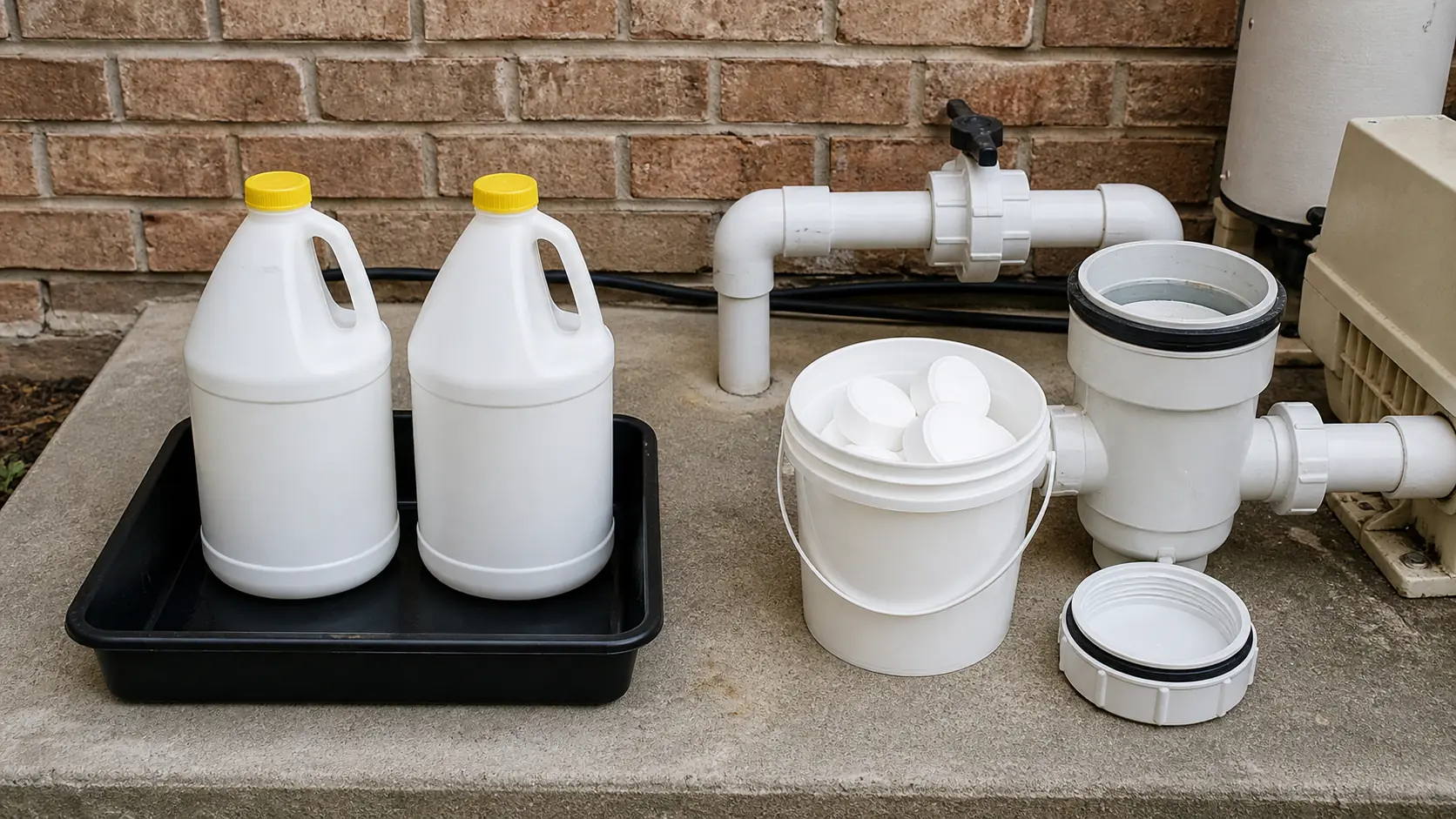
The chemicals that keep a pool safe are, on the shelf, the most dangerous things most homeowners keep at home. They’re strong oxidizers and strong acids sitting a few feet apart in a hot Texas garage, usually in bags that have been opened and rolled shut. This guide covers the three mistakes that cause almost every serious pool chemical injury, and how to store and handle the stuff so none of them can happen to you.
If something is reacting right now
If a container is fuming, smoking, hissing, or hot to the touch, don’t add water to it and don’t try to move it. Water is what accelerates several of these reactions. Get everyone away from it, upwind and indoors, and call 911. For a swallowed or splashed exposure with no fire, call Poison Control at 1-800-222-1222, which is staffed around the clock and free.
Why this is worth six minutes of your attention
This is measured, not asserted. CDC researchers analyzed a decade of injury surveillance data from the Consumer Product Safety Commission and published the result in Morbidity and Mortality Weekly Report: a median of 4,535 emergency department visits a year for pool chemical injuries across 2008 to 2017. Three details in that paper are the reason this article exists.
- They happen at home. At least 56.3 percent of the 2015 to 2017 cases occurred at a residence, not at a public pool with a trained operator.
- They happen in summer. About 64.5 percent fell between Memorial Day weekend and Labor Day, which in Texas is the stretch when the garage is hottest and the chemicals are handled most.
- A third of the patients are children. 36.4 percent were under 18, an estimated 4,917 of them over those three years.
These aren’t exotic industrial accidents. They’re people opening a bucket in a garage, mixing an old scoop into a new product, or leaning over a chlorinator lid.
What makes pool chemicals unusual is that the hazard isn’t really the product. Used as directed, in a large volume of moving pool water, every one of these is fine. The hazard is the concentrated encounter: chemical meeting chemical, or chemical meeting a small amount of water, in a confined space.
The three combinations that actually hurt people
Chlorine and acid
Any chlorine product combined with muriatic acid releases chlorine gas. This is the classic one, and it usually happens by accident rather than by anyone deliberately pouring one into the other. The common versions are pouring acid into the skimmer while a chlorine tab sits in it, dosing acid and chlorine into the pool at the same spot within a minute of each other, or reusing a bucket that held one for the other without rinsing it.
Chlorine gas is heavier than air, so at an equipment pad or in a sunken skimmer it pools rather than dissipating. If you get a lungful, you’ll know immediately. Never put anything but water down a skimmer, and never dose two chemicals into the same part of the pool in the same session.
Cal hypo and trichlor
Calcium hypochlorite, the granular shock most people buy, and trichlor, the stabilized tablet most people use in a floater or feeder, are both chlorine products. Mixed together they can ignite. This isn’t a slow chemical burn; it’s a fire, sometimes with very little delay, and it’s the reason old chlorinators and shared scoops start garage fires every summer.
The practical rules: never use the same scoop for both, never top up a tab feeder with granular shock, never store an opened bag of one on top of an opened bucket of the other, and if you switch tablet brands, empty and rinse the feeder rather than layering the new product onto the old.
Water added to chemical
Adding a small amount of water to a concentrated chemical is a different failure mode from mixing two chemicals, and it catches people who are being careful in every other respect. A splash of water into a bucket of granular shock can generate enough heat and gas to erupt. Muriatic acid diluted the wrong way around will spit hot acid at your face.
The rule has one direction and no exceptions: chemical goes into water, into a large volume of it, with the pump running so it disperses. If you have to pre-dissolve granular shock, that means filling a clean bucket with pool water first and then adding the product to it slowly, never the reverse.
Rain and a rolled-shut bag are the same accident
Most of these reactions need water to get going, and an opened bag closed with a fold isn’t a sealed container. A humid Texas summer, a leaking roof, a wet garage floor, or a hose left dripping next to the shelf is enough. Chemicals that got damp in storage and then got hot are exactly the ones that surprise people.
Storing them so nothing can go wrong
Storage is where you win this, because good storage makes the dangerous combinations physically impossible rather than relying on you remembering the rules at 7pm on a Saturday.
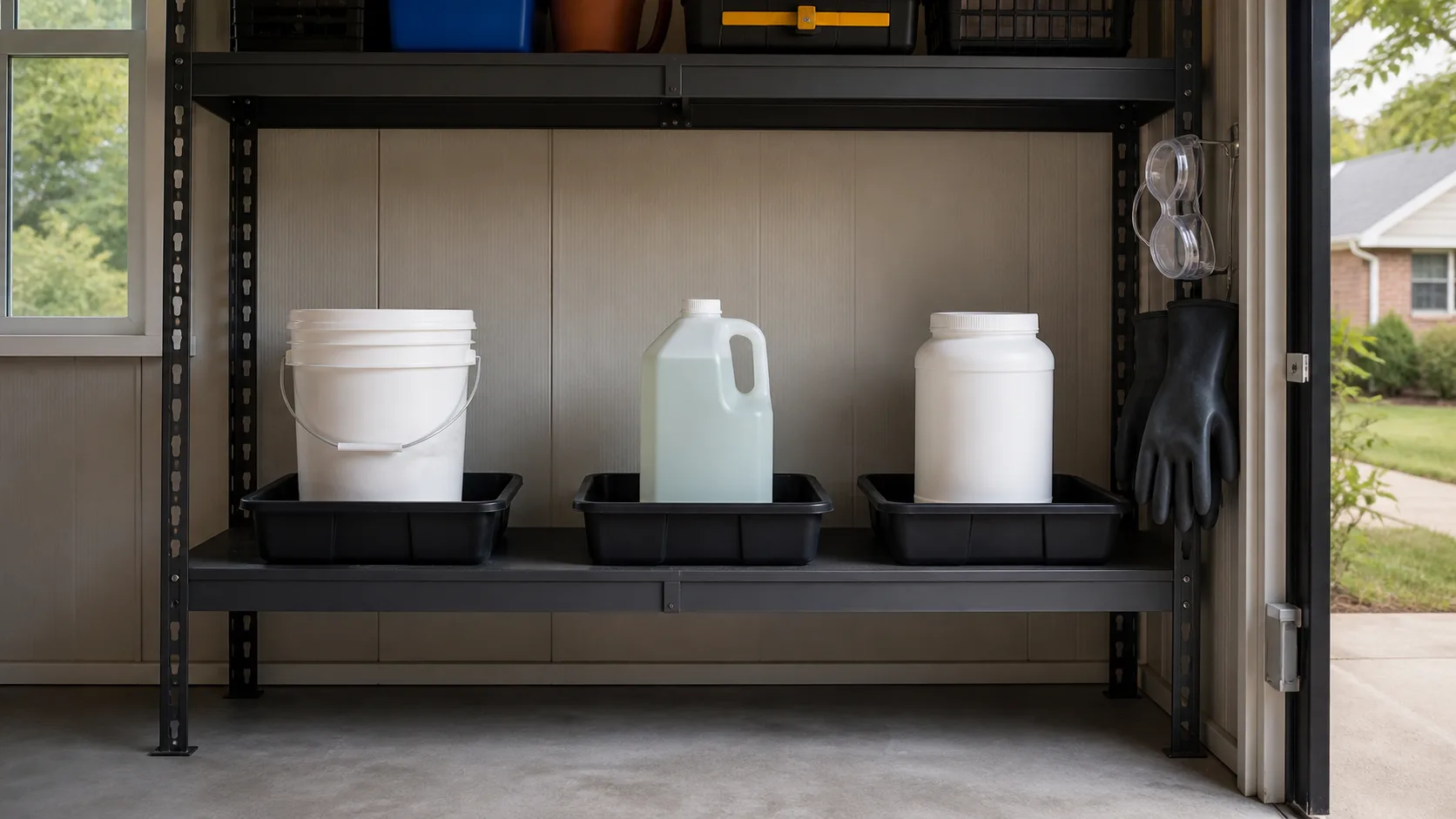
- Cool, dry, dark, and ventilated. A shaded shed or the coolest corner of the garage, off the floor and out of direct sun. Heat degrades chlorine products, and it accelerates anything that has already started to go wrong.
- Oxidizers away from acids. Chlorine products in one place, muriatic acid in another, ideally with a physical separation such as a different shelf or a different wall. Acid fumes also corrode metal, so keep it away from tools, the water heater, and anything with a circuit board.
- Original containers, lids on tight. Never decant a pool chemical into a drink bottle, a coffee can, or an unlabeled bucket. The label carries the handling instructions and, if something happens, it’s what Poison Control will ask you to read out.
- Nothing stacked on anything. A leaking container above a different product is the mixing accident that happens while nobody is home.
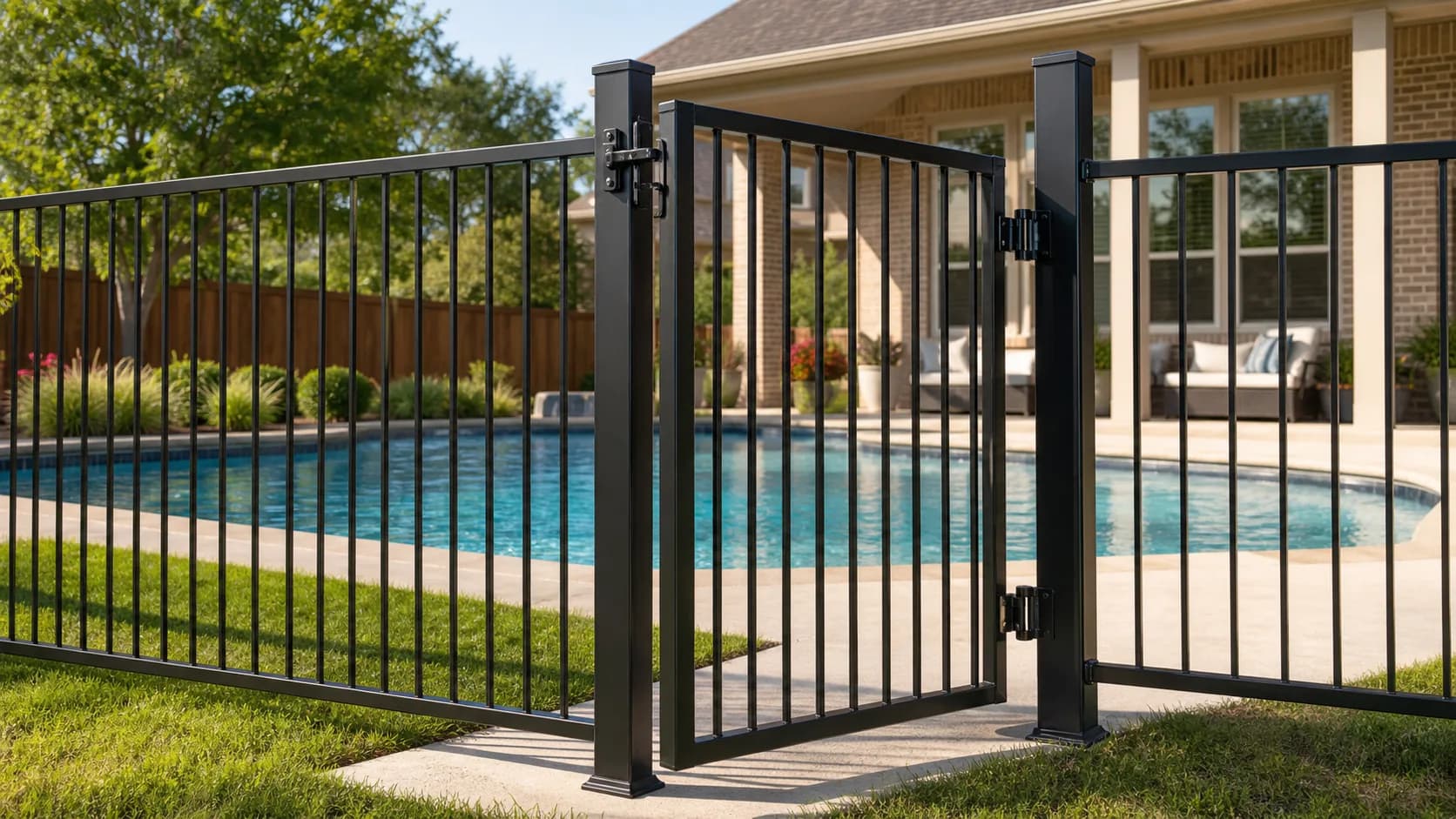
- Locked, or at least latched high. This is the same layered thinking behind a pool barrier: a child who can’t reach it can’t open it.
- A dedicated scoop per product, stored with that product. Cheap, and it removes the single most common route to a cal hypo and trichlor fire.
Handling them without incident
| Situation | What to do |
|---|---|
| Dosing anything | Pump running, one chemical at a time, wait between products |
| Opening a container | Outdoors or in real ventilation, face away from the opening, gloves and splash goggles on |
| Muriatic acid | Add slowly to a full pool, never to a bucket, never near metal equipment |
| Granular shock | Broadcast over the deep end with the pump on, or pre-dissolve by adding it to a bucket of pool water |
| Tablets | Into a clean, empty feeder or floater; never combined with any other product |
| A spill | Do not hose it down until you know what it is; a wet spill of the wrong thing reacts |
| Empty containers | Rinse per the label and dispose of separately, never reused for another chemical |
Dose at dusk, not at noon
Two reasons. Sunlight destroys unstabilized chlorine quickly, so a daytime shock is partly wasted, and the equipment pad is at its hottest in the afternoon, which is when containers are most likely to vent. Late in the day, with the pump running overnight, is both the more effective time and the safer one. The chemistry side of that timing is in our water chemistry guide.
The North Texas complication
Two local conditions make this worse here than it would be in a milder climate.
The first is straightforward: our garages get hot. An uninsulated Plano garage in August runs well above the storage temperatures printed on most of these labels, day after day, for months. Chlorine products lose strength as they sit in that, which means the same scoop does less each week, which is why people quietly start adding more. A stronger dose of a degraded product from a hot shelf is a worse position than it looks.
The second is that our heat drives chemical demand up generally. Higher water temperatures, relentless UV, and long swim seasons all mean more product moving through the house more often, which means more open containers, more partial bags, and more opportunities for the three combinations above. The homeowners who get hurt are almost never careless people. They’re people who handle pool chemicals fifty times a season instead of five. Storm season concentrates that further, because the pool needs dosing the same evening the rain stops, in the dark, in a hurry, which is exactly the situation the post-storm routine describes.
Heat is also why what you keep matters as much as how you keep it. Tablets are the product most likely to be sitting in a hot garage in a half-open bucket, and they are also the product that quietly drives cyanuric acid up all season. The comparison is in liquid chlorine versus tabs.
The case for not keeping them at all
There’s an option most people don’t consider, which is to stop storing pool chemicals in your house entirely. On our weekly service, chemicals are included and they arrive in the truck, get dosed correctly, and leave. There is no bucket in your garage, no half-empty bag of shock behind the lawn mower, and nothing for a curious eight-year-old to find.
That isn’t the reason most people hire a pool company, and it isn’t the reason we would lead with. But if you have small children, or if the storage situation described here sounds like your garage, it’s a real benefit worth counting. If you would rather keep handling it yourself, that’s entirely reasonable too, and these rules are the whole of what you need. Read the label, store acids away from chlorine, give every product its own scoop, and never mix anything with anything but pool water.