Liquid Chlorine vs Tablets in Texas Heat

Austin Andrews
Founder, True Texan Pools
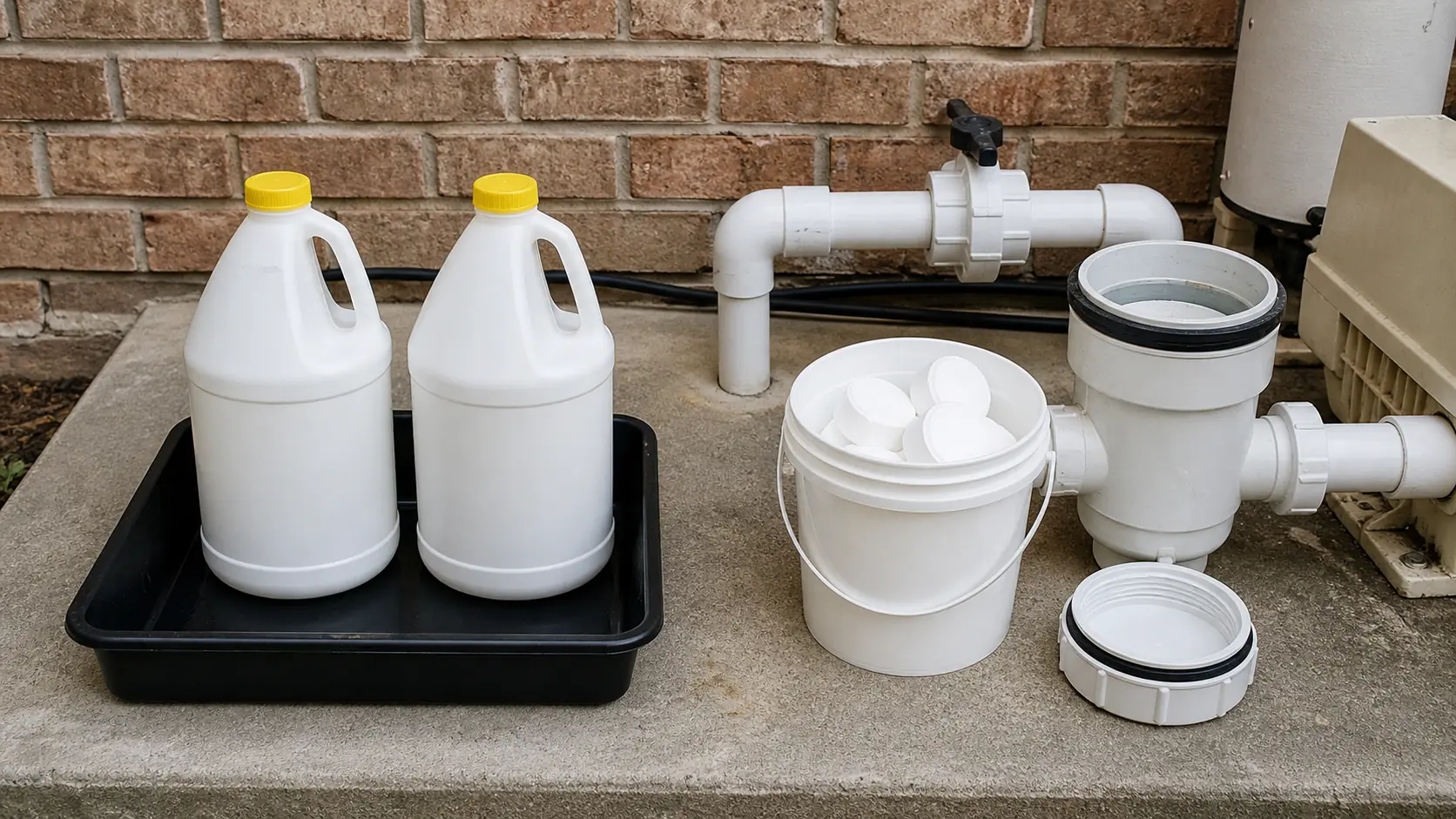
Tablets are convenient, cheap per pound of chlorine, and they are the single most common reason a North Texas pool goes green in its third or fourth season. Not because they do not work, but because of what they leave behind permanently. Here is the honest comparison between liquid chlorine, trichlor tablets, and cal hypo, what each one adds to your water besides chlorine, and the routine that actually suits a Texas summer.
Every chlorine product is chlorine plus something else. The chlorine is consumed. The something else, in two of the three cases, is not. Once you hold that sentence, the whole comparison becomes obvious.
The three products, and what each one leaves behind
| Product | Chlorine form | What else it adds | Effect on pH |
|---|---|---|---|
| Liquid chlorine (sodium hypochlorite) | Unstabilized, immediately available | A small amount of salt, which is harmless and does not accumulate meaningfully | Raises pH slightly |
| Trichlor tablets | Stabilized, dissolves slowly | Cyanuric acid, permanently, at roughly half the tablet's weight | Strongly acidic, lowers pH |
| Cal hypo (calcium hypochlorite) | Unstabilized, granular | Calcium hardness, permanently | Raises pH |
| Dichlor | Stabilized granular | Cyanuric acid, faster than trichlor per unit of chlorine | Roughly neutral |
Read the third column and the North Texas problem writes itself. Two of the four products add something to your water that can only be removed by replacing water, and both of those things are already a local issue: cyanuric acid because tablets are the default habit, and calcium because our fill water arrives hard.
Why tablets specifically cause trouble here
Stabilizer is not a villain. Cyanuric acid protects chlorine from ultraviolet light, and in a climate with our sun angle and day length, a pool with no stabilizer loses free chlorine remarkably fast. Every North Texas pool wants some.
The problem is that a tablet feeder does not know when to stop. Trichlor is around half stabilizer by weight, so every tablet contributes cyanuric acid at a fixed ratio to the chlorine it delivers. Chlorine gets consumed. Cyanuric acid does not: it is not consumed by sanitizing, it does not evaporate, and sunlight does not degrade it. So it climbs, season over season, on exactly the pools whose owners are doing nothing wrong except using the most convenient product.
The consequence is that the free chlorine level you need rises with it. The working target is roughly 7.5 percent of your cyanuric acid, so a pool at 30 ppm CYA needs 2 to 3 ppm of chlorine, while a pool at 100 ppm needs around 7.5 ppm, which is far more than most owners carry. That is why an over-stabilized pool goes green while the test strip looks acceptable, and the cyanuric acid guide covers the chemistry and the only fix there is.
There is no product that reverses this
Anything sold as a chlorine lock remover, a stabilizer reducer, or a shock that breaks through, is not doing what the label implies. Cyanuric acid comes down by replacing water and by nothing else. Which makes the product choice above a genuinely consequential decision rather than a preference, because it is easy to get into and expensive to get out of.
The pH side effect nobody mentions
Trichlor is strongly acidic. A pool running tablets continuously has a persistent downward push on pH, which owners counter by adding a base, which raises alkalinity, which then makes pH harder to move. The result is a pool on a chemical treadmill for reasons that have nothing to do with sanitizing. Liquid chlorine pushes pH gently the other way, which on our alkaline-leaning fill water is generally easier to live with.
Why cal hypo is the wrong daily habit in this county
Cal hypo is a perfectly good product and a reasonable shock. What it adds is calcium.
North Texas fill water is moderately hard to begin with, and a pool concentrates it from there, because evaporation leaves calcium behind and nothing in normal maintenance removes any of it. Calcium hardness is therefore the one reading on your test kit that only ever moves upward. Adding a calcium-based chlorine product every week is pushing on that number deliberately, and like cyanuric acid it can only be brought back down by replacing water.
Occasional shocking with cal hypo is fine. Routine sanitizing with it, on our water, is building a scale problem. What hard water does to a whole pool covers where that lands.
The case for liquid chlorine
Liquid chlorine is sodium hypochlorite, the same active ingredient as household bleach at a higher concentration. It adds chlorine and a small amount of ordinary salt, and nothing that accumulates in a way you will have to correct later.
- No stabilizer added, so your cyanuric acid stays where you deliberately set it.
- No calcium added, which matters on our fill water.
- Immediately available, so a dose does its work now rather than dissolving over days.
- Dose control, since you decide the amount rather than a feeder deciding it.
The honest downsides. It degrades on the shelf, losing strength with time and heat, so buying a summer’s supply in May and leaving it in a Texas garage is buying weak chlorine by July. It requires you to actually show up and pour it, which is the real reason people prefer tablets. And it is heavy to carry and unforgiving of a spill on clothing or paving.
Buy it fresh and store it in the dark
Liquid chlorine loses strength fastest when it is warm and lit. Buy in smaller quantities more often, check for a date on the jug, and keep it somewhere cool, dark, and ventilated, away from acid. Chemical safety and storage covers the separation that matters, and it matters more with liquid chlorine than with tablets because the fumes are more active.
What we would actually recommend for a North Texas pool
A routine rather than a single product.
- Set stabilizer deliberately, once. 30 to 50 ppm for a chlorine pool, 60 to 80 for a salt pool. Dose it with actual stabilizer, measure it, and then stop.
- Sanitize routinely with liquid chlorine. Dose to a target set against your cyanuric acid, not against a fixed number.
- Shock at dusk. Anything added in the afternoon is partly destroyed by sunlight before it works.
- Keep tablets for the situations they suit. Vacations, a stretch you cannot attend, or a new pool that genuinely needs stabilizer. Then take the feeder offline.
- Test cyanuric acid quarterly. It moves slowly and only in one direction, so quarterly is enough and never is not.
Cost, honestly
Per pound of available chlorine, tablets are usually the cheaper product. That is a real advantage and it is why they are everywhere.
What the per-pound comparison misses is the eventual water exchange. Bringing a pool from 120 ppm cyanuric acid down to 40 means replacing roughly two thirds of the volume, in stages, which is thousands of gallons on your meter plus the chemistry to rebalance the fresh water. Amortize that across the seasons of tablet use that caused it and the cost advantage narrows considerably, and that is before counting a green pool recovery if the CYA problem was discovered the hard way. Green recovery costs in DFW puts a number on that outcome.
If you are on a salt pool
Then your cell is producing unstabilized chlorine continuously, which is chemically similar to dosing liquid chlorine, and the relevant target range for cyanuric acid is higher, 60 to 80 ppm, because a cell produces steadily rather than in doses and needs the UV protection.
The mistake specific to salt pools is dropping tablets into a floater or skimmer as a supplement when chlorine runs low. That raises cyanuric acid, which raises the chlorine target, which makes the cell run harder, which shortens its life. If a salt pool is not holding chlorine, the answer is upstream: check the cell, the output setting, the pump hours, and the CYA level. Salt cell lifespan and salt water maintenance both cover this.
Where this fits in the routine
Product choice is one of the four decisions that determine whether a pool is easy or difficult here, alongside the pump schedule, the filter interval, and how honestly you read chlorine against stabilizer. Our water chemistry guide covers the targets and the order to correct them in, and the DIY comparison is candid that drifting cyanuric acid is the most common self-inflicted problem on an owner-maintained pool.
On our own routes we sanitize with liquid chlorine, hold stabilizer where we put it, and use tablets only where they earn their place. That is included in weekly service rather than billed as a chemical line, and chemical balancing is the standalone version if you want the chemistry handled and the rest of the routine yourself.
If it has been more than a year since anybody tested your cyanuric acid, that is the test to get this month, whichever product you use. It is the one number on a pool report that records a decision you made three seasons ago, and it is the only one you cannot undo with a chemical.
Frequently Asked Questions
Are chlorine tablets bad for a pool?
Not bad, but consequential. Trichlor tablets are around half stabilizer by weight, so adding roughly 10 ppm of chlorine through tablets leaves about 6 ppm of cyanuric acid behind permanently. Chlorine is consumed and cyanuric acid is not, so a pool running tablets all season climbs steadily. That is fine for a season or two and it is the reason so many third-year pools go green while the test strip looks acceptable.
Is liquid chlorine better than tablets in Texas?
For routine sanitizing, yes, on a pool that already has stabilizer in it. Liquid chlorine adds chlorine and a small amount of ordinary salt, and nothing that accumulates and has to be corrected later. Tablets keep their place for vacations, for a stretch you cannot attend, or for a new pool that genuinely needs stabilizer, after which the feeder should come offline.
Why is cal hypo a poor choice for routine use in North Texas?
Because it adds calcium, and calcium is the one reading on your test kit that only ever moves upward. North Texas fill water is moderately hard to begin with, evaporation concentrates it from there, and nothing in normal maintenance removes any of it. Adding a calcium-based chlorine product weekly pushes on that number deliberately, and like cyanuric acid it can only be brought back down by replacing water. Occasional shocking with cal hypo is fine.
Does liquid chlorine go bad?
Yes. Sodium hypochlorite degrades on the shelf, losing strength with time and heat, so buying a summer's supply in May and leaving it in a Texas garage means pouring weak chlorine by July. Buy smaller quantities more often, check for a date on the jug, and store it cool, dark, ventilated, and physically separated from acid.
Is there a product that removes cyanuric acid from a pool?
No. Anything sold as a chlorine lock remover or a stabilizer reducer is not doing what the label implies. Cyanuric acid is not consumed, does not evaporate, and is not degraded by sunlight. It comes down by replacing water and by nothing else, which is why the product you sanitize with is a genuinely consequential decision rather than a preference.
Should I use tablets on a salt water pool?
Only deliberately and briefly. The common mistake is dropping tablets into a floater as a supplement when chlorine runs low, which raises cyanuric acid, which raises the chlorine target, which makes the cell run harder and shortens its life. If a salt pool is not holding chlorine, check the cell, the output setting, the pump hours, and the CYA level rather than adding tablets.
Ready to stop thinking about your pool?
True Texan Pools keeps your water swim-ready year-round across Plano and all of DFW. Clear pricing, no contracts, and a photo report after every visit. Austin handles every job personally.
Keep reading
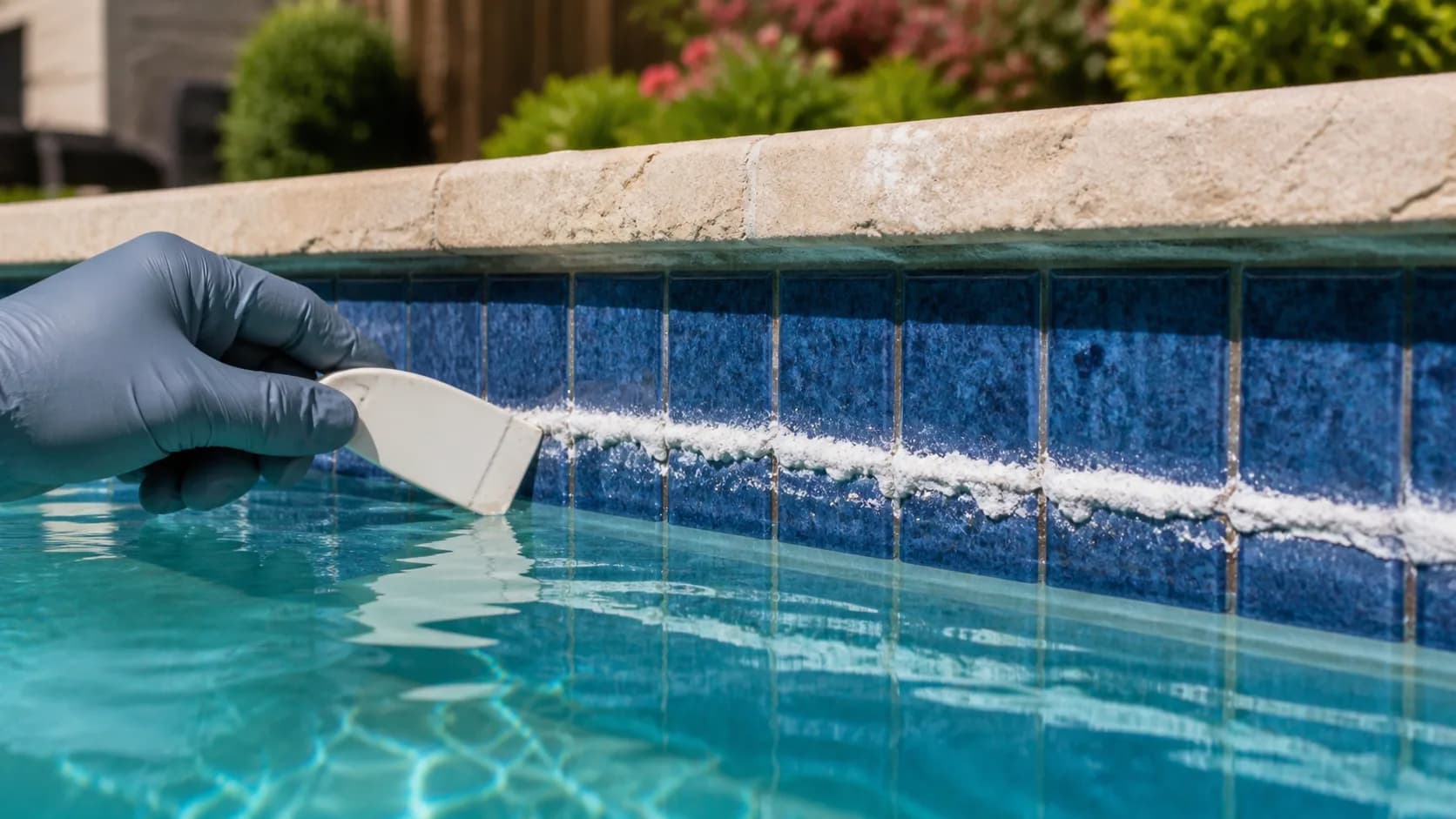
Calcium Scale on Pool Tile: Why It Keeps Coming Back
You can scrub the tile, and you should, but unless you deal with what put the scale there it comes back before the season is out. In DFW, that means understanding why your calcium hardness only ever goes up.
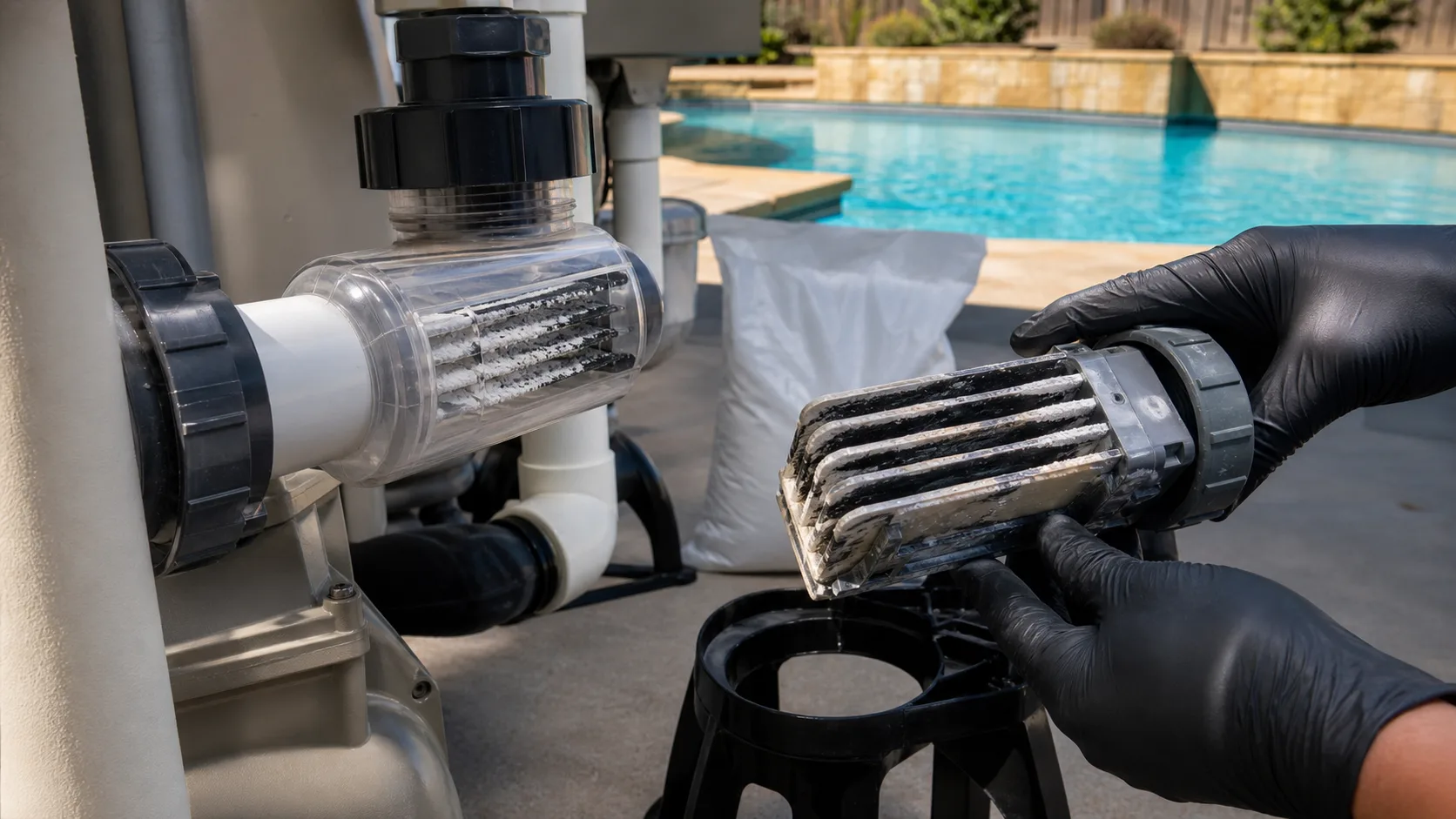
Salt Water Pool Maintenance in North Texas: What Nobody Tells You
Salt pools are not chlorine-free and not lower maintenance. They trade weekly chemical handling for a standing requirement to control pH and keep the cell clean, which is harder here than most places.