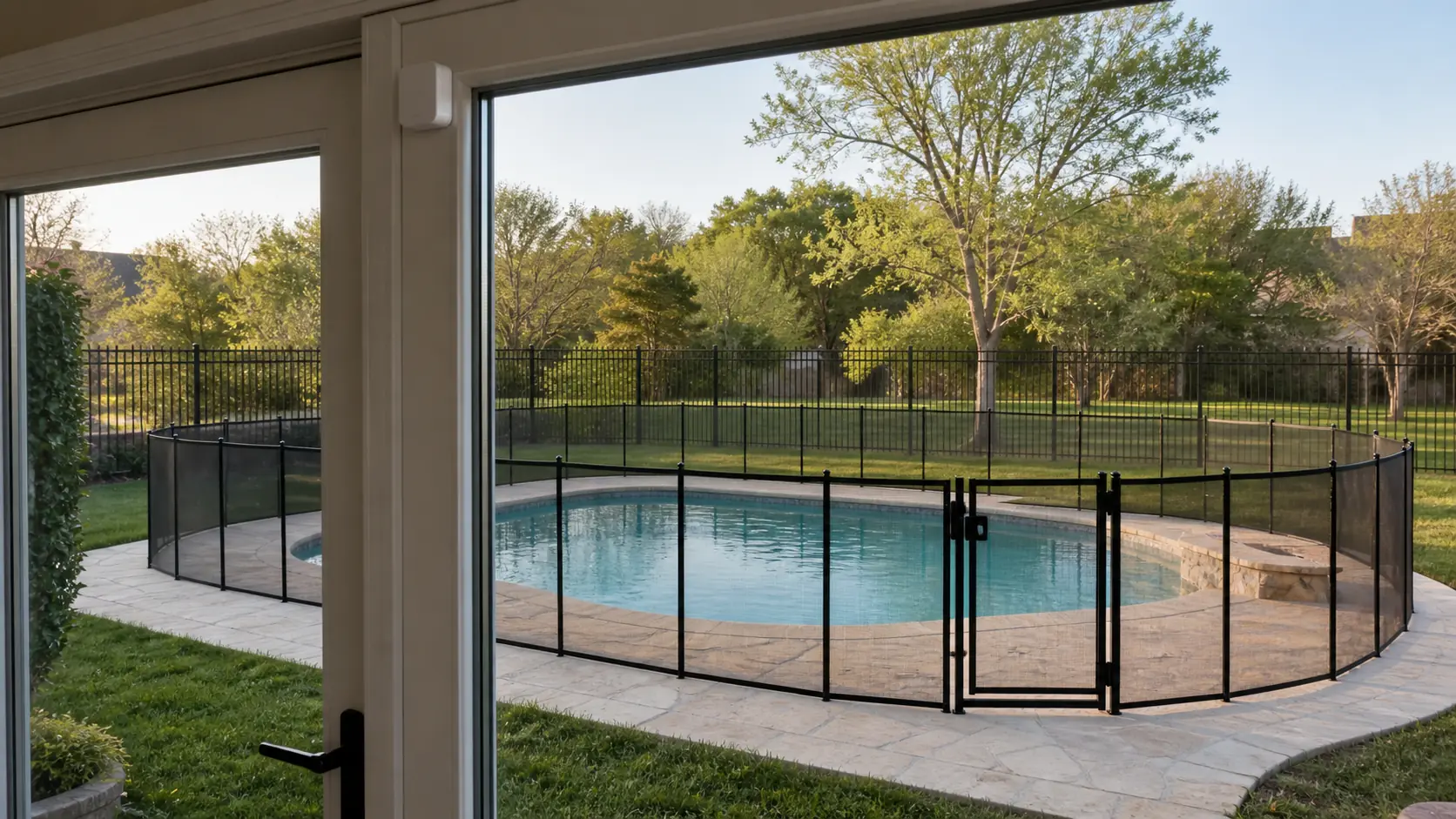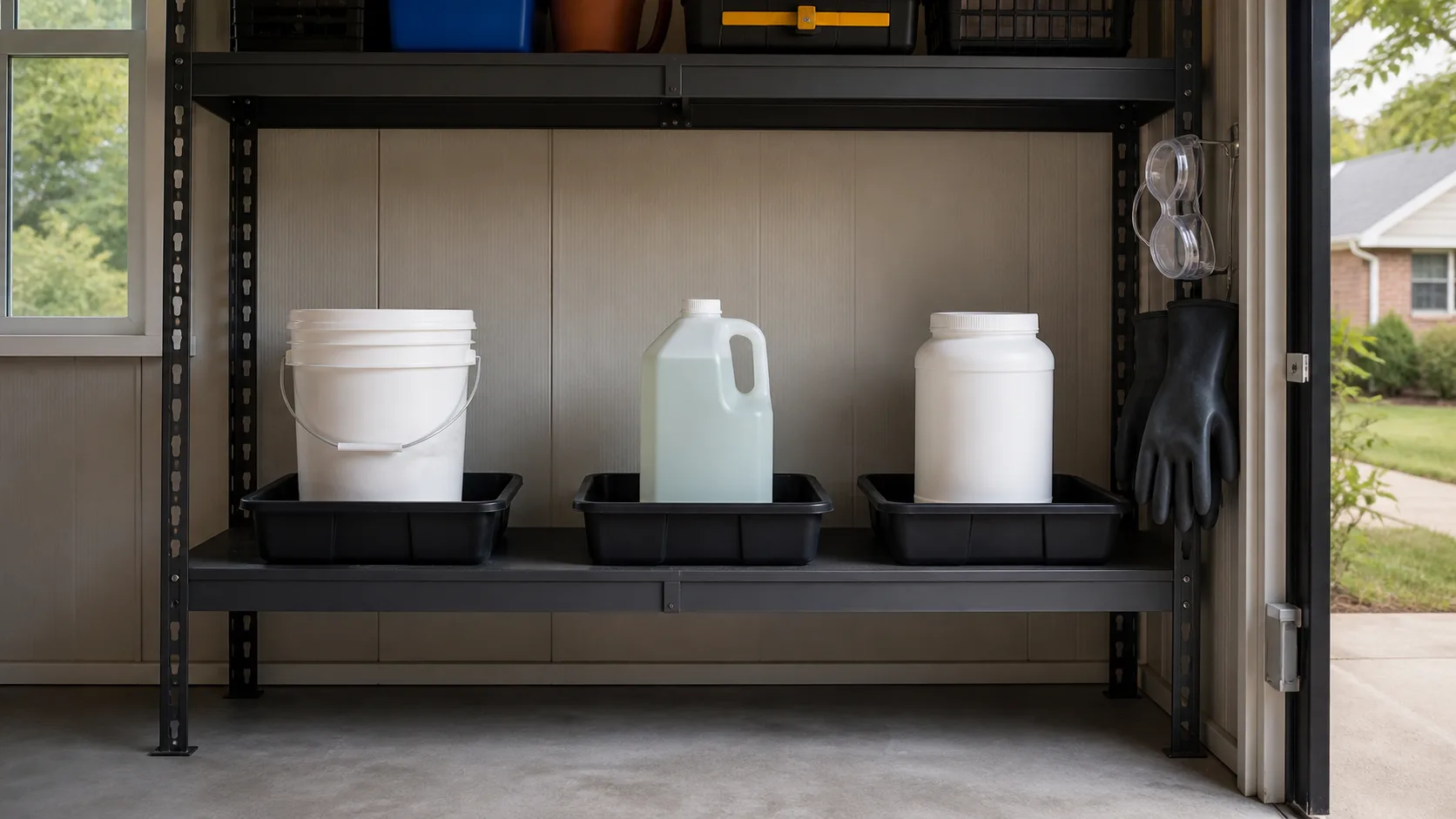
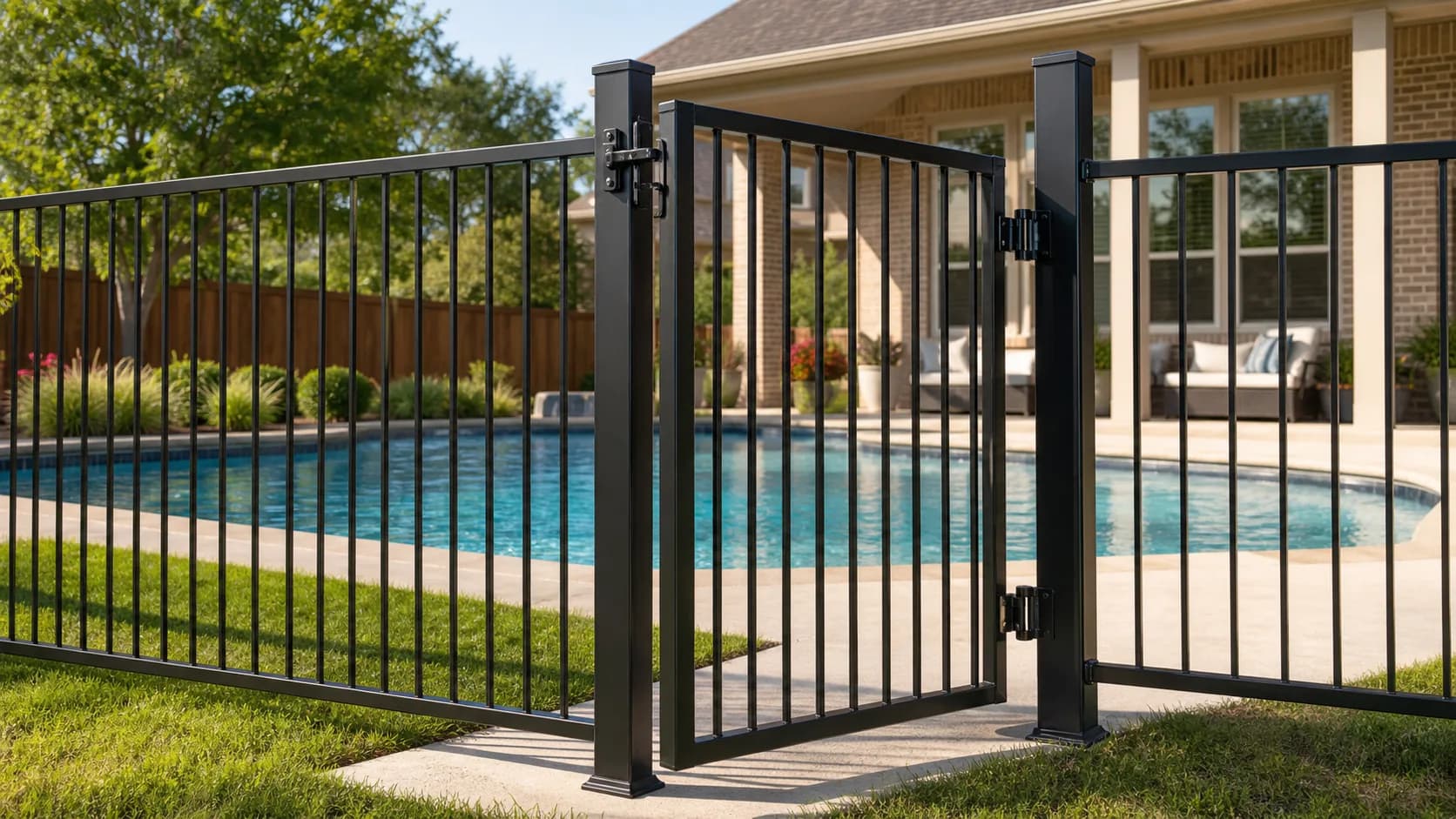
Almost every article about Texas pool fence law gets one thing wrong, and it’s the thing that matters most to you. The state statute everyone quotes, Chapter 757 of the Health and Safety Code, doesn’t apply to a single-family backyard pool at all. It never has. Here is what actually governs your pool, what the safety research actually says, and what we check on every property we service.
What Chapter 757 actually says, and who it applies to
Search for Texas pool fence law and you’ll find dozens of pages confidently telling you that Texas requires a 48-inch fence around your pool, citing Health and Safety Code Section 757.003. The specifications they quote are real. The problem is the scope.
Section 757.002 limits the entire chapter to two things: a pool owned, controlled, or maintained by the owner of a multiunit rental complex or by a property owners association, and the doors and windows of rental dwellings opening into the pool yard of a multiunit rental complex or a condominium, cooperative, or town home project. A privately owned pool behind a single-family house isn’t in that list. If you’re in a townhome or condo project, read that second prong carefully rather than assuming it misses you.
Why this matters, and why it isn’t good news
People sometimes read this and conclude they’re off the hook. The opposite is true. It means the state hasn’t set your requirement, so the requirement comes from your city instead, and the safety standard you should actually build to is stricter than the statute anyway. It also means you can’t rely on a generic article to tell you whether your barrier is compliant. You have to check locally.
So what does apply to your backyard pool?
Two separate things, and it’s worth keeping them apart in your head:
- Your city’s building code. DFW cities adopt versions of the International Residential Code and the International Swimming Pool and Spa Code, then amend them. In practice that means a barrier at least 48 inches high, a gap under it of no more than 2 inches, no openings a 4-inch sphere can pass through, horizontal members kept on the pool side where they’re close enough to climb, and self-closing and self-latching gates. Plano, like most cities here, also requires a permit before the barrier goes in. Confirm the specifics with your city’s building inspections department before you build or modify anything, because the amendments differ from city to city and they change.
- The safety guidance, which isn’t law but is what the evidence supports. The U.S. Consumer Product Safety Commission publishes Safety Barrier Guidelines for Home Pools (Publication 362). The CPSC is explicit that these are guidelines rather than a mandatory standard. They are also the most carefully reasoned barrier document available, and they go further than most city codes.
Why any of this is worth your Saturday
The numbers aren’t abstract. According to the CDC’s drowning facts, the United States sees roughly 4,000 fatal unintentional drownings and about 8,000 nonfatal drownings every year, an average of 11 deaths and 22 nonfatal incidents a day. Nonfatal isn’t the same as harmless: the CDC notes outcomes ranging up to brain damage and permanent disability.
For young children specifically, the CDC states that more children ages 1 to 4 die from drowning than from any other cause of death, and that most drownings in that age group happen in swimming pools. For ages 5 to 14 it is the second leading cause of unintentional injury death, behind motor vehicle crashes. The CDC also states plainly that proper pool fencing prevents young children from reaching the water without a caregiver knowing.
The barrier checklist
These are the CPSC guideline figures. Treat them as the target, then check your city code in case it demands more.
| Element | Guideline | Why |
|---|---|---|
| Barrier height | At least 48 in, measured on the side facing away from the pool | Height a young child can’t scale unaided |
| Gap under the barrier | No more than 4 in above grade, and no more than 2 in over grass, gravel, or any other non-solid surface | This is a clearance, not a sphere test. A toddler goes under a fence far more easily than through it, and soft ground can be scraped away |
| Openings in the barrier | No 4-in sphere may pass | The sphere test governs the fence face, not the gap underneath |
| Vertical member spacing | 4 in where horizontal members are 45 in or more apart; 1-3/4 in where they’re closer than that, with the horizontals on the pool side | Horizontal rails on the outside turn a fence into a ladder, so a climbable fence has to be harder to squeeze through |
| Gates | Self-closing and self-latching, opening away from the pool | A gate propped or left ajar isn’t a barrier |
| Latch release | 54 in or higher from the bottom of the gate. Below that, put the release on the pool side at least 3 in below the top of the gate, with no opening over 1/2 in within 18 in of it | A low latch is only safe if a child can’t reach through the fence to reach it |
The failure mode nobody expects
In our experience the fence is rarely the problem. The gate is. A self-closing hinge that has sagged, a latch that catches only if you lift the gate, a spring someone disabled because the clack was annoying: any of those turns a compliant barrier into a decorative one. Test your gate by pushing it open and letting go. If it doesn’t swing shut and latch on its own, every time, it isn’t doing its job.
The second most common gap is a door from the house directly into the pool yard. If your house wall forms part of the barrier, that door needs an alarm or another approved protection, because otherwise the entire barrier has an unlocked opening in it.
The drain cover almost nobody checks
Barriers keep children away from the water. Drain covers matter once they’re in it, and this is the piece of pool safety equipment homeowners are least likely to have ever looked at. Suction outlets can trap a body, a limb, or hair against the drain with enough force that an adult can’t pull a child free, which is what the Virginia Graeme Baker Pool and Spa Safety Act was written to address.
Two things about it are commonly misunderstood. First, the Act’s operating requirements apply to public pools and spas, not to your backyard, so nobody is going to inspect yours. Second, and more usefully, the manufacturing requirement applies to every drain cover sold in the United States, which is why the CPSC keeps issuing recalls and warnings on non-compliant covers sold through online marketplaces. If you bought a replacement cover cheaply online, that’s worth checking against CPSC recall notices before anything else.
The part that surprises people: compliant drain covers have a service life, and it’s usually stamped on the cover itself, commonly in the five- to seven-year range. Ultraviolet light and pool chemistry make the plastic brittle over time, and a brittle cover can crack under load, which puts you back to an open suction outlet. Go look at yours. If it is cracked, loose, missing screws, or past the date printed on it, replace it, and don’t let anyone swim until you have. A single unblockable-rated cover that is actually intact is doing more for you than any amount of supervision at the moment it matters.
The cheapest time to deal with a drain cover is while the pool is already empty for other work, since replacing one dry costs a fraction of what a diver charges. That is one item on a longer list worth batching into a single drain, which we set out in the resurfacing guide.
The other electrical item in the water belongs on the same list. A pool light that trips its GFCI is reporting a fault that can energize the water, not being fussy, and it is handled in pool light replacement.
The ten-minute audit to run before summer
None of this needs a contractor to check. It needs somebody to actually walk the fence line once a year, and the failures it finds are almost always the same four.
- The gate test. Push each gate fully open from a standstill and let go. It must swing shut and latch on its own, every time, without a nudge. Do it three times. A gate that latches twice out of three is a gate that will be standing open the day it counts.
- The climb test. Stand back and look at what is within reach of the barrier from the outside: patio furniture, a planter, the trash bins, a cooler, the air conditioning condenser, a stack of firewood. A 48-inch fence with a chair beside it is a 20-inch fence. This is the single most common real-world failure we see, and it is created by furniture, not by construction.
- The gap test. Walk the base of the fence looking for washouts. Our clay soil moves seasonally and heavy rain scours channels under fence lines, so a gap that didn’t exist last spring can exist now. The ground you’re checking is the ground our expansive clay is constantly reshaping.
- The house-door check. Every door and window from the house into the pool yard needs its alarm tested, and tested loud enough to be heard from wherever adults actually are.
Layers, not a single line of defense
The reason the CPSC talks about barrier types rather than one fence is that any single measure fails eventually. Someone props the gate. Someone forgets to set the alarm. Someone looks away. The point of layering is that no single lapse is enough to reach the water.
- A compliant barrier that fully separates the pool from the house and the yard.
- Self-closing, self-latching gates that you physically test, not just look at.
- Alarms on any door or window opening into the pool yard.
- A power safety cover for pools that sit unused for long stretches.
- Designated supervision. One adult whose only job, right now, is watching the water. Not the adult who is also cooking.
- Swim lessons. The CDC notes that formal swimming lessons reduce drowning risk for children and young adults.
Clear water is a safety feature, not a cosmetic one
This is the part that overlaps with what we do. If you can’t see the bottom of the pool, you can’t see a child on it. A green or cloudy pool is a visibility hazard on top of being a sanitation one, which is why we won’t call a pool swim-ready until the water is clear. If your pool is green right now, our green-to-clean guide covers the recovery, and keep everyone out of the water until it is done.
What we check, and what we don’t
On every visit we notice and flag the safety-relevant things we can see: a gate that is not latching, a barrier gap that has opened up, a missing drain cover, water too cloudy to see the floor. We’ll tell you about all of it.
What we aren’t is a code inspector or a fence contractor. We don’t certify compliance, and nothing here is legal advice. For whether your specific barrier meets your specific city’s current code, talk to your city’s building inspections department, and for installation talk to a licensed fence contractor. What we can do is keep the water clear enough that you can see straight to the bottom of it, every week. That’s the whole point of weekly service as we run it: visibility is a safety layer, and it’s the one that quietly disappears first.