Pool Leak Detection: What It Costs in DFW and When It Is Worth It

Austin Andrews
Founder, True Texan Pools
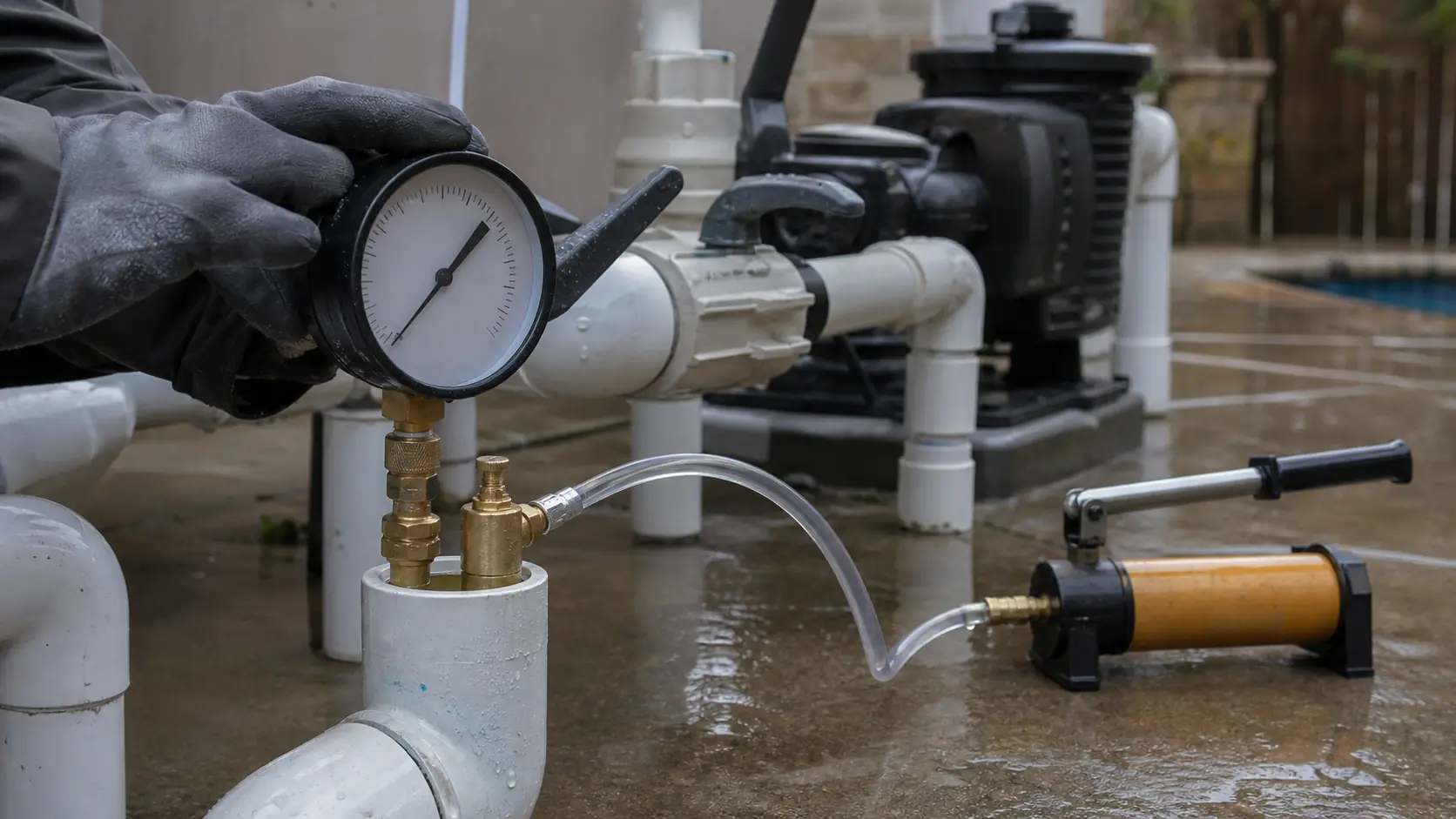
Professional leak detection in DFW typically runs $350 to $600, with $395 flat a common published rate and some specialists at $500 to $700. That is a real amount of money to spend on finding out where a problem is rather than fixing it, which is why the more useful question is not what it costs but when it is worth paying for. Here is what the money buys, what you can rule out yourself for free first, and the point at which guessing gets more expensive than knowing.
Leak detection is a genuine specialist trade. The people who do it well carry listening equipment, pressure test rigs, dye, and cameras, and they are diagnosing a system that is almost entirely buried in concrete and clay. It is skilled work and the price reflects it. It is also, in a meaningful share of cases, work that did not need doing, and the difference is a free test you can run this afternoon.
Before you spend anything: is it actually leaking?
Normal evaporation in a North Texas summer is around half an inch a day. That figure surprises people, because the rule of thumb repeated online is a quarter inch, and that number comes from milder conditions than ours. Afternoons near or past 100 degrees, low humidity, and wind push it up. On a 15 by 30 foot pool half an inch is roughly 140 gallons a day, or close to a thousand gallons a week, with nothing whatsoever wrong.
Add legitimate extras and it climbs further: a water feature running, a heated pool, an exposed windy yard, splash-out from actual swimming, and backwashing a sand filter.
The bucket test settles the question in 24 hours for the price of a bucket. Fill a five-gallon bucket with pool water, set it on the second step so it is partly submerged, mark the water level inside and the pool level outside, turn off the autofill, and wait a day. If both dropped by the same amount, it is evaporation. Full instructions, including the second run with the pump off that tells you which side of the system to suspect, are in is my pool leaking or just evaporating.
The autofill problem
An autofill valve keeps the level constant no matter how much water is escaping, so the symptom you would normally notice never appears. The leak shows up on the water bill instead, months later, and by then it has also been diluting your chemistry and washing soil out from under something. If you have an autofill, turn it off for the duration of the bucket test, and treat any unexplained jump in water usage as worth investigating rather than as a billing error.
What detection actually costs here, and what you get
| Structure | Typical range | Notes |
|---|---|---|
| Flat rate detection | $395 is a common published figure | Usually covers a defined scope: shell and accessible plumbing |
| Typical market range | $350 to $600 | Varies with pool size and how much plumbing is involved |
| Higher-end specialists | $500 to $700 | Often includes more extensive pressure testing |
| Repair | Quoted separately | The variable that matters most, and it depends entirely on where the leak is |
Read the last row carefully, because it is where the misunderstanding usually happens. Detection and repair are two different jobs. The detection fee buys you a location and a diagnosis. A split in above-ground plumbing at the pad is then an inexpensive fix. The same volume of water escaping from a line under a concrete deck is a very different number, because somebody has to get to it.
What a detection visit involves
- Isolating the system. Plugging returns and skimmer lines to determine whether the loss is in the shell or the plumbing, which is the first fork in the road.
- Pressure testing individual lines. Each line is pressurized and watched. A line that will not hold pressure has the leak.
- Acoustic listening. Sensitive microphones pick up the sound of water escaping under pressure, which is how a leak gets located to a spot rather than to a line.
- Dye testing. For shell leaks, cracks, light niches, and skimmer throats, where dye released near a suspect point either gets drawn in or does not.
- Camera inspection. For lines large enough to accept one.
A good visit ends with a specific location, a photograph, and a repair recommendation you can take to anybody. A visit that ends with somewhere in the return line is not a finished job.
Where leaks actually happen in North Texas
Two local conditions drive our leak pattern, and neither is about pool quality.
Expansive clay
Collin County clay swells when wet and shrinks hard when dry, and that annual movement works on rigid PVC, on the joints where fittings meet the shell, and on the deck. A pool that has been through fifteen summers here has been flexed fifteen times. What clay soil does to a pool covers the wider effect.
Freeze damage on a delay
Water left in a line during a hard freeze splits it, but the split frequently does not become a visible leak until the system is pressurized again. Plenty of leaks discovered in April were created in January. Spotting freeze damage after the thaw covers the inspection.
Beyond those two, the usual suspects are ordinary: skimmer throats where the plastic meets the shell, light niche conduits, return fittings, and the equipment pad itself, which is the one place you can actually see.
When to pay for detection, and when not to
A clear-eyed way to decide.
| Situation | Worth paying? | Why |
|---|---|---|
| Bucket test shows equal loss | No | You do not have a leak. Fix the expectation, not the pool. |
| Losing a quarter inch a day more than the bucket | Usually yes | That is thousands of gallons a month and it will not improve on its own |
| Loss changes when the pump runs | Yes | That is a strong diagnostic signal and it points at plumbing, which you cannot see |
| Visible wet spot at the pad | Not yet | You may have already found it. Have somebody look at the pad first. |
| Soggy patch in the yard or a settling deck | Yes | An underground leak washing out soil is doing structural damage while you wait |
| About to resurface or replaster | Yes | Finding a plumbing leak after the new surface goes on is the expensive order to do it in |
| Small loss, old pool, selling next spring | Judgment call | Disclosure matters, and a documented leak with a quote is easier to negotiate than a vague one |
Do the cheap eliminations first
Before booking anybody: run the bucket test with the pump on, then again with it off. Check the equipment pad for wet concrete on a dry day. Check whether the loss started right after a freeze or right after a rainy spell. Look at whether the water stops falling at a particular level, which points at a leak at that exact depth, usually a light niche, a return, or a skimmer throat. Those four observations cost nothing and they materially shorten a detection visit, which sometimes shortens the bill.
What the repairs run once it is found
Location determines nearly everything.
- At the pad, above ground. The cheap outcome. A coupling, some pipe, an hour.
- A skimmer throat or a return fitting. Moderate, and often fixable without breaking concrete.
- A light niche or conduit. Moderate, occasionally awkward.
- A line under the deck. Now it is a project. Either cut and patch the concrete, or reroute the line around it, which is frequently the better value.
- A crack in the shell. Depends entirely on whether it is a surface craze or a structural crack, and those are very different conversations.
Our repair cost guide covers the plumbing side in more detail, including why the same split costs different amounts depending on where it is.
The cost of not fixing it
Worth stating plainly, because the detection fee often looks large next to a slow leak.
- Water. A quarter inch a day above evaporation on a normal pool is thousands of gallons a month, metered.
- Chemicals. Every gallon that leaves takes your chlorine and stabilizer with it, and every gallon that replaces it arrives hard and unbalanced.
- Heat. If you heat the pool, you are heating water into the ground.
- Soil. The expensive one. Water escaping underground washes fines out from beneath decks, coping, and eventually the shell itself, and that damage does not reverse when the leak is fixed.
The last point is the argument. A $400 detection fee on a leak that is quietly undermining a deck is not really an expense, it is the cheapest part of the problem.
Where we fit
We are a service company rather than a dedicated leak detection outfit, and we would rather say that plainly than pretend otherwise. What we do is the part in front of it: confirm whether the pool is genuinely losing water, check the equipment pad where a meaningful share of leaks turn out to be, and tell you honestly whether a specialist is warranted. That is what our leak detection service covers, and where the job needs full acoustic and pressure work on buried lines, we will say so rather than guessing at your expense.
If you are unsure where to start, start with the bucket test tonight. Roughly half the calls we take about water loss end there, and it is a good outcome. A bucket, a strip of tape, and one quiet day answers the question that a $400 visit would otherwise have to.
Frequently Asked Questions
How much does pool leak detection cost in DFW?
Typically $350 to $600, with $395 flat a common published rate and some specialists at $500 to $700. That is detection only. The repair is quoted separately once the leak is located, and the repair number depends almost entirely on where the leak turns out to be: a split at the pad is inexpensive, a line under a concrete deck is a project.
How do I know if my pool is leaking before paying for detection?
Run the bucket test. Fill a five-gallon bucket with pool water, set it on the second step so it is partly submerged, mark the water level inside and the pool level outside, turn off the autofill, and wait 24 hours. Equal loss is evaporation. Then run it again with the pump off: losing more with the pump running points to the pressure side, more with it off points to suction or the shell.
How much water loss is normal in a Texas summer?
About half an inch a day, which is roughly 140 gallons a day or close to a thousand gallons a week on a 15 by 30 pool, with nothing wrong. The commonly quoted quarter inch comes from milder conditions than ours. Water features, heating, wind exposure, splash-out, and backwashing a sand filter all push it legitimately higher.
Can an autofill hide a pool leak?
Perfectly, and this is the most common way a leak goes unnoticed for months. The level stays constant no matter how much water is escaping, so the symptom you would normally see never appears, and the leak shows up on the water bill instead. Turn the autofill off for the bucket test, and treat any unexplained jump in water usage as worth investigating.
When is professional leak detection worth paying for?
When you are losing a quarter inch a day more than the bucket, when the loss changes depending on whether the pump is running, when there is a soggy patch in the yard or a settling deck, and before any resurfacing job, since finding a plumbing leak after the new surface goes on is the expensive order to do it in. It is not worth it when the bucket test shows equal loss.
What does an unfixed pool leak actually cost?
Water on your meter, chlorine and stabilizer leaving with it, fresh hard water arriving to be rebalanced, and heat if you heat the pool. The expensive one is soil: water escaping underground washes fine material out from beneath decks, coping, and eventually the shell, and that damage does not reverse when the pipe is fixed. That is why a $400 detection fee is often the cheapest part of the problem.
Ready to stop thinking about your pool?
True Texan Pools keeps your water swim-ready year-round across Plano and all of DFW. Clear pricing, no contracts, and a photo report after every visit. Austin handles every job personally.
Keep reading
What Your Monthly Pool Bill Actually Covers, and What It Does Not
Three quotes at $135, $165, and $210 look like a clear decision until you find out they are written in three different billing models. Here is how to compare them properly.
How Much Does Pool Cleaning Cost in Plano, TX? (2026 Pricing Guide)
Most Plano pool companies hide their prices behind a phone call. Here is exactly what weekly service, one-time cleans, and green pool recovery actually cost in 2026, and what drives the number up or down.