What Pool Repairs Actually Cost in DFW, Part by Part

Austin Andrews
Founder, True Texan Pools
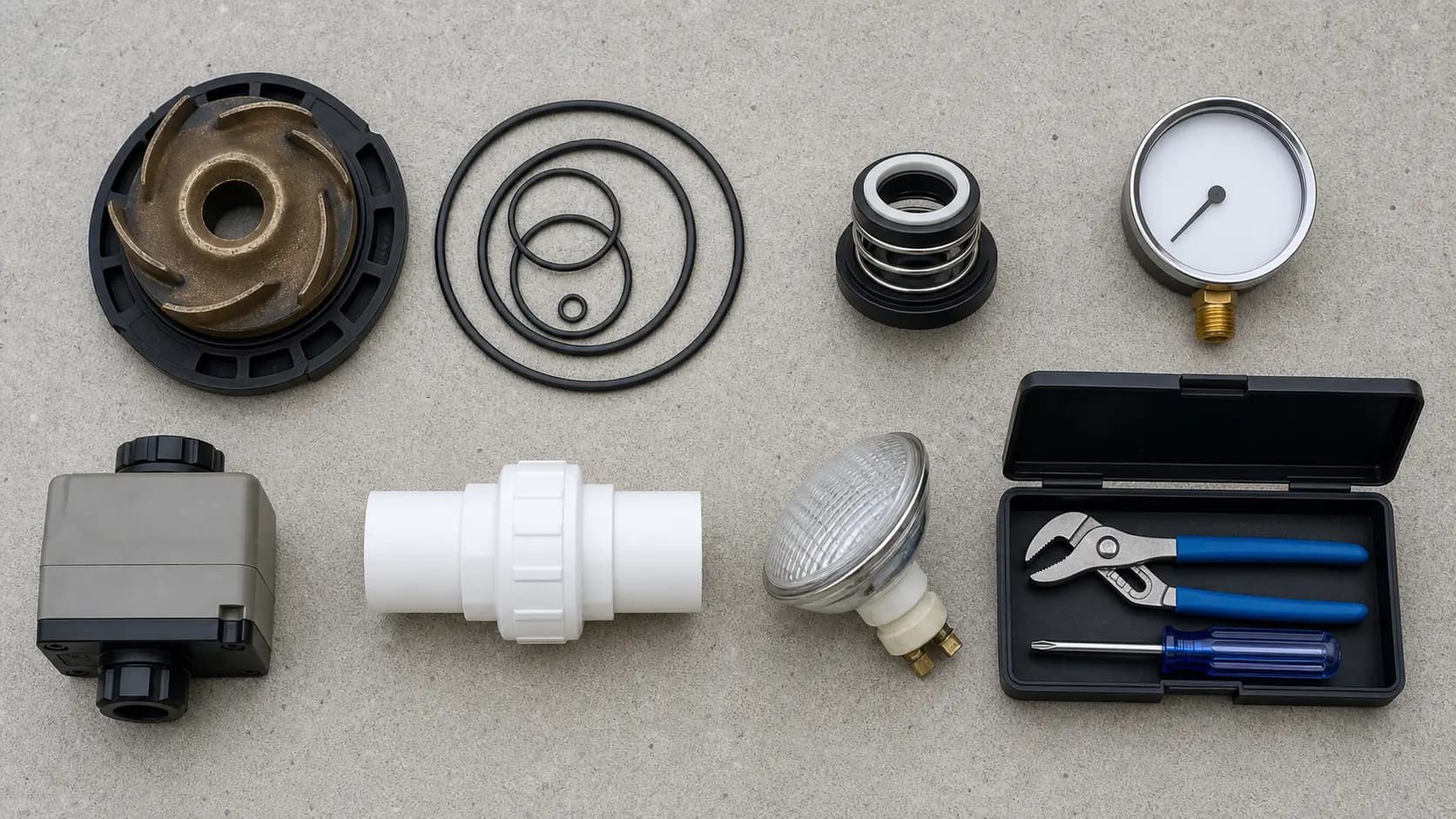
A repair quote is impossible to judge without knowing two things: what the part costs and how long the job takes. Nobody publishes either, which is how a $180 job and an $800 job for the same symptom both sound reasonable on the phone. Here is what the common pool repairs actually involve in DFW, roughly what each runs, and which symptoms have a cheap cause that should be ruled out before anybody quotes you for the expensive one.
Two things determine every number below. The first is the part, which for most pool components is a published price anybody can look up. The second is access, which is invisible to a homeowner and dominates the labor. Replacing a valve on an open pad is straightforward. Replacing the same valve where somebody plumbed the pad four inches from a brick wall is the same part and three times the work.
Ranges here are what this kind of work commonly runs in the DFW area. Treat them as a way to tell a reasonable quote from an unreasonable one, not as a price list. Anybody quoting a firm number without seeing the pad is guessing, including us.
Pump repairs
| Job | What it involves | Cost driver |
|---|---|---|
| Lid o-ring or lid replacement | A part and ten minutes | Cheapest real repair there is |
| Shaft seal replacement | Split the pump, replace the seal, reassemble | Labor, roughly an hour, plus a modest part |
| Impeller clearing or replacement | Open the wet end, clear or swap the impeller | Usually cheap unless the impeller is damaged |
| Start capacitor | Replace a component on the motor | Inexpensive part, quick job |
| Motor replacement | New motor onto the existing wet end | The point where a whole pump is often better value |
| Whole pump replacement | New variable speed unit, replumbed to fit | $1,200 to $2,500 installed is a common range |
Rule out first: a pump that will not prime is usually a suction-side air leak rather than a failing pump. A dried lid o-ring, an unseated lid, a backed-off drain plug, a full basket, or a low water level all produce the same symptom for a fraction of the price. The won’t-prime diagnostic works through it in order, and repair or replace covers where the line falls on an older pump.
Filter repairs
- Filter deep clean. Not a repair, but it belongs here because it is the fix for so many symptoms. Typically $125 to $150 in this area, every three to six months. Cost and frequency covers when it is genuinely due.
- Cartridge replacement. A set every three to five years, quoted per unit and varying enormously by filter size.
- Sand media change. Every five to seven years. Mostly labor: emptying wet sand out of a tank is genuinely unpleasant work.
- DE grid replacement. Every five to ten years, and usually done as a full set rather than one grid.
- Clamp band, o-ring, or pressure gauge. Small parts, quick jobs, and the gauge in particular is worth replacing the moment you suspect it, because a stuck gauge is worse than no gauge.
- Tank replacement. A cracked tank means a new tank, and at that point the internals usually transfer over.
Heater repairs
The most variable category on this page, because a heater contains a gas train, an ignition system, a control board, sensors, and a heat exchanger, and each one fails differently.
- Igniter, flame sensor, or pressure switch. Common failures, modest parts, and the most likely answer when a heater lights and then shuts off.
- Thermistor or high limit switch. Similar category.
- Control board. Expensive, and worth confirming carefully before buying, since board failures are frequently diagnosed by elimination.
- Heat exchanger. The big one. Often close enough to the price of a new heater that replacing the unit is better value on anything older, particularly given that a heater that scaled once will scale again unless the water chemistry changes.
Rule out first: gas supply, a closed valve, filter pressure and flow, and the thermostat setpoint. A heater that will not fire because flow is too low is not a broken heater. Our heater troubleshooting guide covers the checks worth doing before calling, and hard water explains why exchangers fail early here specifically.
Salt system repairs
- Cell replacement. Roughly $600 to $1,000 installed, and due every three to six years. This is a consumable reaching the end of its life rather than a component failing.
- Control board or power supply. Quoted per unit, and often a similar order of cost to a cell, which makes the age of the whole system relevant to the decision.
- Flow switch or temperature sensor. Modest parts that produce dramatic symptoms, because a failed flow switch stops generation entirely.
Rule out first: a salt system reporting low salt is frequently a scaled or aging cell rather than low salt, and a system generating nothing in January is often behaving exactly as designed, because most cells stop producing in cold water. Cell lifespan and replacement covers both, and salt water maintenance covers keeping one alive longer.
Plumbing and valves
| Job | Typical situation | What changes the price |
|---|---|---|
| Replace a union or a short pipe section | Above ground at the pad | The cheapest plumbing work there is |
| Replace a three-way valve | At the pad | Part plus an hour, more if access is tight |
| Valve actuator replacement | Automated systems | Part plus wiring and calibration |
| Repair a split found after a freeze | Above ground | Modest, if the split is reachable |
| Locate and repair an underground leak | Under deck or yard | Detection first, then excavation. The open-ended one. |
| Replumb a whole pad | Aging or badly laid-out systems | A project, quoted as one |
Rule out first: water loss is not automatically a leak. In a North Texas summer half an inch a day of evaporation is ordinary, which is close to a thousand gallons a week on a 15 by 30 pool. The bucket test costs nothing and settles it in 24 hours, and leak detection costs in DFW covers when paying a specialist is worth it.
Lights, cleaners, and the smaller items
- Pool light replacement. An LED fixture and the labor to pull the old one, with the cord and niche seal usually the real failure point rather than the lamp.
- Automatic cleaner repair. Wear parts such as tires, belts, diaphragms, and hoses are routine annual items. A failed drive motor on a robot is frequently close to replacement cost.
- Timer or controller replacement. A mechanical timer is inexpensive. A modern automation panel is a different order of money.
- Skimmer or return fitting repair. Cheap if the plastic threads failed, considerably more if the leak is behind the shell.
The four symptoms most often quoted wrong
A pump that will not prime, quoted as a pump. A heater that will not fire, quoted as a control board. Low return flow, quoted as a pump when it is a loaded filter or a clogged basket. And a salt system reading low salt, quoted as salt when the cell is at the end of its life. All four have a free or cheap thing to check first, and any technician worth hiring will check it in front of you.
How to read a repair quote
Five questions, and they work on any trade rather than just this one.
- What is the symptom, and what test confirmed the cause? A diagnosis names a mechanism. A quote that names a part without one is a guess with a price on it.
- What is the part and what is the labor? You are entitled to the split, and the split tells you whether you are paying for a component or for access.
- What happens if I do nothing for a month? The honest answer separates genuine urgency from manufactured urgency. Some of these can wait until autumn. A leak, a pump running dry, and anything electrical cannot.
- How old is the component, and what is left in it? A $900 repair on a twelve-year-old pump is a different proposition from the same repair on a four-year-old one.
- What is the warranty on the part and on the labor? They are frequently different lengths, and the labor one is the one that matters.
If the answers do not add up, getting a second opinion is normal and nobody reasonable is offended by it.
When repair stops being the right answer
Three tests, any one of which points to replacement.
- The repair costs more than about half of a new unit and the old one is past the middle of its expected life.
- It is the third repair on the same component.
- The replacement reduces a recurring cost, which in practice means an old single-speed pump, where the energy math does the work on its own.
Equipment lifespan in Texas heat has the realistic service life for each component here, which is the number the first test depends on.
How we quote
Diagnosis first, explained before anything is spent, through an equipment inspection. Then a quote with the part and the labor separated and the reasoning attached, so you can take it to somebody else if you want to. Repairs are quoted per job rather than bundled into a monthly rate, which is how nearly everyone in this market works, and what your bill covers sets out where that boundary sits.
One practical note if you are calling anybody, us included: say whether the pool is currently down, and say whether it is green. In July those two facts genuinely change where a job sits in the day, and a technician who knows them before arriving turns up with the right parts on the truck.
Frequently Asked Questions
How much does it cost to replace a pool pump in DFW?
A whole variable speed pump installed commonly runs $1,200 to $2,500 depending on the pump and how much replumbing is needed to fit it. Smaller repairs are far cheaper: a lid o-ring is the cheapest real repair there is, a shaft seal is roughly an hour of labor plus a modest part, and a start capacitor is inexpensive. The point where a motor replacement stops making sense is usually where a whole pump starts.
What determines the price of a pool repair?
The part and the access, and access is the one you cannot see. Replacing a valve on an open pad is straightforward; the same valve where somebody plumbed the equipment four inches from a brick wall is the same part and three times the work. That is why two honest quotes for the same repair can differ, and why you should ask for the parts and labor split.
Which pool repairs are most often quoted wrong?
Four. A pump that will not prime, quoted as a pump when it is usually a suction-side air leak. A heater that will not fire, quoted as a control board when flow or gas supply is the cause. Low return flow, quoted as a pump when it is a loaded filter or a clogged basket. And a salt system reading low salt, quoted as salt when the cell is at the end of its life.
How much does salt cell replacement cost?
Roughly $600 to $1,000 installed for a typical residential unit, every three to six years. It is a consumable rather than a failure: the coating on the titanium plates is consumed by hours of generation. A control board or power supply failure is a separate item, often a similar order of cost, which is why the age of the whole system matters to the decision.
When should I replace pool equipment instead of repairing it?
Three tests, any one of which points to replacement. The repair costs more than about half of a new unit and the old one is past the middle of its expected life. It is the third repair on the same component. Or the replacement reduces a recurring cost, which in practice means an old single-speed pump where the energy math does the work on its own.
What should a pool repair quote include?
The symptom and the test that confirmed the cause, the part and the labor separated, what happens if you do nothing for a month, the age of the component, and the warranty on the part and separately on the labor. A quote that names a part without explaining the mechanism it fixes is a guess with a price on it, and it is fair to say so.
Ready to stop thinking about your pool?
True Texan Pools keeps your water swim-ready year-round across Plano and all of DFW. Clear pricing, no contracts, and a photo report after every visit. Austin handles every job personally.
Keep reading
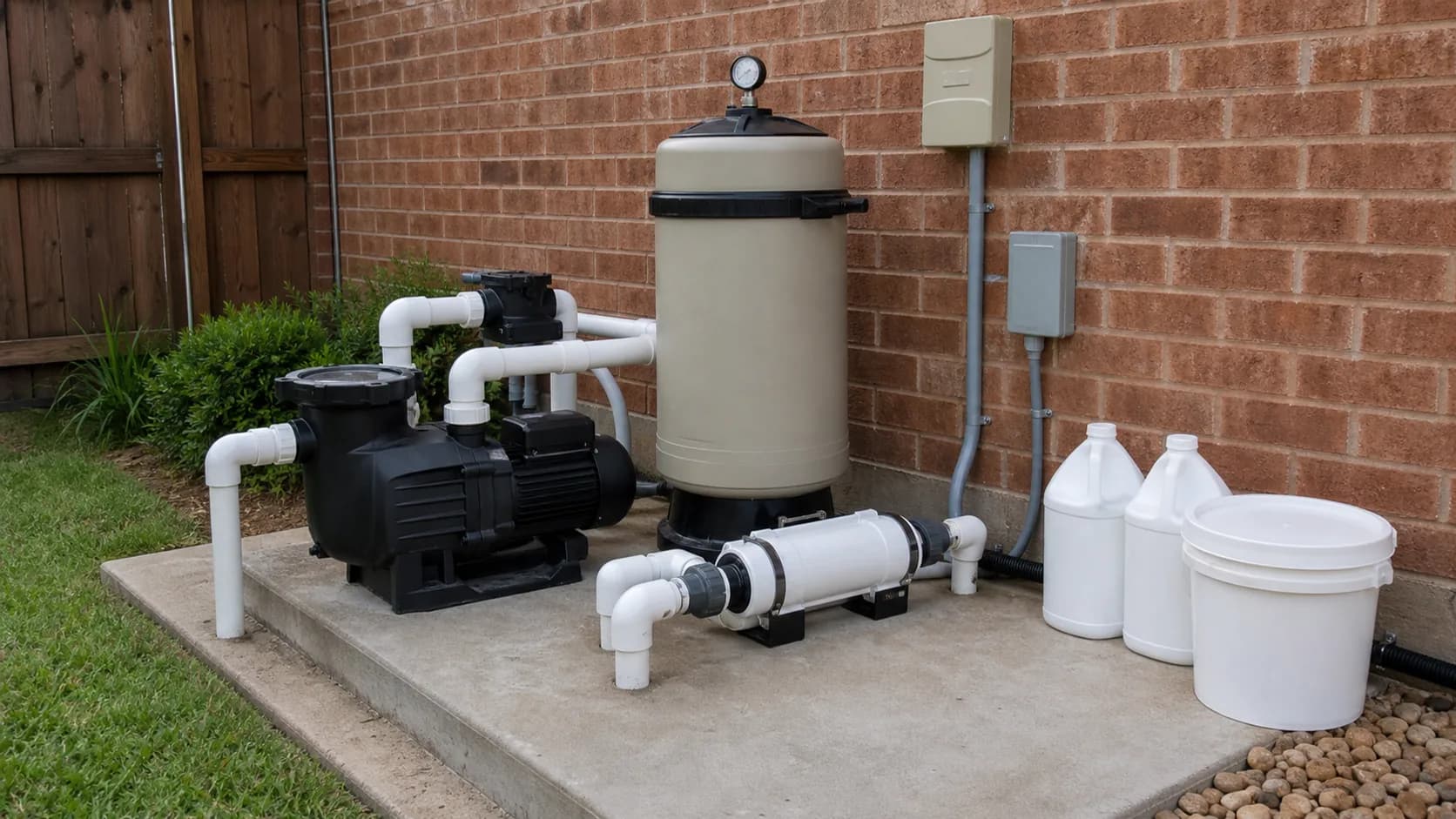
What Your Monthly Pool Bill Actually Covers, and What It Does Not
Three quotes at $135, $165, and $210 look like a clear decision until you find out they are written in three different billing models. Here is how to compare them properly.
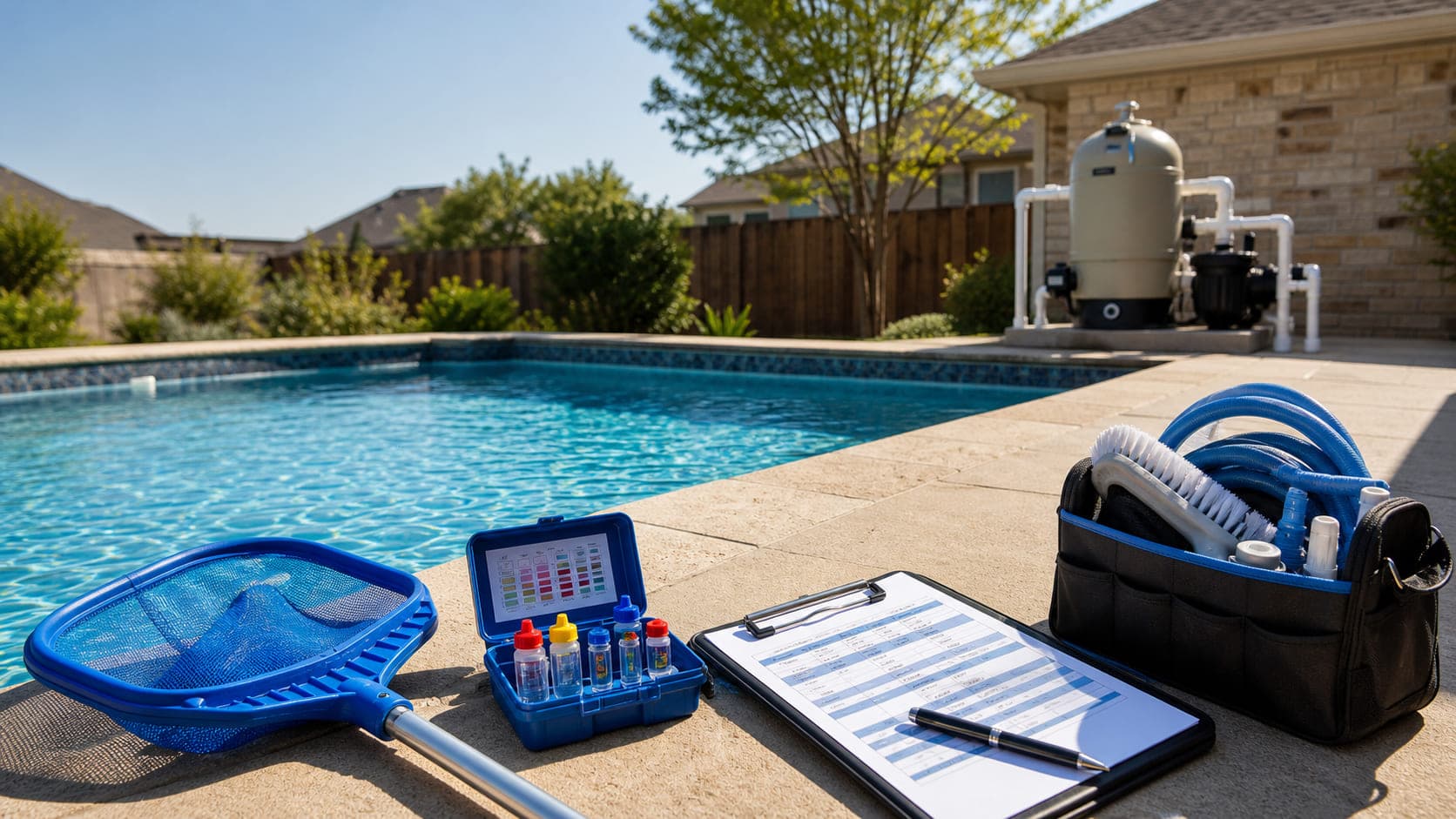
How Much Does Pool Cleaning Cost in Plano, TX? (2026 Pricing Guide)
Most Plano pool companies hide their prices behind a phone call. Here is exactly what weekly service, one-time cleans, and green pool recovery actually cost in 2026, and what drives the number up or down.