How Collin County Clay Soil Shows Up in Your Pool

Austin Andrews
Founder, True Texan Pools
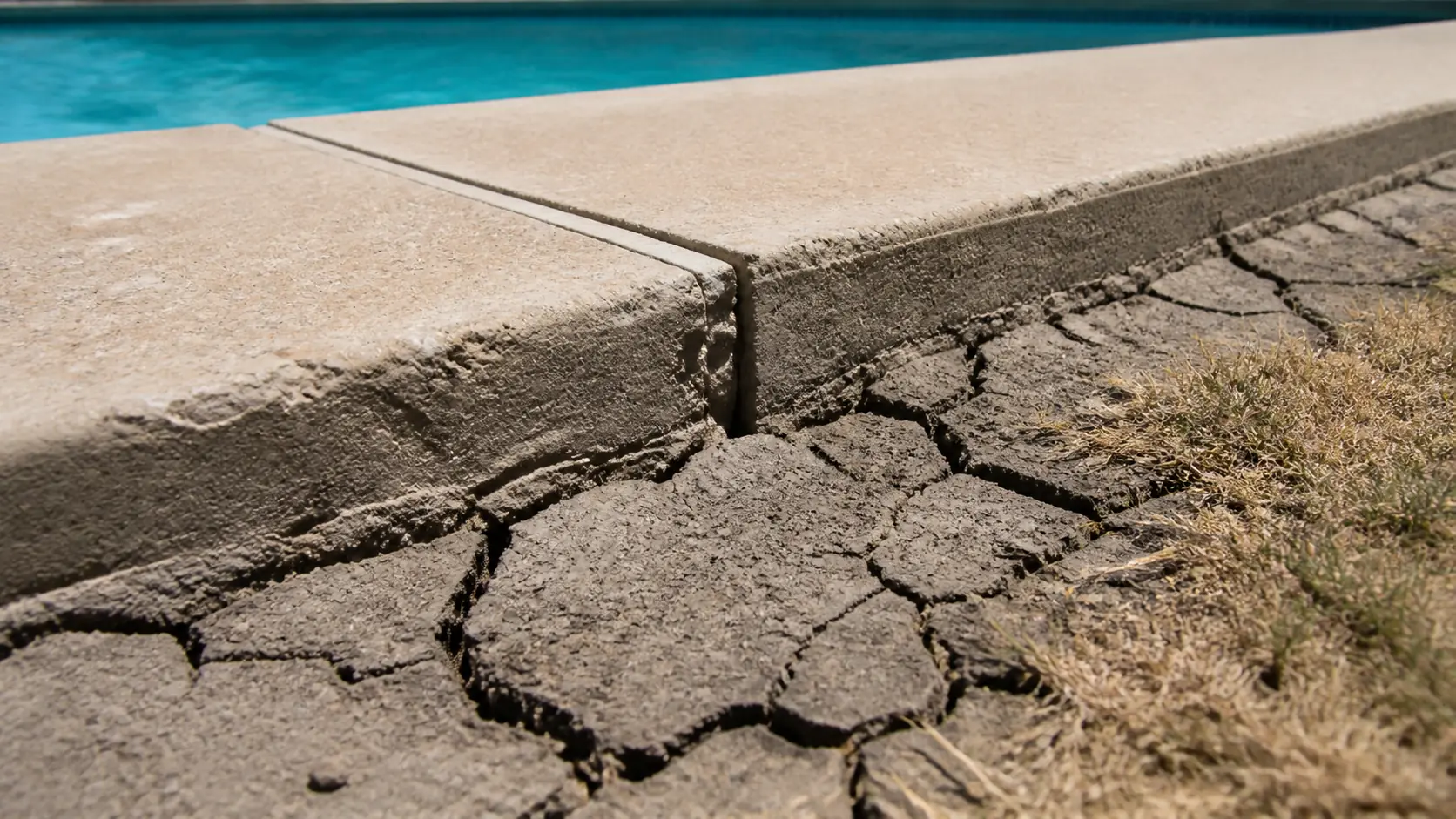
The ground under your pool moves. Collin County sits on expansive clay that swells when it gets wet and shrinks hard when it dries, and it does that every year, in both directions. That single fact explains the cracked deck joint, the coping that lifted, the plumbing leak that appeared out of nowhere, and the reason nobody local should ever fully drain a pool. Here is what the soil actually does and what to do about each symptom.
Almost every North Texas pool article mentions clay soil in a sentence and moves on. It deserves more than that, because it is the local condition that produces the most expensive pool failures in this county, and because it is the reason a piece of general advice that is perfectly sound in Phoenix or Orlando can wreck a pool here.
What expansive clay actually does
The clay minerals in this region absorb water into their structure and physically expand. Dry them out and they contract, opening fissures. That is not a slow geological process, it is an annual cycle you can watch: the ground cracks visibly in an August drought and closes up after a wet spring.
Two forces come out of that, and they act in opposite directions.
- Swelling pressure, when it is wet. Expanding clay pushes upward and inward on anything buried in it. This is what lifts decks and, on an empty pool, what can lift the shell.
- Settlement and voids, when it is dry. Shrinking clay withdraws support from under slabs and pipes, leaving them spanning gaps they were never designed to span.
The damage comes from the cycling rather than from either state. A pool that stayed permanently wet or permanently dry would be far happier than one that does both every year.
The one that costs a pool: never drain it
This is the single most important paragraph on the page, and it overrides plenty of otherwise sensible general advice you will read online.
A pool shell full of water is heavy, and that weight is what holds it down against the groundwater in the surrounding soil. Empty it and the weight is gone while the groundwater pressure is not. In saturated expansive clay, that pressure can lift a plaster pool out of the ground, or crack it, and both are structural repairs rather than resurfaces. Fiberglass pools are, if anything, more vulnerable to floating than concrete ones.
If you take one thing from this article
Do not drain a pool in Collin County to fix chemistry, to clean it, or to start fresh. Never drain after heavy rain, when the surrounding clay is at its most saturated. Every problem that people drain a pool to solve, including very high calcium hardness and very high cyanuric acid, can be solved with staged partial exchanges while the pool stays weighted. A genuine full drain, when a resurface makes one necessary, is a job done with a hydrostatic relief valve and somebody watching the water table.
A second reason, unrelated to soil: exposed wet plaster crazes within hours in a Texas afternoon. So even a successful drain in dry conditions can cost you the surface. Hard water and high cyanuric acid both cover the staged exchange approach that replaces draining.
Decks and coping: the visible symptom
The deck moves first because it is a shallow slab sitting directly on the most active layer of soil, and because it has no water weight holding it down.
| What you see | What is happening | How urgent |
|---|---|---|
| A stepped gap at an expansion joint | Differential movement, one section settled or lifted | Monitor. Normal here, but photograph it dated |
| Hairline cracks across the deck | Shrinkage and ordinary movement | Cosmetic, seal them to keep water out of the subgrade |
| Coping stones lifting or separating | Deck movement pulling away from the shell | Seal the joint promptly, water getting behind it accelerates everything |
| A gap opening between deck and coping | The mastic joint has failed | Fix it. This joint exists precisely to absorb this movement |
| Deck sloping toward the pool where it did not | Settlement on the outside edge | Worth attention, it changes drainage |
| A crack running from the pool wall into the deck | Possible structural movement of the shell | Get it looked at. This is the one that matters |
The mastic joint between the coping and the deck deserves a specific mention, because it is cheap, it is the designed sacrificial element, and almost nobody maintains it. It is there to flex so that the deck and the shell can move independently. When it fails, surface water runs straight down behind the coping into the soil against the shell, which is exactly the water you do not want there. Resealing it is inexpensive and it is genuinely preventive work.
Plumbing: the leaks nobody caused
Rigid PVC does not enjoy being flexed. Underground pool plumbing in this county is worked on every year by soil that expands and contracts around it, and the stress concentrates at the least forgiving points: glued joints, fittings, and where a pipe passes from soil into the concrete shell or slab.
Two patterns worth recognizing.
- Leaks appear after a swing, not during it. A very wet spring following a very dry summer is the classic trigger, because the ground moves furthest and fastest at the transition.
- Freeze damage and soil movement compound. A joint already stressed by movement is the joint that splits on a hard night. Post-freeze inspection covers that side.
If your pool is losing water, start with the bucket test, because half an inch a day of evaporation is normal here and a large share of suspected leaks are not leaks. If it is real, leak detection costs in DFW covers what finding it involves.
An underground leak makes the soil problem worse
This is the feedback loop worth understanding. Water escaping underground saturates the clay locally, which swells, which moves the deck and stresses the plumbing further, and which also washes fine material out from beneath slabs and coping, leaving voids. That is why a slow leak that seems tolerable is not: the damage it does to the ground does not reverse when the pipe is fixed.
The shell itself
Concrete pools here are generally built for this, with reinforcement designed against local soil conditions, which is why shell failure is much rarer than deck movement. When it does happen, there are four tells.
- A crack that runs continuously from inside the pool out into the deck.
- A crack that is visibly wider at one end than the other.
- Water loss that continues at the same rate whether the pump is on or off.
- Tile popping off in a line rather than in scattered places.
Distinguish those from surface crazing, which is a fine spiderweb pattern in the plaster itself, does not leak, and is cosmetic. Craze marks are extremely common on older plaster and are not a structural finding.
What actually reduces the damage
You cannot change the soil. You can absolutely change how much its moisture content swings, and that is the whole mitigation.
- Keep drainage away from the pool. Downspouts should discharge well clear of the deck rather than beside it. A downspout emptying next to the coping is a machine for creating local swelling.
- Maintain the mastic joint. The cheapest preventive maintenance available on a pool in this county.
- Water the perimeter during a drought.Counter-intuitive, and it is the same advice foundation engineers give for houses here. Consistent moisture beats a dry-then-soaked cycle. Soaker hoses at a distance from the deck, run modestly, keep the clay from shrinking hard. Check your city’s current watering restrictions first, since these change with drought stage.
- Seal deck cracks so surface water does not reach the subgrade through them.
- Mind large trees near the deck. A mature tree withdraws a great deal of moisture from the soil in summer, and that local drying is a real contributor to differential settlement.
- Fix leaks quickly rather than living with them.
Documenting it, which is worth more than it sounds
Movement in clay is seasonal, so a gap that looks alarming in September may close in April. The only way to tell genuine progressive movement from an annual cycle is a record.
Photograph the deck joints, the coping line, and any crack twice a year, in late summer and in early spring, from the same positions, with something in frame for scale. Two years of that turns an anxious guess into an answer, and it is exactly what any structural engineer will ask for if you ever need one.
Where this stops being a pool company’s job
Worth being straightforward about the boundary. Deck sealing, mastic joints, leak investigation, and everything to do with the water are pool work. A shell that is genuinely moving, a crack running from the pool into the house-side structure, or a deck that has dropped significantly is a structural engineering question, and the right answer is an engineer rather than a contractor with an opinion.
What we will do is tell you honestly which of those you are looking at, check whether the pool is genuinely losing water, and reseal what should be sealed. An equipment inspection covers the pad and the plumbing you can reach, and leak detection covers confirming whether water loss is real.
One last thing, because it is the cheapest advice on this page and nobody follows it. Photograph your deck joints and your coping line twice a year, from the same spots, in late summer and early spring. Clay moves seasonally, so a gap that looks alarming in September may close by April. Two years of dated photographs is the difference between knowing you have a problem and worrying that you might.
Frequently Asked Questions
Can I drain my pool in Collin County?
Not safely, and it is the most expensive mistake available here. A pool full of water is held down by that weight against groundwater pressure in the surrounding soil. Empty it and in saturated expansive clay that pressure can lift the shell out of the ground or crack it, which is a structural repair rather than a resurface. Never drain after heavy rain. Staged partial exchanges solve every chemistry problem a drain would.
Why does my pool deck keep cracking?
Expansive clay changes volume with moisture. It swells when wet and pushes upward, and it shrinks when dry and withdraws support, leaving slabs spanning voids they were never designed to span. The deck moves first because it is a shallow slab on the most active layer of soil with no water weight holding it down. Hairline cracks are cosmetic; a stepped gap at a joint is worth photographing and monitoring.
Does clay soil cause pool leaks?
It contributes to them. Rigid PVC does not enjoy being flexed, and annual soil movement concentrates stress at glued joints, fittings, and where a pipe passes from soil into concrete. Leaks here cluster after a very wet spell following a very dry one, because that is when the ground moves furthest and fastest. Freeze damage and soil movement also compound: a joint already stressed is the one that splits.
What is the mastic joint and why does it matter?
The flexible seal between the coping and the deck. It is there deliberately, so the deck and the shell can move independently, and it is the cheapest preventive maintenance on a pool in this county. When it fails, surface water runs straight down behind the coping into the soil against the shell, which is exactly the water you do not want there. Resealing it is inexpensive.
Should I water the soil around my pool during a drought?
Counter-intuitively yes, and it is the same advice foundation engineers give for houses here. The damage comes from the swing between wet and dry rather than from either state, so consistent moisture beats a dry-then-soaked cycle. Soaker hoses run modestly at a distance from the deck keep the clay from shrinking hard. Check your city's current watering restrictions first, since these change with drought stage.
When is a pool crack structural rather than cosmetic?
Surface crazing is a fine spiderweb pattern in the plaster itself, does not leak, and is very common on older finishes. Suspect something structural when a crack runs continuously from inside the pool into the deck, when it is visibly wider at one end, when water loss continues at the same rate whether the pump is on or off, or when tile is popping off in a line. That is an engineering question rather than a contractor one.
Ready to stop thinking about your pool?
True Texan Pools keeps your water swim-ready year-round across Plano and all of DFW. Clear pricing, no contracts, and a photo report after every visit. Austin handles every job personally.
Keep reading
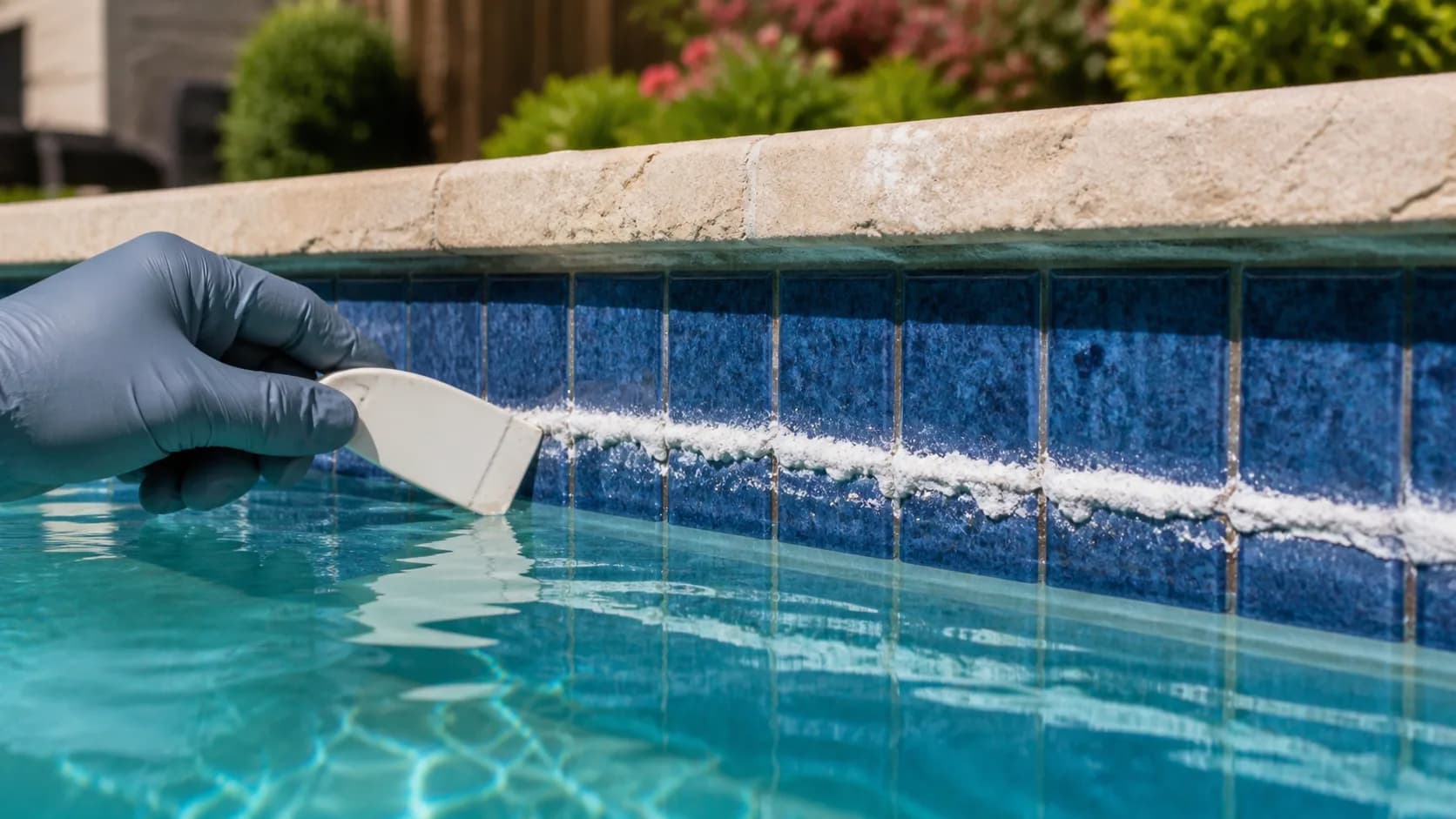
Calcium Scale on Pool Tile: Why It Keeps Coming Back
You can scrub the tile, and you should, but unless you deal with what put the scale there it comes back before the season is out. In DFW, that means understanding why your calcium hardness only ever goes up.
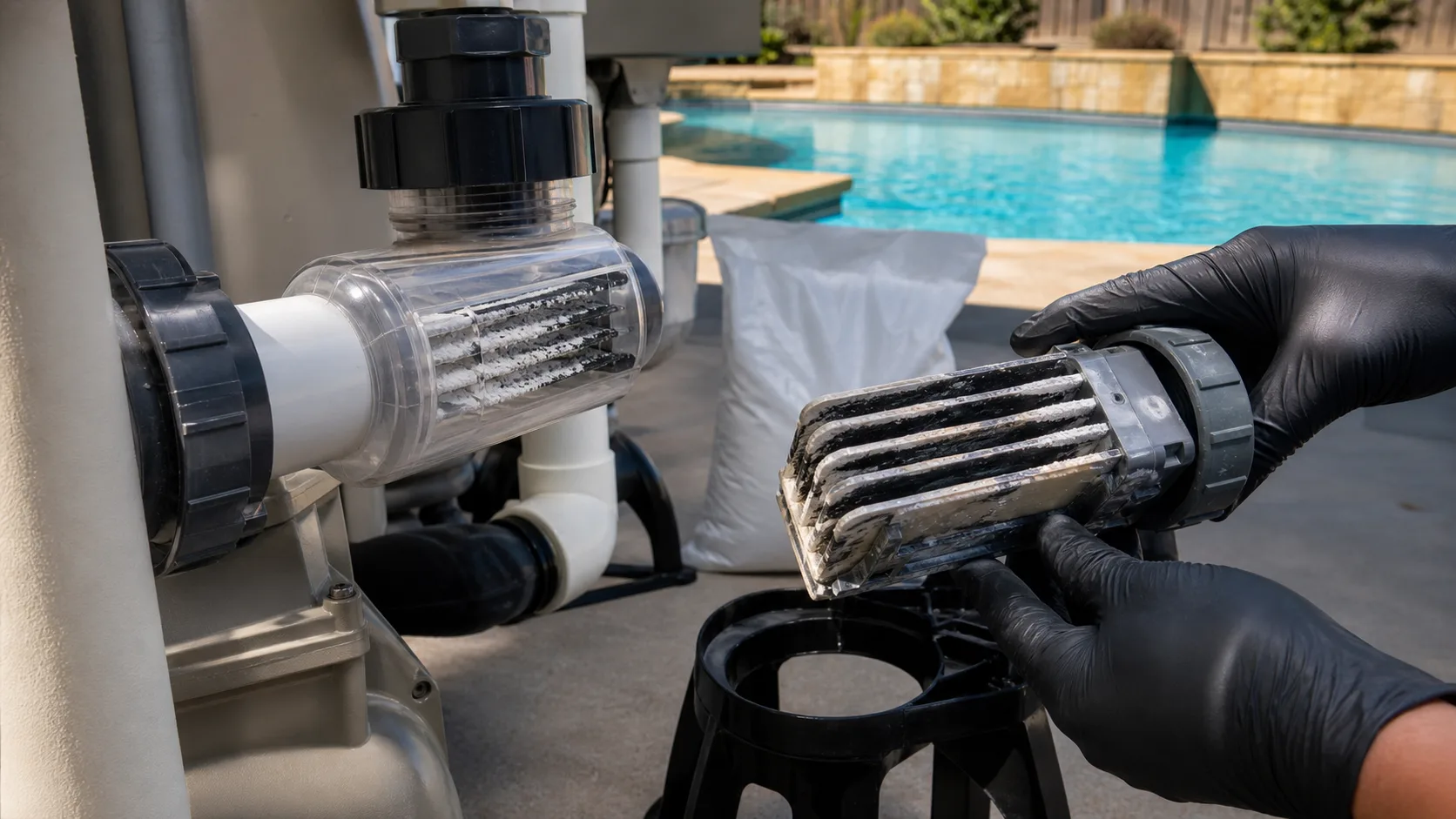
Salt Water Pool Maintenance in North Texas: What Nobody Tells You
Salt pools are not chlorine-free and not lower maintenance. They trade weekly chemical handling for a standing requirement to control pH and keep the cell clean, which is harder here than most places.