What Pool Resurfacing Costs in DFW, and When You Actually Need It

Austin Andrews
Founder, True Texan Pools
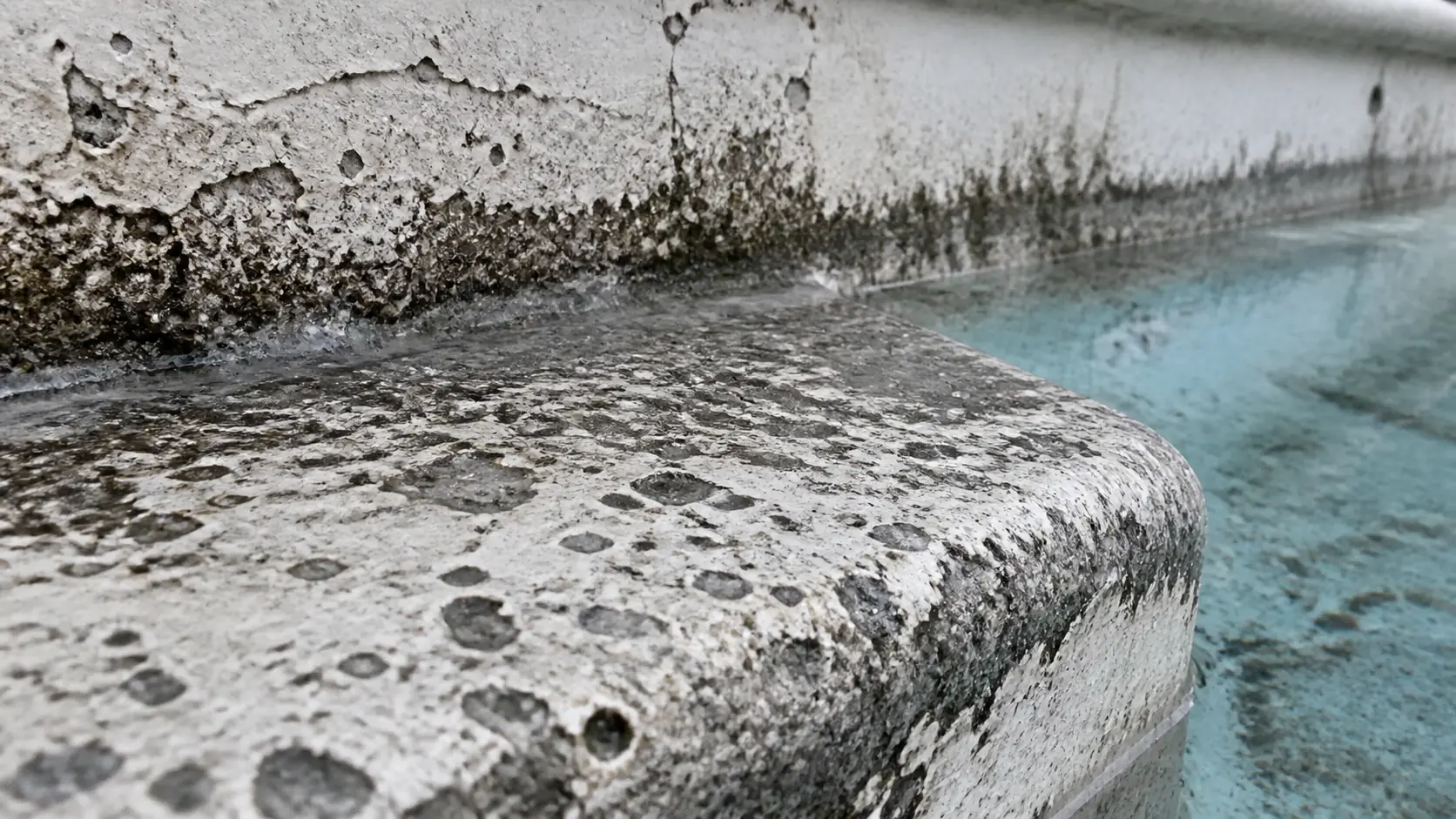
Plaster is a wear item. It has a service life the way a roof does, it fails gradually rather than suddenly, and the pool it’s on will keep working for years after it starts looking bad. That combination is why resurfacing quotes land as a shock: the number is five figures on many DFW pools, nobody budgeted for it, and the pool doesn’t seem broken. Here is what the finishes actually cost around here, how long each one lasts, and how to tell a surface that’s genuinely finished from one that just needs cleaning.
Almost every pool in Plano, Frisco, and McKinney built in the late 1990s and early 2000s is now at or past the age where its original finish is due. That’s a very large number of pools reaching the same milestone at the same time, which is why this quote is circulating in so many neighborhoods at once and why the quality of the crews doing the work varies as widely as it does.
What resurfacing actually is
The concrete shell is the pool. What you see and touch is a thin interior finish bonded to it, and that finish is the part that wears. Resurfacing means chipping the old finish off down to sound concrete, prepping and bonding, and applying a new one. On a properly done job the shell itself is untouched and unchanged, which is why a forty year old gunite pool with a new finish is a perfectly good pool.
What it is not is a repair to the structure. If the shell has a structural crack, that gets addressed as its own job before anyone talks about finishes. A resurface over an unresolved structural problem is money applied to the symptom, and the new finish will telegraph the crack back through within a season or two.
The finishes, what they cost, and how long they last
The ranges below are what we see quoted in Collin County for a typical residential pool in the 400 to 600 square foot surface range, which covers most backyard pools here. They include the standard drain, chip out, prep, application, and startup. They do not include tile, coping, structural work, or plumbing surprises.
| Finish | Typical installed cost | Service life here | What you’re buying |
|---|---|---|---|
| White plaster | $5,500 to $9,000 | 7 to 12 years | The cheapest way back to a clean pool. Classic light blue water. Stains and etches most readily. |
| Colored plaster | $6,500 to $10,000 | 7 to 12 years | Same material, pigmented. Darker colors show mottling and trowel marks more, not less. |
| Quartz aggregate | $8,500 to $14,000 | 10 to 15 years | Plaster with quartz through it. Harder, more stain resistant, still smooth underfoot. |
| Pebble aggregate | $11,000 to $20,000 | 12 to 20 years | The most durable common choice. Textured, hides stains and imperfections, rougher on feet. |
| Polished or fine pebble | $14,000 to $25,000 | 15 to 20 years | Pebble ground smooth. Pebble durability with a plaster feel, at a real premium. |
| Full tile interior | $25,000 and up | Decades | Effectively permanent, and priced accordingly. Rare on residential pools here. |
Why the ranges are wide
Three things move a quote inside its band: surface area, access, and what the crew finds after the chip out. A pool with a spa, a beach entry, or a lot of steps and benches has considerably more square footage than its footprint suggests. A backyard reachable only through a five foot gate turns a machine job into a wheelbarrow job. And a shell that needs significant patching before bonding adds a day and materials. A quote given over the phone without any of those known is a guess.
The cost per year is the number that matters
Run the arithmetic across the service life rather than comparing sticker prices. White plaster at $7,000 over ten years is $700 a year. Pebble at $15,000 over eighteen is about $830. The gap between the cheapest and the most durable common finish is far smaller than it looks in the quote, and it narrows further once you count the second drain you avoid, which in Collin County clay is a risk cost as well as a money cost.
The case for white plaster is a genuine one when you may sell in the next few years, or when cash now matters more than cost over time. The case against it is that you’ll do this again sooner, and the second drain is not free.
How to tell a finished surface from a dirty one
Plenty of pools get quoted for resurfacing when what they need is a proper clean and a chemistry correction. The distinction is worth several thousand dollars, so it’s worth ten minutes on your knees at the edge with your hand in the water.
| What you see or feel | Usually means | Resurface? |
|---|---|---|
| Rough, sandpaper texture underfoot | Etching from persistently aggressive water, or age | Eventually yes |
| Exposed grey aggregate through white plaster | The finish has worn through in that area | Yes |
| Chalky white residue on your hand | Plaster breaking down at the surface | Yes, though not urgently |
| Small hollow-sounding areas, popping tiles | Delamination from the shell | Yes, and get it looked at |
| Brown, green, or grey discoloration | Staining, organic or metal | No, treat the stain |
| Mottled or blotchy color | Curing variation from the original job | No, cosmetic |
| Grey ring at the waterline | Calcium scale and oils | No, clean it |
| Fine spiderweb crazing | Normal plaster shrinkage cracking | No, cosmetic and common |
Metal stains in particular get mistaken for a dead surface constantly, because a rust-brown blotch on a white wall reads as damage. It usually isn’t, and it usually comes off. We separate the types and their treatments in the guide to metal stains and what causes them. Calcium at the waterline is the same story from a different angle, covered in calcium scale on pool tile.
About acid washing
An acid wash strips a layer of plaster to reveal clean material underneath. It works, it looks dramatic, and it consumes part of what remains of your finish. On a surface with years left it can be a reasonable choice once. On a thin, etched, near-the-end surface it can take the pool from needing a resurface in three years to needing one in one. Anybody proposing it should be telling you how much life it costs, not just how good it will look.
What kills plaster early in North Texas
Plaster is a calcium-based material sitting in water, and water that wants more dissolved calcium takes it out of the walls. That is the whole mechanism, and it’s why two identical pools built the same year can be six years apart on their finishes.
- Low pH and low alkalinity held for long stretches. Aggressive water etches. A single bad week is nothing. A summer of it is measurable.
- Chasing high calcium with acid. Our fill water is hard, so calcium climbs on its own, and the reflex to push pH down constantly is what turns hardness into surface damage. The hard water guide covers the balance that actually holds here.
- Tablets sitting in a skimmer or a floater in one spot. Trichlor is strongly acidic. Parked over the same section of plaster for years it etches a visible patch, and it drives the cyanuric acid problem that is discussed in liquid chlorine versus tabs.
- A pool left off through a green period. Algae holding to a surface and then being killed and brushed off repeatedly wears the surface faster than clear water ever will.
- Freeze events with water in the plumbing. Not a plaster failure as such, but the repairs that follow can involve the surface. See freeze protection.
None of that is exotic. It’s the ordinary consequence of water sitting slightly out of balance for a long time, which is precisely the thing a weekly chemistry routine exists to prevent. The plaster bill is where neglected chemistry finally shows up as money.
What else to do while the pool is empty
This is the part people regret. Draining a pool in Collin County clay carries real risk, and doing it twice doubles that risk for no reason. Anything that requires an empty shell should be on the list now.
- Waterline tile. Almost always replaced with the finish, partly because the new plaster terminates against it and partly because matching a twenty year old tile later is a losing game. Budget $3,000 to $8,000 depending on tile and linear footage.
- Coping. Only if it’s failing or you want the look changed. It can be done later without draining, so it’s the one item that genuinely defers.
- Main drain covers. Anti-entrapment covers carry a service life and get brittle. Replacing them dry costs a fraction of what a diver charges, and the safety argument stands on its own. See pool safety requirements in Texas.
- Light niches and conduit. A light that has been out for two years is much easier to deal with now. The math on that is in pool light replacement costs.
- Return and skimmer fittings, and any known crack. Cheap while dry, awkward wet.
How to read a resurfacing quote
The variance between quotes on the same pool is often forty percent, and that spread is mostly in what the low quote left out. Ask for the following in writing.
- Square footage, and how it was measured. If nobody measured, the quote is a category rather than a price.
- Chip out or bond coat. Applying new plaster over old with a bonding agent is faster and cheaper and has a much worse track record. Full chip out to sound concrete is the durable version.
- Who handles the drain, and what the plan is for groundwater. The quote should mention the hydrostatic relief valve. If it doesn’t, ask. The reasons are in draining a pool in Collin County clay.
- How long the pool will be empty. A number in days, not a shrug.
- Startup. New plaster needs a specific brushing and chemistry regime for the first month, and a job that ends when the truck leaves is not finished. Confirm who does it and for how long.
- The warranty, and what voids it. Most exclude damage from water chemistry, which is fair, and which is another argument for having the chemistry handled by somebody who documents readings.
Austin’s Tip
Ask each bidder for two addresses in your city where they resurfaced three or more years ago, not last month. Every new finish looks good. What separates crews is how the surface looks in year three, and any company doing volume locally can produce two addresses without difficulty.
The first 28 days after new plaster
New plaster is still curing when the water goes back in, and it releases calcium into the pool while it does. This period is not vague folklore, it is a defined procedure: the National Plasterers Council sets the start-up window at 28 days, on the basis that the bulk of the cement in the plaster cures inside it, and it warns that the finish is at its most vulnerable to staining, scaling, and discoloration during exactly that stretch. Most of the ruined finishes we see were ruined in month one, by an owner who was never told any of this.
- Brush frequently and thoroughly from day one. The NPC procedure is built around removing plaster dust before it can settle and set, and this is the single most important thing anybody does in the first fortnight.
- No wheeled vacuum or automatic cleaner until the water is balanced and the plaster dust cloudiness is gone, which the NPC puts at roughly 7 to 10 days after fill. A robot dropped into a week-old pool leaves tracks in the finish.
- Leave the heater off for the full 28 days. This one surprises people and it is explicit in the procedure.
- Expect pH to climb persistently and plan on correcting it repeatedly rather than once.
- Hold off on salt in a saltwater pool for the period the applicator specifies, which is commonly the same 28 days.
- Keep the pump running long hours through the cure, which is a different schedule than the one in how long to run your pump.
We handle plaster startups for customers who are having work done by a resurfacing crew, because the two jobs are genuinely different trades and the handoff between them is where finishes get damaged in their first month. If you’re getting quotes and want someone reading the water through the cure, that’s part of weekly service.
Where we sit on resurfacing
We do not resurface pools. That is a specialist trade with its own crews and its own equipment, and a weekly service company that tells you otherwise is subcontracting it and adding a margin. What we do is tell you whether you actually need it, which is a genuinely useful thing to hear from somebody who is not quoting the job.
Budget for plaster the way you budget for a roof: it’s coming, roughly on a schedule, and the only real question is whether you get the full life out of it. Choose the finish on cost per year rather than sticker price. Do everything that needs an empty shell in one visit. Check whether what you’re looking at is a stain before you pay to remove a wall. And whatever finish goes on, the thing that decides whether it lasts seven years or fourteen is the chemistry it sits in for the next decade, which is the one part of this we are actually responsible for.
Frequently Asked Questions
How much does it cost to resurface a pool in DFW?
For a typical 400 to 600 square foot residential pool, white plaster runs $5,500 to $9,000, quartz aggregate $8,500 to $14,000, and pebble $11,000 to $20,000. Polished pebble and full tile interiors go higher. Those figures cover the drain, chip out, prep, application, and startup, and exclude tile, coping, structural work, and anything found after the old finish comes off.
How long does pool plaster last in Texas?
Standard white plaster typically gives roughly 7 to 12 years here, quartz 10 to 15, and pebble 12 to 20. The spread within each range is mostly water chemistry. Two identical pools built the same year can be six years apart on their finishes, because plaster is a calcium-based material and water held slightly aggressive for long stretches dissolves it.
Is pebble worth the extra cost over plaster?
Compare cost per year rather than sticker price. White plaster at $7,000 over ten years is $700 a year; pebble at $15,000 over eighteen is about $830. The gap is far smaller than the quotes suggest, and it narrows further once you count the second drain you avoid, which in Collin County clay is a risk cost as well as a money cost. White plaster makes sense if you may sell soon or cash now matters more.
How do I know if my pool needs resurfacing or just cleaning?
Rough sandpaper texture, chalk on your hand, exposed grey aggregate showing through white plaster, and hollow-sounding delaminated patches all mean the surface is going. Discoloration, mottled color, a grey waterline ring, and fine spiderweb crazing are cosmetic or treatable. Metal staining in particular gets mistaken for a dead surface constantly, and it usually lifts off with an ascorbic acid treatment.
What should be done while the pool is drained for resurfacing?
Waterline tile almost always, since the new plaster terminates against it and matching twenty year old tile later is a losing game. Also main drain covers, any light niche or conduit work, return and skimmer fittings, and any known crack. Coping is the one item that genuinely defers, because it can be replaced later without draining. Everything else needs an empty shell, and a second drain in this soil is not a small thing.
What do I have to do after new plaster goes in?
Brush the entire surface daily for the first one to two weeks, which is the single most important thing and is not optional. Expect pH to climb persistently through the cure and plan on correcting it repeatedly. Hold off on salt for the period the applicator specifies, commonly around a month, run the pump long hours, and keep both swimmers and any pool cleaner out until startup is signed off.
Work it out for your pool
All toolsFree, instant, and no email needed to see the answer.
Ready to stop thinking about your pool?
True Texan Pools keeps your water swim-ready all year, across Plano and the rest of DFW. Clear pricing, a photo report after every visit, and Austin doing every job himself.
Or skip the conversation entirely and read the whole price list, priced by pool size, with no email required.
Keep reading
What Your Monthly Pool Bill Actually Covers, and What It Does Not
Three quotes at $135, $165, and $210 look like a clear decision until you find out they’re written in three different billing models. Here is how to compare them properly.
How Much Does Pool Cleaning Cost in Plano, TX? (2026 Pricing Guide)
Most Plano pool companies hide their prices behind a phone call. Here is exactly what weekly service, one-time cleans, and green pool recovery actually cost in 2026, and what drives the number up or down.