Variable Speed Pumps: The Texas Math, and the Rebate That Does Not Exist

Austin Andrews
Founder, True Texan Pools
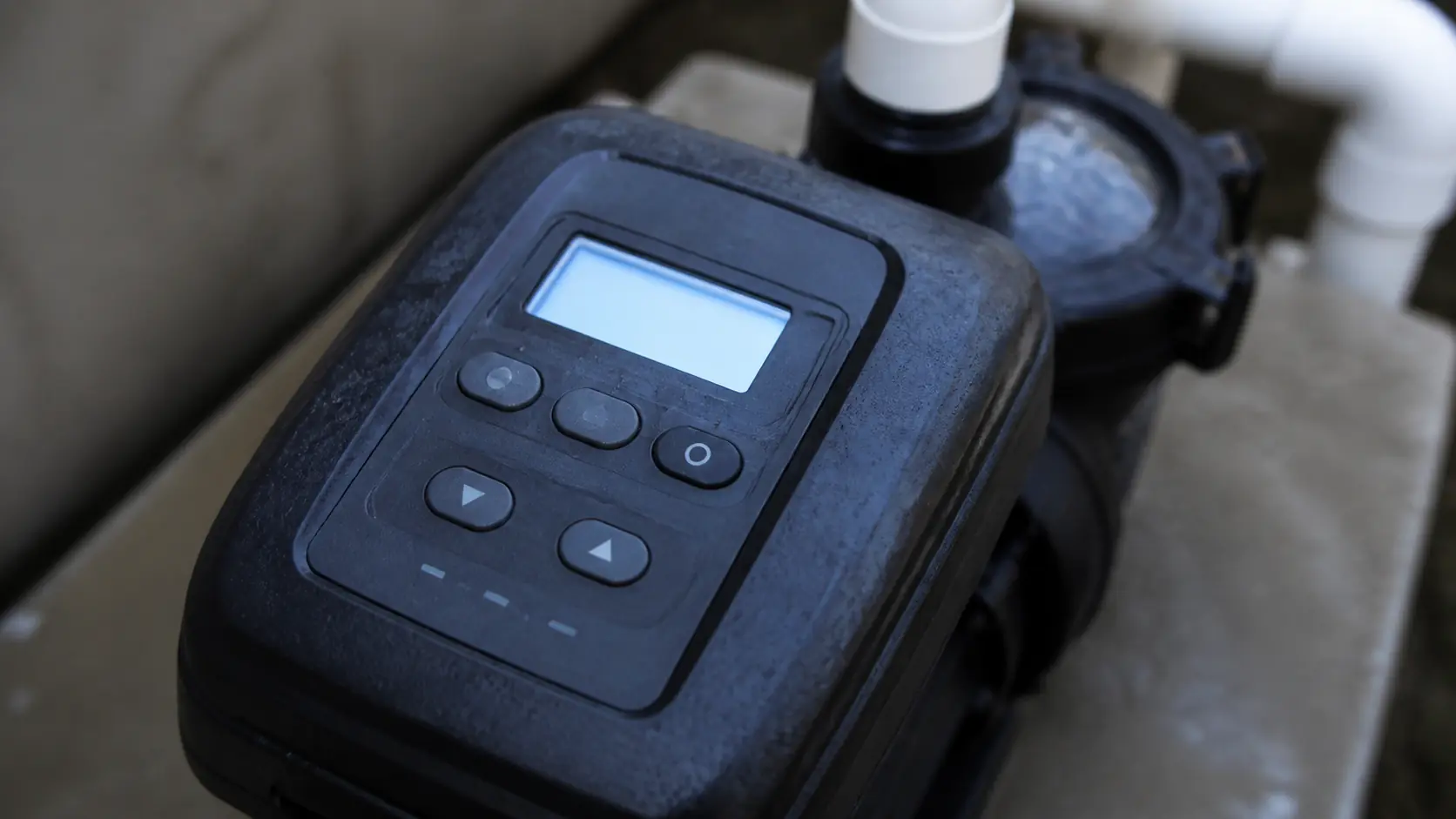
The case for a variable speed pump rests on one piece of physics: flow falls roughly in proportion to speed, but power draw falls with roughly the cube of it. That is why slowing a pump down and running it longer moves the same water for a fraction of the electricity. What makes the decision different in North Texas is that we run twelve months a year, and that there is no utility rebate here waiting to make the sums easier. Here is the honest math.
Two claims get made about variable speed pumps and only one of them is reliably true. The true one is that they use dramatically less electricity for the same result. The unreliable one is any specific payback figure, because payback depends on your electricity rate, your pool volume, the pump you have now, and how many hours you actually run. Any article quoting you a flat number of months without asking about all four is guessing.
The physics, in one paragraph
A centrifugal pump follows a set of relationships known as the affinity laws. Flow rate scales roughly with speed. Head pressure scales roughly with the square of speed. Power scales roughly with the cube of speed.
That third relationship is the whole argument. Drop a pump from 3,450 rpm to 1,725 rpm and you get about half the flow for about one eighth of the power. To move the same total volume of water you run twice as long, so you spend two times one eighth, which is one quarter. The same turnover for a quarter of the electricity, with no change to the pool at all.
| Speed | Approximate flow | Approximate power | Energy for the same total volume |
|---|---|---|---|
| Full | 100% | 100% | 100% |
| Three quarters | About 75% | About 42% | About 56% |
| Half | About 50% | About 12.5% | About 25% |
| One third | About 33% | About 4% | About 11% |
The figures are rounded and real systems deviate, particularly because plumbing losses do not scale perfectly, but the shape is right and it is why the industry moved.
Slower also filters better
The energy saving gets the attention, but the filtration improvement is real and less discussed. Water moving slowly through a filter spends longer in contact with the media, which catches finer particles. A pool run long and slow is generally clearer than the same pool run short and fast, which is a second reason the schedule matters as much as the hardware.
Why the Texas math is different
We run all year
A pool that is closed from October to May accumulates savings for seven months a year. Ours run twelve, because a North Texas pool is not winterized and the winter schedule is a freeze defense. More running hours means the savings accrue faster, which shortens payback compared with a northern pool. Whether to run through winter covers that schedule.
Our summers demand more turnover
August water in the high 80s consumes chlorine fast and grows algae faster, and the answer is more circulation. On a single-speed pump, more turnover means more expensive hours. On a variable speed pump, it means longer hours at a low speed, which is close to free. The pump that costs the most to own is the one that makes you choose between water quality and the electricity bill.
There is no rebate to wait for
This is the part nobody local seems to have written down. Owners regularly defer the upgrade expecting a utility incentive. Oncor, which delivers electricity to most of Collin County, publishes no residential variable-speed pool pump rebate. Entergy Texas does run a distributor program worth up to $350 per qualified pump, but Entergy serves a different part of the state.
So the honest position is that in most of the DFW area, the upgrade justifies itself on the energy math alone or it does not justify itself at all. For a year-round pool with an old single-speed pump, it generally does. Worth one check of your own provider’s current offers before you buy, since programs do change, but do not build a plan around one appearing.
The regulation that has already changed the choice
Under the Department of Energy’s September 2023 final rule for dedicated-purpose pool pump motors, variable-speed control is required for motors from 1.15 to 5 total horsepower as of 29 September 2025, and for motors from 0.5 up to 1.15 THP as of 28 September 2027.
Two things this does and does not mean. It does not mean anybody will make you replace a working pump. It does mean that these standards govern what manufacturers may produce, so when your single-speed pump fails, a like-for-like replacement may simply not be on the shelf. In practice the decision is drifting from whether to upgrade toward when, and doing it on your schedule is cheaper than doing it on the pump’s. Repair or replace covers the wider decision.
How to actually work out your own number
Four inputs, all of which you can get in an afternoon.
- Find your pump’s power draw. The motor label gives horsepower and often amps. A single-speed 1.5 horsepower pump commonly draws somewhere around 1.5 to 2 kW in service. If the label is bleached blank, this is why photographing your pad is worth doing before the sun finishes the job.
- Find your electricity rate. Take the total bill divided by kilowatt hours used rather than the headline rate, because delivery charges are real money.
- Count your real running hours. Not what you intended, what the timer actually does, averaged across summer and winter.
- Multiply, then apply the cube. Current annual cost is power times hours times rate. The variable speed equivalent, delivering the same daily turnover, is roughly a quarter of that if you run at half speed for twice as long.
Set that annual saving against an installed replacement cost, commonly in the range of $1,200 to $2,500 in this area depending on the pump and the plumbing, and you have your own payback rather than somebody else’s.
The mistake that erases the entire saving
A variable speed pump installed and then left on its highest speed saves nothing at all, and we see it regularly. It usually happens for a reason that sounds sensible at the time: the automatic cleaner needs more flow, or the spa jets do, or somebody was told the pool was not turning over. The fix is a schedule with different speeds for different jobs, which is exactly what the pump was bought for. If nobody programmed yours, you own an expensive single-speed pump.
Programming it properly
A workable schedule for a normal North Texas pool looks like this, adjusted to your own turnover.
- A long low-speed block covering most of the day, doing the filtration and the circulation. This is where nearly all the savings live.
- A short higher-speed block if you have a suction-side or pressure-side cleaner, a skimmer that needs real flow, or a heater with a minimum flow requirement.
- A spa or feature speed on demand rather than on the schedule.
- Freeze protection enabled and tested, which overrides everything above on the nights it matters.
There is a floor on how slow you can go, set by whatever component on your pad needs the most flow, usually a heater or a cleaner, and by the point at which the skimmers stop skimming. The run time guide covers finding that floor and calculating turnover.
When a variable speed pump is not the right purchase
Three cases where the honest answer is to wait.
- Your current pump is already two-speed or variable and simply programmed badly. Fix the schedule, which costs nothing.
- The pump is new and working. Replacing functional equipment to chase a saving rarely pays back, and the savings are on running hours you have not yet spent.
- You are about to move. It is a real improvement, but it is not one a buyer will pay you back for on the sale price.
Conversely, if your pump is a single-speed unit past its eighth year, running twelve months a year, on a plan you have not looked at in three years, this is probably the single highest return purchase available on your equipment pad. Our cost of ownership breakdown puts it beside the other four lines so you can see where it actually sits.
If you want the number for your own pool
An equipment inspection reads the pump label, the real schedule, the filter condition, and the turnover, and produces the arithmetic above for your actual pool rather than a representative one. We will also tell you plainly when the answer is that your existing pump has years left and the schedule is the only thing that needs changing, because that is a free fix and it happens often.
The last thing worth saying is that half of this upgrade is free. The pump is the purchase, but the saving lives in the schedule, and a schedule costs nothing to change. Before you price a new pump, find out what speed your current one is actually running at. On a surprising number of pads the answer is full speed, on a unit that was bought precisely so it would not have to.
Frequently Asked Questions
How much does a variable speed pool pump actually save?
Flow falls roughly in proportion to speed but power draw falls with roughly the cube of it, so halving the speed moves about half the water for around an eighth of the power. Running twice as long at half speed delivers the same daily turnover for roughly a quarter of the energy. The actual dollar saving depends on your rate, pool volume, current pump, and run hours, so treat any flat payback figure with suspicion.
Is there a rebate for variable speed pool pumps in Texas?
Not from Oncor, which delivers electricity to most of Collin County and publishes no residential variable-speed pool pump rebate. Entergy Texas runs a distributor program worth up to $350 per qualified pump, but that is a different service territory. So in most of DFW the upgrade justifies itself on the energy math alone or not at all. Worth one check of your own provider's current offers, but do not build a plan around one appearing.
Are variable speed pool pumps required by law?
Effectively, by motor size. Under the Department of Energy's September 2023 final rule for dedicated-purpose pool pump motors, variable-speed control is required for motors from 1.15 to 5 total horsepower as of 29 September 2025, and for motors from 0.5 up to 1.15 THP as of 28 September 2027. Nobody will make you replace a working pump, but a like-for-like single-speed replacement may not be available when yours fails.
Why does a variable speed pump sometimes save nothing?
Because it was installed and left on its highest speed, which we see regularly. It usually happens for a reason that sounds sensible: the automatic cleaner needs more flow, or the spa jets do, or somebody was told the pool was not turning over. The fix is a schedule with different speeds for different jobs. If nobody programmed yours, you own an expensive single-speed pump.
How should a variable speed pump be programmed?
A long low-speed block covering most of the day, which is where nearly all the savings live, plus a short higher-speed block if you have a suction-side or pressure-side cleaner, a skimmer needing real flow, or a heater with a minimum flow requirement. Add a spa or feature speed on demand, and enable and test freeze protection, which overrides everything on the nights that matter.
When is a variable speed pump not worth buying?
When your current pump is already two-speed or variable and simply programmed badly, in which case fixing the schedule costs nothing. When the pump is new and working, since replacing functional equipment to chase a saving rarely pays back. And when you are about to move, because it is a real improvement that a buyer will not pay you back for on the sale price.
Ready to stop thinking about your pool?
True Texan Pools keeps your water swim-ready year-round across Plano and all of DFW. Clear pricing, no contracts, and a photo report after every visit. Austin handles every job personally.
Keep reading
Buying a House With a Pool in DFW: What to Check Before You Close
The pool is often the most expensive system on the property after the roof and the foundation, and it is the one nobody looked at. Here is how to look at it during the option period, while you still have leverage.
How Long Should You Run a Pool Pump? (North Texas Edition)
Ask ten people and nine say eight hours. That number answers the wrong question. What your pool needs is a volume of water moved, and hours are just how you buy it.