Layers of Protection: Drowning Prevention for DFW Families

Austin Andrews
Founder, True Texan Pools
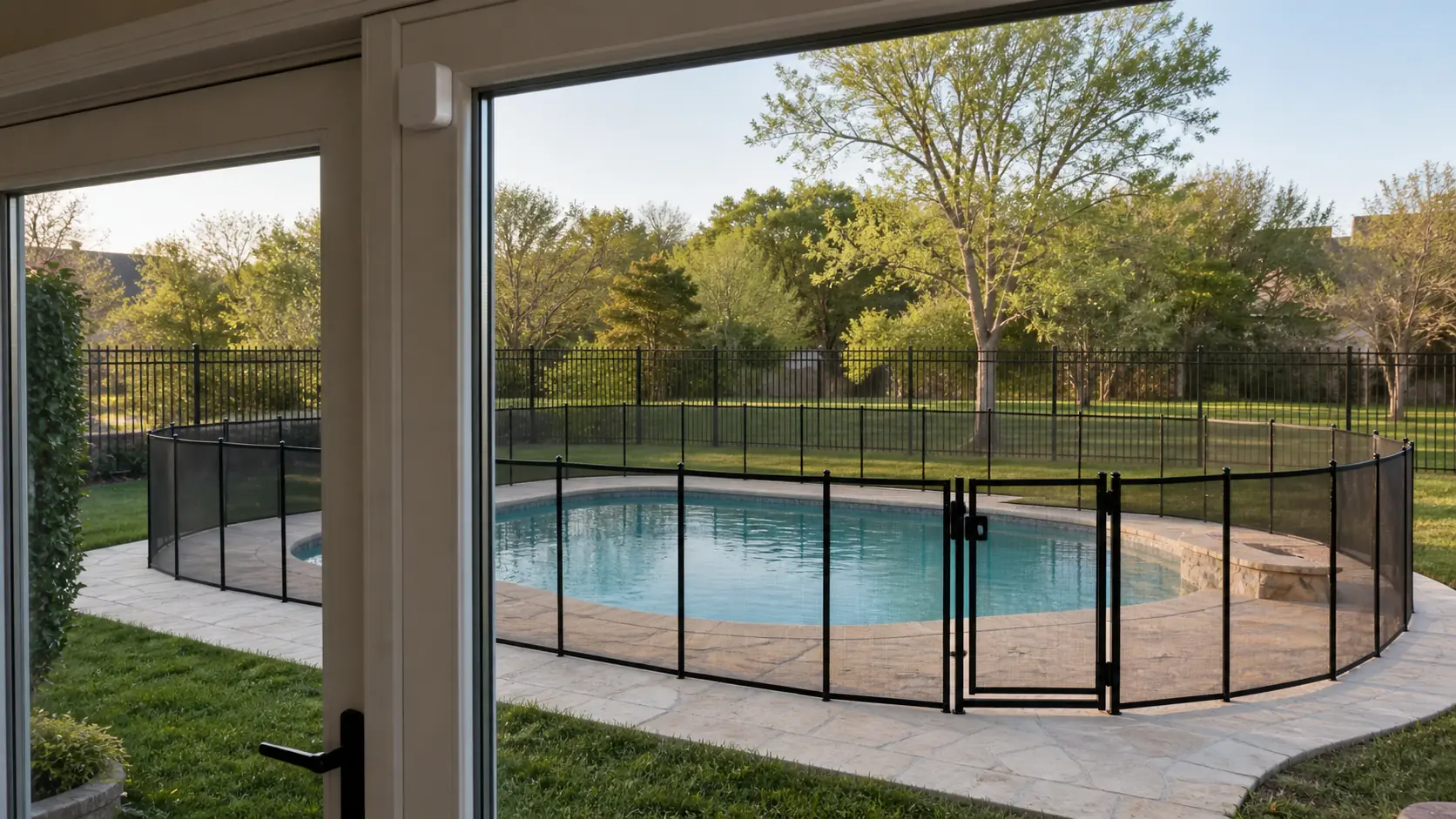
A fence is not a safety plan, it is one layer of one. The reason safety guidance is built around layers is that every single measure eventually fails: a gate gets propped open, an adult looks at a phone, a child learns to climb. Layers work because they fail independently. Here is what the evidence actually supports, what to check in your own backyard this weekend, and the two facts about how drowning happens that most people have wrong.
This article is the behavioral companion to what Texas fence law actually requires, which covers the legal side and the barrier specification in detail. Read that one for compliance. Read this one for the layers that sit around it.
Two facts about drowning that change how you supervise
It is silent
The drowning most people picture, with splashing and calling for help, is not what usually happens. A person in genuine difficulty cannot call out, because the airway is prioritized for breathing over speech, and the arms are instinctively pressing down on the water rather than waving. It looks like quiet. A child can go under in a garden full of people and nobody hears anything, which is why supervision has to be visual and continuous rather than ambient.
It is fast
The window is measured in seconds to a couple of minutes, not in the several minutes people assume. That is short enough that answering the door, taking a call, or fetching a towel is long enough. This is not a call for anxiety, it is the reason the water watcher idea below exists, because a defined handover is what turns a group of nearby adults into actual supervision.
The most common failure is a group of adults
With one adult present, that adult is watching. With eight adults present, everybody reasonably assumes somebody else has it. Diffusion of responsibility is a well documented effect and a backyard party is exactly the conditions for it. The fix is a name, out loud: somebody is the water watcher for the next twenty minutes, and when they hand over, they say so.
The layers, in order of how much they contribute
Layer 1: a four-sided isolation barrier
The most effective physical measure available, and the important word is isolation. A fence that separates the pool from the house is substantially more protective than one that merely encloses the yard, because the majority of young-child drownings begin with a child leaving the house unnoticed. A three-sided barrier that uses the house wall as its fourth side leaves the back door as an unlocked entrance to the water.
Practically, that means a barrier around the pool itself, not just around the property.
Layer 2: gates that actually work
A gate is only a barrier while it closes and latches on its own. Go and test yours properly.
- Open it a few inches and let go. It should close and latch on its own.
- Open it fully and let go. Same result.
- Test it from both directions. Gates should open outward, away from the pool.
- Check the latch is high enough to be out of a small child’s reach, and that reaching through the gate to operate it is not possible.
- Check the gap underneath and the gaps in the fence face.
This is worth doing every spring in Collin County specifically, because our expansive clay moves through the year and a gate that latched perfectly last September may not this April. Clay soil and your pool covers why the ground moves that much.
Layer 3: alarms on the doors from the house
If any door or window opens from the house into the pool area, alarm it. These are inexpensive, they are the layer that covers the exact failure mode that kills the most young children, and they do the one thing no barrier can do: tell you the moment a child leaves the building.
Pool surface alarms and wearable alarms exist too. They are a reasonable addition and they are not a substitute for a barrier, because they alert after entry rather than preventing it.
Layer 4: swim lessons
Formal swim lessons are associated with a substantially lower risk of drowning in young children. The important framing is that lessons are a layer rather than a licence: a child who can swim can still drown, and a child who has had lessons still needs the barrier and the supervision. What lessons buy is competence and, at minimum, the ability to get to an edge.
Layer 5: an adult who can actually help
At least one adult present who can swim, and ideally who knows CPR. The interval between somebody going under and emergency services arriving is exactly the interval in which the outcome is usually decided, and that interval belongs to whoever is standing there.
Layer 6: water you can see through
The layer that never appears on safety checklists and belongs on all of them. If the water is cloudy or green, a person on the bottom of the pool is not visible from the deck. Every second spent searching a pool you cannot see into is a second not spent on the response.
This is the one place where pool maintenance and pool safety are the same subject. A pool that has gone green is not merely unattractive, it is a pool with a hidden floor. Why pools go green and cloudy water both cover getting visibility back, and it should be treated as urgent for this reason rather than a cosmetic one.
The backyard audit, this weekend
| Item | What good looks like |
|---|---|
| Barrier | Four sided, isolating the pool from the house, no climbable footholds |
| Gate self-closing | Closes on its own from any opening angle |
| Gate self-latching | Latches every time, latch out of a small child's reach |
| Fence gaps | No gap a small child can pass through, minimal clearance underneath |
| Objects near the fence | Nothing climbable: no chairs, planters, coolers, or firewood stacks |
| House doors to the pool | Alarmed, and locked when the pool is not in use |
| Pet doors | Consider whether a child can use them |
| Rescue equipment | A reaching pole and a ring buoy, mounted and not buried in a shed |
| Drain covers | Intact and secured. A broken or missing cover is an entrapment hazard |
| Water clarity | Bottom drain covers clearly visible from the deck |
| Chemicals | Latched, out of reach, and not stored where children play |
| Emergency plan | Everyone knows where the phone is and what the address is |
Two of those deserve a note. The objects near the fence line defeats more barriers than any structural defect: a patio chair moved next to a 48 inch fence makes it a 20 inch fence. And drain covers are a genuine mechanical hazard rather than a formality, so a cover that is cracked, loose, or missing takes the pool out of use until it is replaced.
The Texas legal position, briefly
Nearly every article on Texas pool fence law cites Chapter 757 of the Health and Safety Code. Section 757.002 limits that chapter to pools owned, controlled, or maintained by a multiunit rental complex owner or a property owners association, plus the doors and windows of rental dwellings opening into such a pool yard. It does not govern a private single-family backyard pool.
What governs yours is your city’s adopted building code, which in DFW cities generally means a barrier at least 48 inches tall, no more than a 2 inch gap underneath, no openings a 4 inch sphere can pass, and self-closing self-latching gates. Cities amend these independently, and Plano also requires a permit before a barrier is installed, so confirm the current requirement with your own city’s building inspections department. Our fence law guide covers this properly.
On state figures: the Texas Department of Family and Protective Services publishes child drowning statistics for Texas and is the right primary source for a Texas audience. Because those counts move through the year, check the current figure there rather than trusting a number quoted in an article, including this one.
A note on what this article cannot do
Nothing on this page, and no product or service anywhere, substitutes for adult supervision and a compliant barrier. That includes swim lessons, alarms, covers, and pool maintenance. The layers work together and none of them is the answer on its own.
Two situations worth planning for specifically
Visitors
The highest-risk moment for many backyard pools is when other people’s children are present. They do not know the pool, their parents do not know your yard, and everybody assumes the host has it covered. Name a water watcher before anyone gets in, and say out loud where the shallow end stops.
Nobody is swimming
Most young-child drownings do not happen during a swim. They happen at a time when nobody intended anybody to be in the water at all, which is exactly when the barrier and the door alarms are the only things working. That is why the gate test matters more than any rule applied during a pool party.
Where a pool company fits
Honestly, at the edges rather than the center. What we can do is keep the water clear enough that the bottom is visible, flag a drain cover or a gate latch that has failed when we see one, and treat a green pool as urgent rather than as a scheduling item. That is genuinely part of what weekly service is for, and it is a smaller contribution than the barrier and the supervision, which are yours.
If your pool is currently not clear enough to see the bottom, that is the thing to deal with this week rather than at the next visit. A recovery is priced by condition, and what one costs in DFW sets expectations.
Everything else on this page is yours, and it is worth one Saturday. Walk the fence, open each gate a few inches and let go, move the patio chair that is sitting beside it, and put a name to who is watching the water before anyone gets in. None of that costs anything. All of it fails independently, which is the entire reason it works.
Frequently Asked Questions
How common is drowning in home swimming pools?
The CDC reports roughly 4,000 fatal unintentional drownings and about 8,000 nonfatal drownings in the United States each year. More children ages 1 to 4 die from drowning than from any other cause of death, and most drownings in that age group happen in swimming pools. For Texas-specific counts, the Department of Family and Protective Services publishes child drowning statistics and is the right primary source.
Does drowning look like it does on television?
No, and this is the single most useful thing to know. Drowning is usually silent. A person in difficulty cannot call out, because the airway is prioritized for breathing over speech, and the arms instinctively press down on the water rather than waving. It also happens in seconds to a couple of minutes. That is why supervision has to be visual and continuous rather than ambient.
What are the layers of pool safety?
A four-sided isolation barrier separating the pool from the house, gates that genuinely self-close and self-latch, alarms on any door opening into the pool area, a designated adult water watcher, formal swim lessons, at least one adult present who can swim and ideally knows CPR, and water clear enough that the bottom is visible. Each layer fails differently, which is why layering works.
Why does a four-sided fence matter more than a fenced yard?
Because most young-child drownings begin with a child leaving the house unnoticed rather than during a swim. A barrier that isolates the pool from the house intercepts that. A three-sided barrier using the house wall as its fourth side leaves the back door as an unlocked route to the water, which is exactly the failure mode that kills the most children.
Does Texas law require a fence around a backyard pool?
Not through the statute most articles cite. Texas Health and Safety Code Chapter 757 is limited by Section 757.002 to pools owned, controlled, or maintained by a multiunit rental complex owner or a property owners association, plus the doors and windows of rental dwellings opening into such a pool yard. For a private backyard pool the requirement comes from your city's adopted building code, so confirm it with your city's building inspections department.
Is clear pool water actually a safety issue?
Yes, and it is the layer that never appears on safety checklists. If the water is cloudy or green, a person on the bottom of the pool is not visible from the deck, and every second spent searching water you cannot see into is a second not spent responding. A pool that has gone green is not merely unattractive, it is a pool with a hidden floor.
Ready to stop thinking about your pool?
True Texan Pools keeps your water swim-ready year-round across Plano and all of DFW. Clear pricing, no contracts, and a photo report after every visit. Austin handles every job personally.
Keep reading
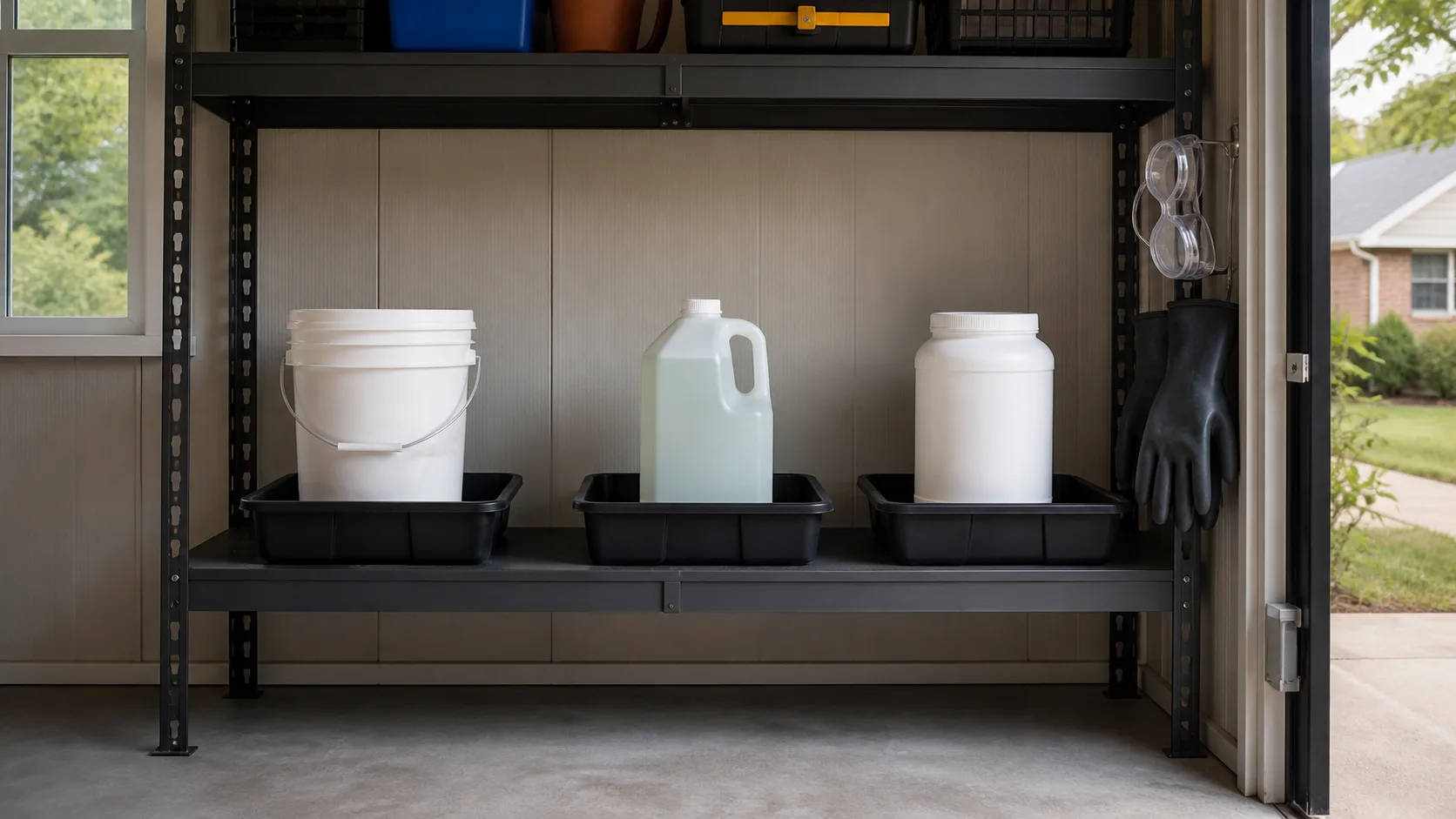
Pool Chemical Safety: The Three Mixes That Hurt People
The chemicals that keep a pool safe are, on the shelf, the most dangerous things most homeowners keep at home. Three combinations cause almost every serious injury, and good storage makes all three impossible.
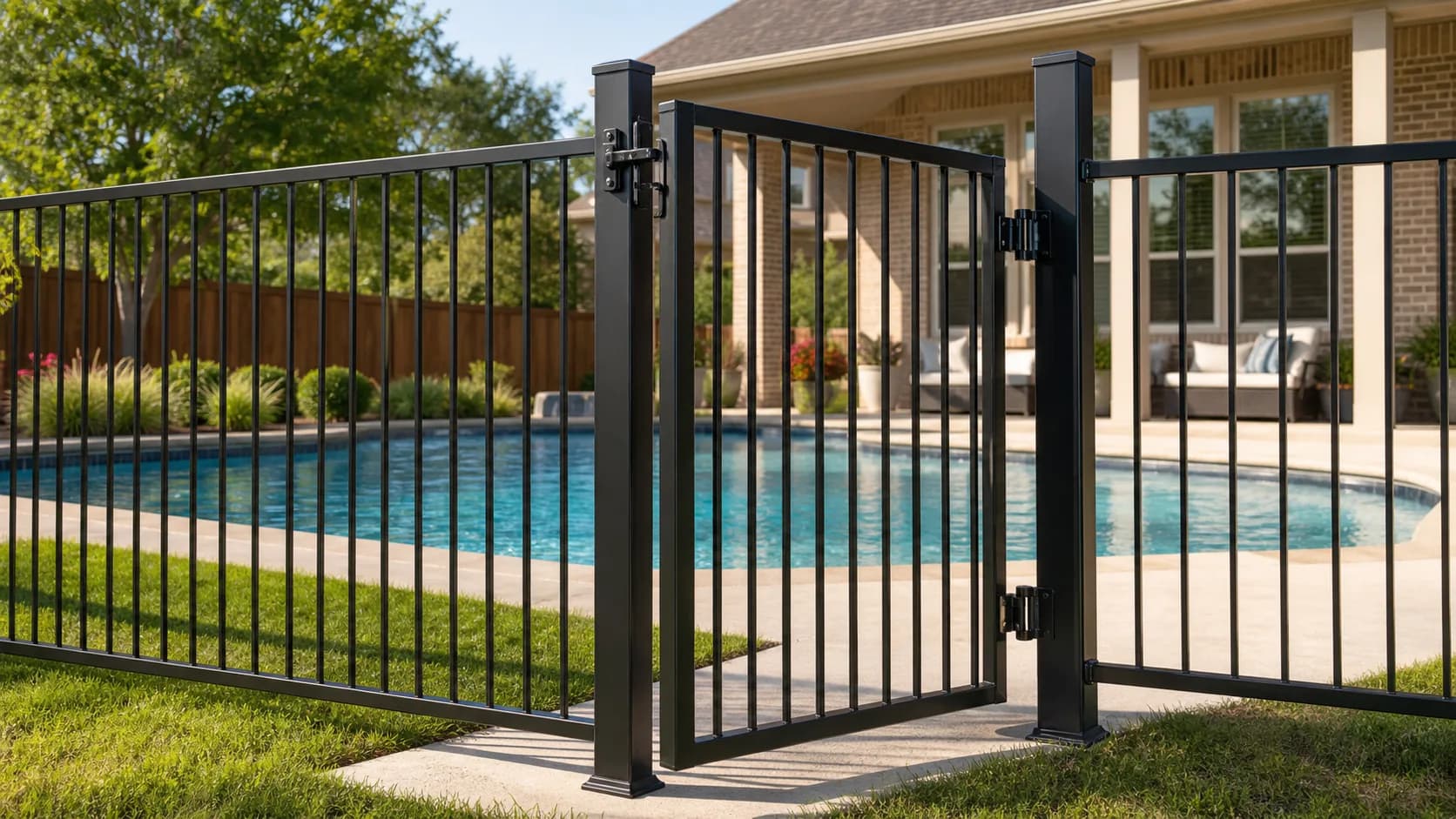
Texas Pool Fence Law: What Actually Applies to Your Backyard
Almost every article on Texas pool fence law cites a statute that does not apply to single-family homes. Here is what actually governs your backyard pool, and the barrier checklist that matters more than the law does.