Gas Heater vs Heat Pump in North Texas

Austin Andrews
Founder, True Texan Pools
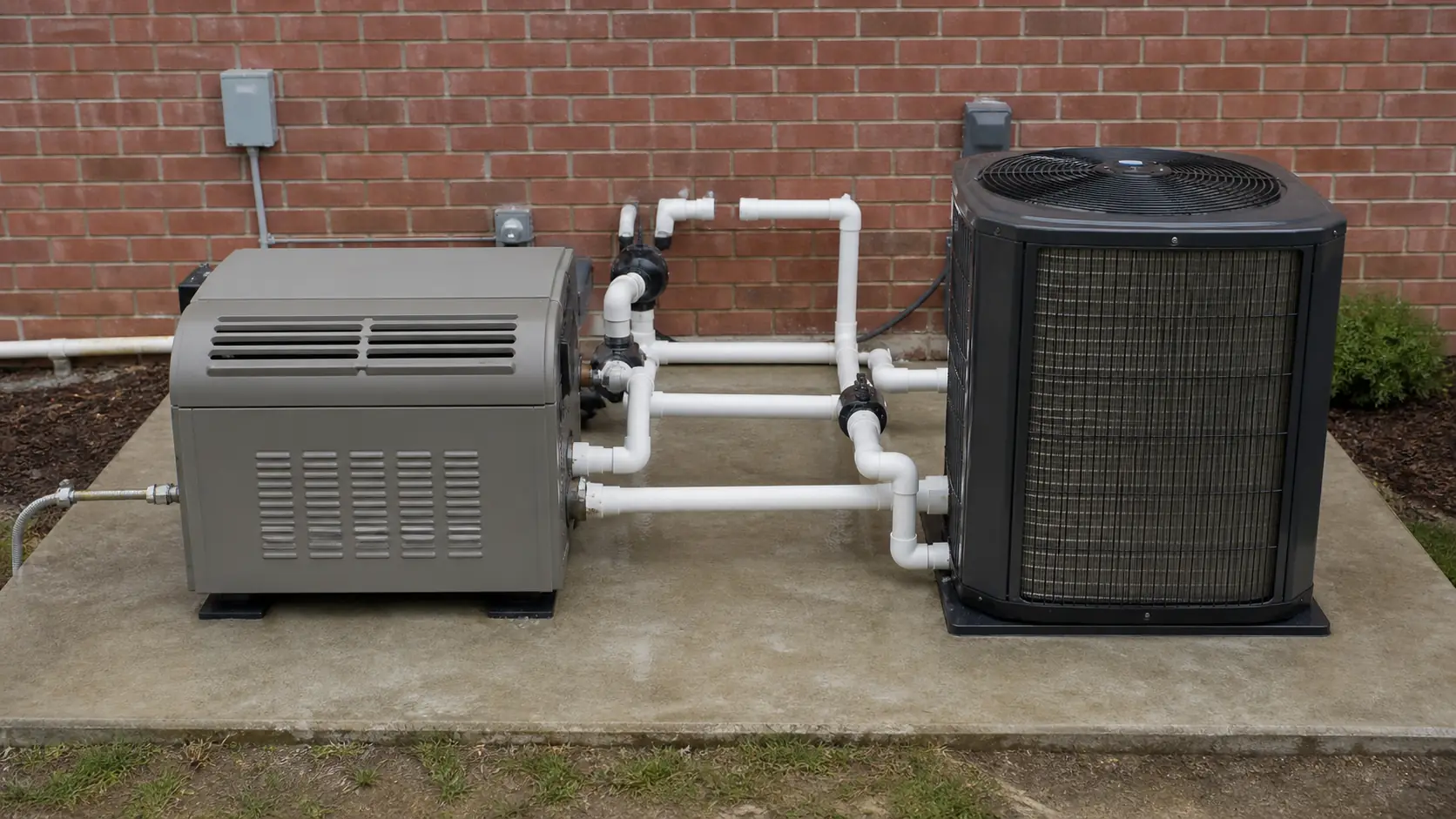
In Florida this is an easy question and the answer is a heat pump. In Minnesota it is an easy question and the answer is gas. North Texas sits precisely in the awkward middle, because our shoulder seasons are long and mild, which suits a heat pump, and our cold snaps are sudden and sharp, which is exactly when a heat pump has least to give. Here is how the choice actually falls here.
Before either: a cover does more for pool temperature per dollar than any heater, because evaporation is the main route by which a pool loses heat. Nobody enjoys hearing that and it is true. A heater fighting an uncovered pool overnight is heating the sky.
How each one works, and why it matters
Gas heater
Burns natural gas or propane in a combustion chamber and passes pool water through a copper heat exchanger above it. It creates heat, so it does not care what the air outside is doing. A gas heater on a 40 degree January morning performs the same as it does in July.
Heat pump
Runs a refrigeration cycle in reverse, extracting heat from the outside air and transferring it into the water. It does not create heat, it relocates it, which is why it is dramatically more efficient and also why its output depends entirely on how much heat is available in the air. As the air cools, there is less to move.
The efficiency gap is real and large
A modern gas heater converts most of the fuel it burns into heat in the water. A heat pump typically delivers several times more heat energy than the electrical energy it consumes, because it is moving heat rather than generating it. That is not a marginal difference, and it is the entire running-cost argument. The catch is in the second sentence of the section above.
The North Texas weather problem
This is where general advice stops being useful and local reasoning takes over.
Our climate gives a heat pump a lot to work with for most of the year. March through May and September through November are long, mild, and full of days in the 60s and 70s, which is precisely when a heat pump is at its most useful: extending the swimming season at the two ends rather than heating against real cold.
Then there is the other North Texas. A cold front drops the air 30 degrees in an afternoon, we get a fortnight in the 40s, and a heat pump’s capacity falls away just as demand for it rises. Most air-source heat pumps become substantially less effective as air temperatures drop toward and below the 50s, and below roughly 45 to 50 degrees many are close to pointless for pool heating. Gas does not care.
| Period | Typical air | Heat pump | Gas |
|---|---|---|---|
| March to May | 60s to 80s | Excellent, and cheap to run | Works, but expensive for the same result |
| June to August | 90s and up | Excellent, often unnecessary | Rarely needed |
| September to November | 60s to 80s falling | Very good early, fading late | Reliable throughout |
| December to February | 30s to 50s | Marginal to ineffective | The only one that genuinely works |
| A sudden cold front, any month | Falls fast | Loses capacity when you want it | Unaffected |
The spa question, which usually settles it
A spa is used on impulse. Somebody decides at eight in the evening that a hot tub would be nice, and they want it at temperature within the hour. Gas does that. A heat pump does not, and no amount of sizing changes the fundamental fact that it works slowly.
A heat pump raising a pool a degree or two a day is fine, because a pool is a season-long proposition. Raising a spa 30 degrees on demand is a different job entirely, and that is what gas is for.
Which is why a great many well-specified North Texas pads run both: a heat pump maintaining the pool cheaply across the shoulder seasons, and a gas heater on the spa for immediate heat. It costs more up front and it is genuinely the right answer for a pool-and-spa combination that gets used both ways.
Lifespan, and why gas heaters die early here
Gas heaters commonly run 5 to 10 years. Heat pumps commonly run 10 to 20, often quoted at 10 to 12 in practice. That gap is meaningful when you are comparing purchase prices, because a cheaper unit replaced twice as often is not cheaper.
The local reason gas heaters sit at the short end here is our water. It arrives moderately hard from the tap and then concentrates, because evaporation leaves calcium behind and nothing removes it, so an older pool is usually carrying more of it than a new one. The hottest water in the entire system is inside a gas heater’s exchanger, and heat is what drives calcium out of solution. Scale coats the inside of the tubes, insulates them from the water they are meant to be heating, and the flame keeps working against a surface that cannot shed heat. Efficiency drops, then the tube fails.
A heat pump has no combustion and no exchanger cooking at flame temperature, so it does not suffer the same failure. Its exposure is different: fan motor, compressor, and a coil sitting outdoors in Texas hail. What hard water does to a whole pool covers the mechanism, and equipment lifespan in Texas heat covers the wider replacement picture.
If you buy gas, protect the exchanger from day one
Keep the saturation index near neutral rather than positive, hold pH at the lower end of range, keep calcium hardness from climbing unchecked, and run a sequestrant on a schedule. A gas heater on our water with no chemistry discipline is a five year appliance. The same heater on managed water is a ten year one, and that difference is worth more than the price gap between brands.
The rest of the comparison
| Gas heater | Heat pump | |
|---|---|---|
| Purchase and install | Lower, plus gas line work if none exists | Higher, plus electrical capacity |
| Running cost | Substantially higher per degree | Substantially lower per degree |
| Speed | Fast, hours | Slow, days to raise a pool meaningfully |
| Cold weather | Unaffected | Loses capacity, marginal below the 50s |
| Typical life here | 5 to 10 years | 10 to 20 years |
| Main failure mode | Scaled heat exchanger | Fan, compressor, coil damage |
| Good for a spa | Yes, this is its case | No |
| Good for extending a pool season | Works, expensively | Yes, this is its case |
| Install requirements | Gas supply, venting, clearances | Electrical service, and real airflow around it |
| Noise | Runs briefly, burner noise | Runs long, fan noise like an air conditioner |
Installation constraints people discover late
- Gas supply. A pool heater is a large gas appliance. If there is no line at the pad, running one is real work and real money, and an existing line may not have the capacity alongside the house.
- Electrical service. A heat pump needs a dedicated circuit and adequate panel capacity. On an older McKinney or Plano house that can mean an electrical upgrade.
- Airflow. A heat pump pulls a large volume of air through itself and must not be boxed in. Tucking one into a tight side yard against a fence is the most common installation mistake, and it costs performance permanently.
- Flow rate. Both types have a minimum flow requirement, which matters if you run a variable speed pump at low speed. It is one of the things that sets the floor on how slow your pump can go, covered in the run time guide.
- Noise and neighbors. A heat pump runs for many hours to do its job. Consider where the fan points before it is installed rather than after.
How to decide
Answer these four honestly and the choice usually makes itself.
- Do you have a spa you use spontaneously? If yes, you want gas, at least for the spa.
- Do you want to swim in December and January? If yes, gas, because a heat pump will not deliver it here.
- Do you mainly want a longer season at both ends? If yes, heat pump, and it will cost a fraction to run.
- How long will you own the house?A heat pump’s advantage is running cost and lifespan, both of which accrue over years. If you are moving in three, the arithmetic is much less compelling.
Before you buy either one
Two things worth doing first, because both are cheaper than a heater and both improve the outcome whichever you choose. Get a cover, since evaporation is where the heat goes. And get the chemistry under control, since scale is what kills gas heaters here and a heat pump on aggressive water has its own problems.
If you have an existing heater that is underperforming rather than dead, that is frequently scale rather than failure. Heater troubleshooting covers the checks worth doing, and repair costs in DFW covers what the common heater parts run before you decide to replace the whole unit.
For a straight assessment of what your pad can support, and whether the existing heater has another season in it, an equipment inspection is the right first step.
And the unglamorous conclusion, offered by people who sell neither: buy the cover before you buy either heater. Evaporation is where the heat actually goes, so a cover makes whichever unit you choose smaller, cheaper to run, and better at its job. It is the only purchase in this article that improves the answer no matter which way you decide.
Frequently Asked Questions
Is a heat pump or a gas heater better for a pool in North Texas?
It depends on what you want heated and when. A heat pump is far cheaper to run and excellent from March to May and September to November, which is most of what people actually want. A gas heater works regardless of the weather and heats fast, which is what a spa needs and what December and January require. Plenty of well-specified local pads run both: a heat pump on the pool, gas on the spa.
Do pool heat pumps work in cold weather?
Progressively less well, because they move heat from the air rather than creating it, so their output falls as the air cools. Most air-source pool heat pumps become substantially less effective as temperatures drop toward the 50s and are close to pointless below roughly 45 to 50 degrees. In North Texas that means the capacity fades exactly when a cold front arrives and you want it.
Why do gas pool heaters fail early in North Texas?
Scale in the heat exchanger. The hottest water in the entire system is inside a gas heater, and heat is what drives calcium out of solution. Our water arrives moderately hard and concentrates in the pool from there, so scale coats the inside of the tubes, insulates them from the water they are heating, and the flame works against a surface that cannot shed heat. Efficiency drops, then the tube fails.
How long do pool heaters last?
Gas heaters commonly run 5 to 10 years, heat pumps 10 to 20 with 10 to 12 often quoted in practice. That gap matters when comparing purchase prices, because a cheaper unit replaced twice as often is not cheaper. On our water, chemistry discipline is the difference between a five year gas heater and a ten year one, which is worth more than the price gap between brands.
What should I check before installing a pool heat pump?
Electrical capacity, because it needs a dedicated circuit and an older house may need a panel upgrade. Airflow, because a heat pump pulls a large volume of air through itself and must not be boxed into a tight side yard, which is the most common installation mistake. Noise, since it runs for many hours. And your pump's minimum flow rate, which sets a floor on how slowly you can run a variable speed pump.
Is a pool cover better value than a heater?
For raw temperature per dollar, yes, and nobody enjoys hearing it. Evaporation is the main route by which a pool loses heat, so a heater fighting an uncovered pool overnight is heating the sky. A cover does not replace a heater for a spa or for genuine winter swimming, and it makes either heater dramatically more effective and cheaper to run.
Ready to stop thinking about your pool?
True Texan Pools keeps your water swim-ready year-round across Plano and all of DFW. Clear pricing, no contracts, and a photo report after every visit. Austin handles every job personally.
Keep reading
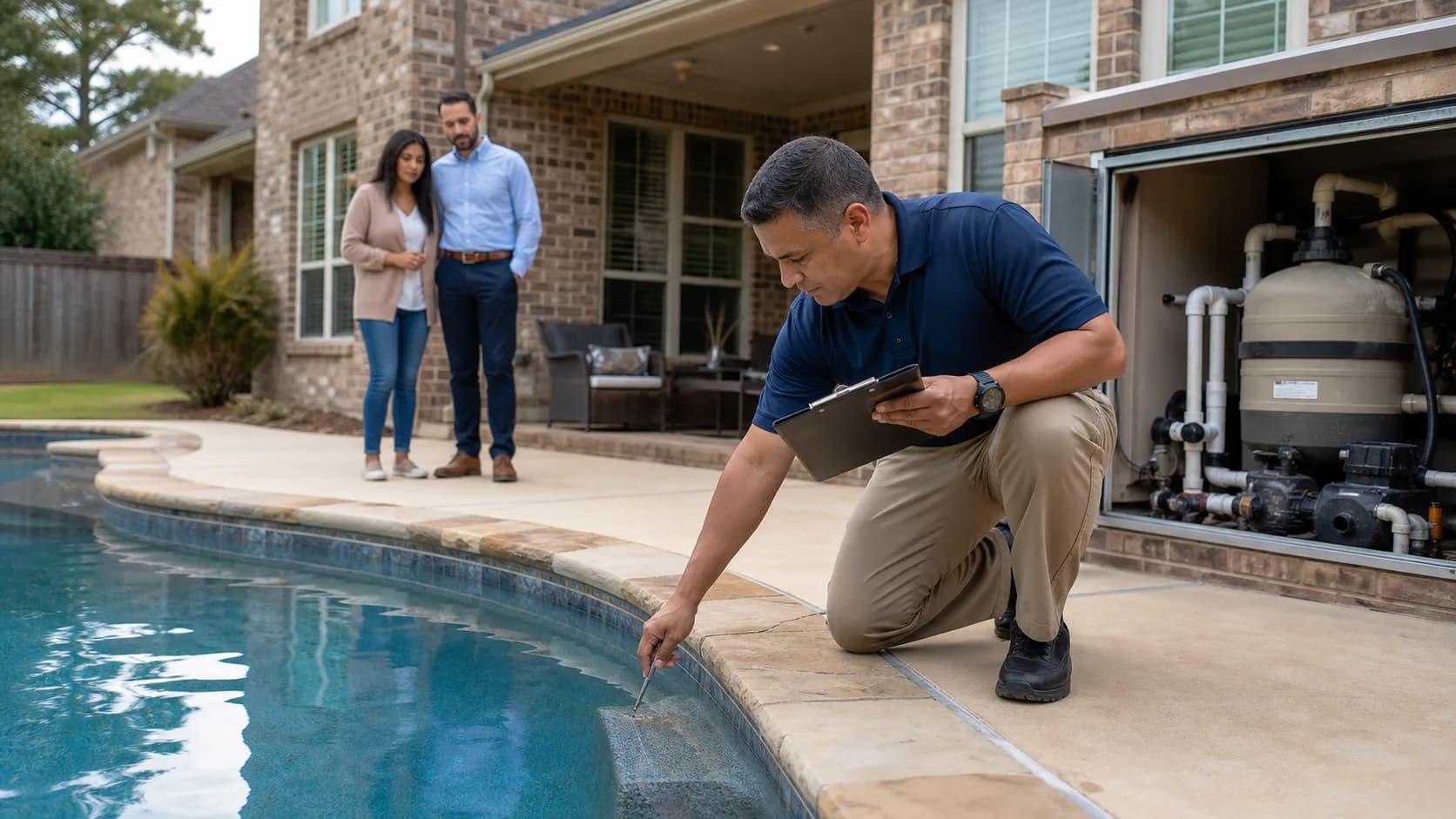
Buying a House With a Pool in DFW: What to Check Before You Close
The pool is often the most expensive system on the property after the roof and the foundation, and it is the one nobody looked at. Here is how to look at it during the option period, while you still have leverage.
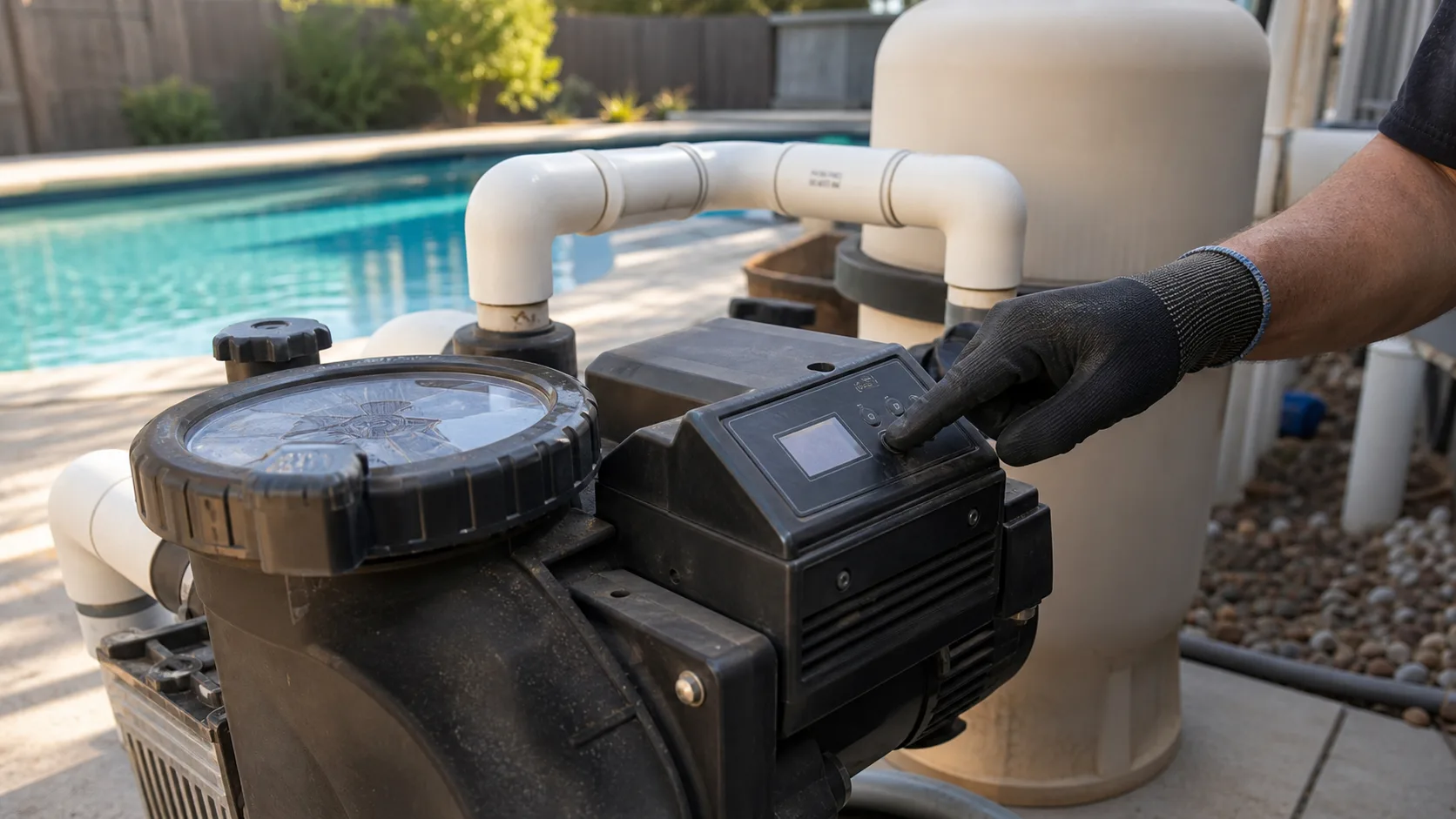
How Long Should You Run a Pool Pump? (North Texas Edition)
Ask ten people and nine say eight hours. That number answers the wrong question. What your pool needs is a volume of water moved, and hours are just how you buy it.