How Long Pool Equipment Actually Lasts in Texas Heat

Austin Andrews
Founder, True Texan Pools
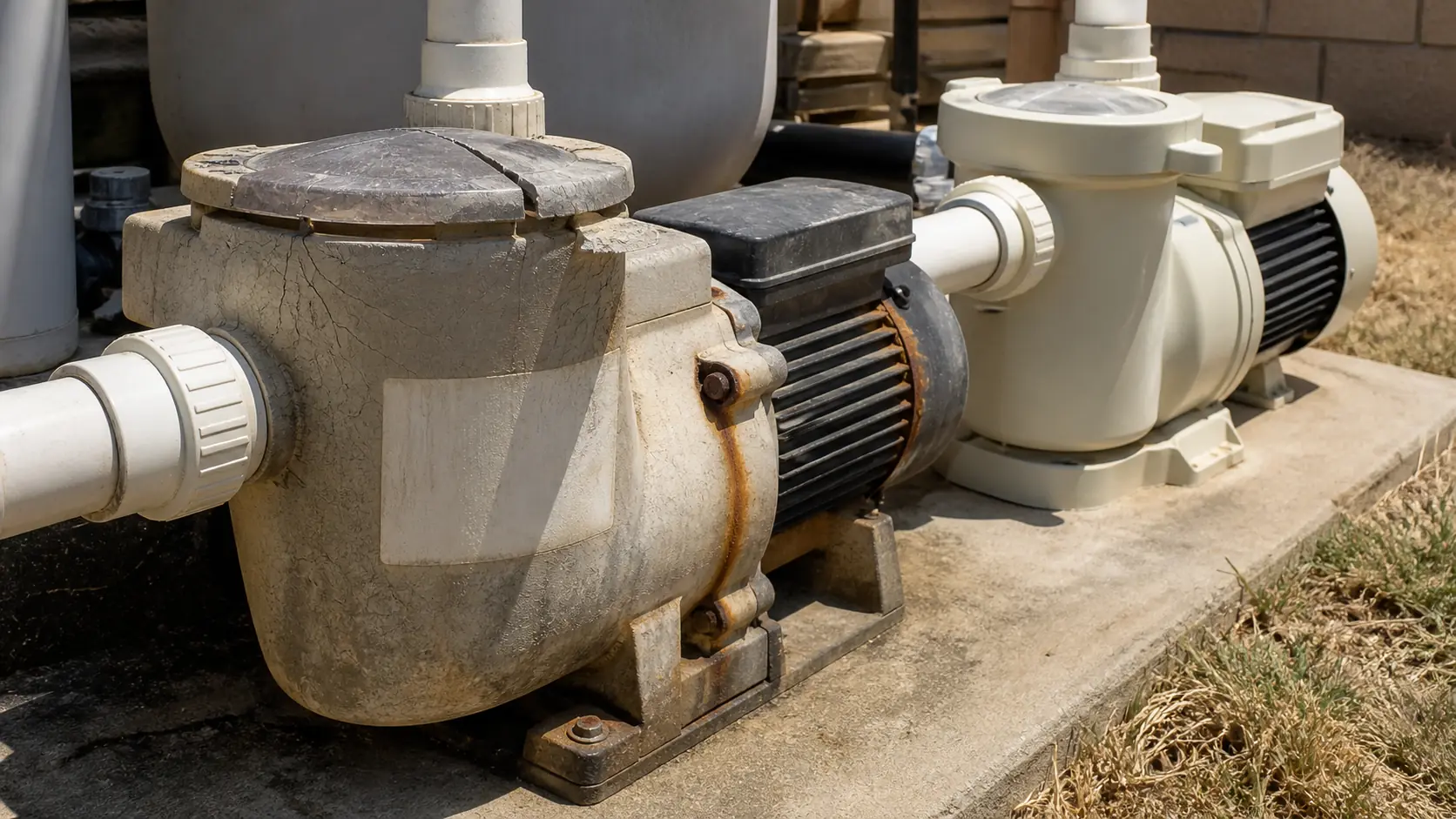
Every published lifespan figure for pool equipment assumes a pool that spends four months of the year switched off. Ours never do. A North Texas pad runs twelve months, sits under UV that destroys plastic, and gets asked to survive a night at 12 degrees once or twice a winter. Here is what each component actually lasts here, why our climate moves the number, and how to turn all of it into one monthly reserve figure instead of a series of shocks.
This article exists because of a specific conversation that happens two or three times a year. A pump fails, the owner is surprised, and it turns out the pump was fourteen years old. Nothing went wrong. It reached the end of its life on schedule and nobody had a number in mind for when that would be. Knowing the numbers does not stop anything failing, but it turns a crisis into a purchase.
The three things our climate does to equipment
1. No off season
A pool in Chicago is closed from October to May. Its pump accumulates perhaps seven months of running per calendar year, and it spends the winter dry and still. Ours runs every month, because a North Texas pool is not winterized, and the winter schedule is a freeze defense rather than an optional extra. Over a decade that is a materially different duty cycle on the same motor.
2. Ultraviolet light
Everything on the pad that is plastic is being slowly destroyed by sunlight. Pump lids go cloudy and then brittle, housings chalk and fade, labels bleach until you cannot read the model number you now need, and o-rings dry out faster than their published replacement interval. This is the failure mode people underestimate most, because it is invisible until the part cracks in your hand.
3. Freeze cycling
The most important one, and the one that does not fit on a lifespan table at all. Water expands as it freezes. A pump pot, an above-ground pipe, a filter tank, or a heater header full of still water on a night at 12 degrees can split regardless of whether it was installed last year or ten years ago. Freeze does not shorten a lifespan, it ends one. Our guide to spotting freeze damage after the thaw covers what to look for, and freeze protection covers preventing it.
A shaded pad is a longer-lived pad
The cheapest thing you can do for equipment life in Texas is put a roof over it. Not an enclosure, which traps heat and starves a motor of cooling air, but simple shade that keeps direct afternoon sun off the plastic. Manufacturers will tell you the housings are UV-stabilized, which is true and is not the same as immune. Leave real airflow around the motor.
Component by component
Pumps: 8 to 12 years, sometimes to 15
The motor and the shaft seal are what fail. A seal that starts weeping is a cheap repair caught early and a dead motor caught late, because the leak runs down into the bearings. Signs you are near the end: a rising whine, a hot motor, tripping the breaker on a warm day, or rust weeping from the bolts.
The replacement decision has changed. Federal efficiency standards for dedicated-purpose pool pump motors mean a like-for-like single-speed replacement may simply not be available when yours fails, which usually makes a variable speed unit the practical choice rather than an upsell. Our repair or replace guide works through it, and the Texas math on variable speed covers whether it pays for itself.
Filters: the tank outlives the media
Worth separating, because people replace whole filters when they need a $200 part.
- Sand media: 5 to 7 years, with the tank commonly lasting 10 or more. Old sand goes smooth and rounded and stops trapping anything, and channels form so water runs straight through.
- Cartridges: 3 to 5 years, housing to 10. A cartridge that will not come clean, or whose pleats have gone limp and grey through, is finished regardless of how it looks after hosing.
- DE grids: 5 to 10 years. Torn fabric is the end, and it announces itself as powder blowing back into the pool through the returns.
Cartridges take the worst of it locally, because our pollen and dust load means more cleaning cycles per year, and every cleaning is mechanical wear. Filter cleaning cost and frequency covers the service interval, and the filter comparison covers choosing between them.
Gas heaters: 5 to 10 years, and hard water decides where
The shortest-lived expensive item on a North Texas pad, and the reason is chemistry rather than the burner. Scale inside a copper heat exchanger insulates the tube from the water it is heating, so the flame works against a surface that cannot shed heat, and the tube eventually fails. Our fill water is mineral rich enough that this is the normal outcome rather than an unlucky one. See what hard water does to a whole pool.
A heater used twice a year for a spa will outlive one that heats a pool every October. Falling heat output with no other symptom is usually scale, not a failing burner.
Heat pumps: 10 to 20 years, commonly 10 to 12
Longer lived than gas because there is no combustion and no exchanger cooking, but the fan motor, the compressor, and the coil are all outdoors and exposed. Hail is a genuine local risk to the coil fins. Our gas versus heat pump comparison weighs the lifespan difference against the fact that a heat pump loses capacity exactly when our weather turns cold.
Salt cells: 3 to 6 years, $600 to $1,000 installed
The plates are coated titanium and the coating is consumed by use. Two things shorten it here: scale, which our water supplies generously, and running the output percentage higher than necessary, which is the most common self-inflicted wound on a salt pool. If your cell is set at 80 percent year round, you are buying cells faster than you need to. Salt cell lifespan and cost covers getting the most out of one.
Plaster: 7 to 12 years, and marcite is the most replaced surface here
The pool itself is a wear item, which surprises people. Traditional white marcite plaster runs 7 to 12 years before it needs redoing, and DFW replastering commonly runs $6,000 to $15,000, or roughly $6.50 to $8.00 per square foot. Quartz and pebble finishes cost more and last longer.
What shortens it: chemistry swings, particularly water that goes aggressive and dissolves calcium out of the surface, and repeated acid washing, which is a controlled way of removing a layer of your plaster to make it look new. Two acid washes is often a resurface brought forward by years.
The small parts nobody budgets for
- O-rings and gaskets: annually to every couple of years. Cheap, and the cause of most air leaks.
- Pressure gauges: 2 to 5 years, and a stuck gauge is worse than none because you trust it.
- Valve actuators: 5 to 10 years, and they fail by stopping halfway.
- Pool light: LED fixtures last years, but the niche and the cord seal are the real failure point.
- Automatic cleaner: 3 to 8 years depending on type, with wear parts annually.
- Timer: mechanical timers last decades and fail gradually. Digital controllers fail suddenly.
Turning all of it into one number
Take each item, use a realistic replacement cost, divide by a realistic life, and add them up. That is your monthly reserve, and it is the honest answer to what a pool costs that no service quote contains.
| Item | Realistic life here | Reserve logic |
|---|---|---|
| Pump | 8 to 12 years | Full replacement divided by 10 |
| Salt cell | 3 to 6 years | $600 to $1,000 divided by 4 to 5 |
| Filter cartridges | 3 to 5 years | A set divided by 4 |
| Sand media | 5 to 7 years | Media and labor divided by 6 |
| Gas heater | 5 to 10 years | Only if fitted, and it is the largest single line |
| Heat pump | 10 to 20 years | Divided by 12 to be safe |
| Plaster resurface | 7 to 12 years | $6,000 to $15,000 divided by 10 |
| Small parts and gauges | Ongoing | A modest flat monthly allowance |
Do this once and the exercise pays for itself, because it changes how you evaluate a repair quote. A $900 repair on a nine-year-old pump reads differently when you already knew the pump had a year or two left. Our full cost-of-ownership breakdown for Collin County folds this reserve in alongside service, chemicals, electricity, and water.
Photograph every label today
Sunlight bleaches equipment labels blank within a few years, and the model and serial number are exactly what you need for a warranty claim, a part, or an accurate phone quote. Take five photographs now, put them somewhere you will find them, and you will save yourself an afternoon at the worst possible moment.
The four habits that genuinely extend equipment life
- Keep chemistry balanced rather than corrected. Water that is aggressive eats plaster and metal, water that is scaling coats heaters and cells. The saturation index is doing more damage or more good to your equipment than any single product you buy.
- Clean the filter on schedule. A loaded filter makes the pump work against resistance every hour it runs, which costs electricity now and pump life later.
- Run slower for longer. A variable speed pump at low speed is under far less mechanical and thermal stress than the same pump at full speed, as well as being dramatically cheaper.
- Take freezes seriously. Nothing on this page matters if the pad is still and full of water on a 12 degree night.
When to replace before it fails
Usually you should not. Running equipment to failure is normally the right economics, with three exceptions.
- A single-speed pump on an expensive electricity plan. The savings are real and recurring, so the replacement pays for itself rather than merely restoring function.
- A heater going into the season you need it. Failing in October means going without until somebody has availability.
- Anything you have already repaired twice. A third repair is a replacement paid for in installments, with the downtime included free.
If you want somebody to age the pad honestly and tell you what has one more season in it, an equipment inspection is exactly that conversation, and getting it done in February rather than in July is the difference between a plan and an emergency.
The reason this article exists is a conversation we have two or three times a year. A pump fails, the owner is shocked, and the pump turns out to be fourteen years old. Nothing went wrong. It reached the end of its life on schedule and nobody had a number in mind for when that would be. Knowing the numbers does not stop anything failing. It turns a crisis into a purchase.
Frequently Asked Questions
How long does pool equipment last in Texas?
Expect the bottom half of every published range. Pumps run 8 to 12 years, sand media 5 to 7 with the tank lasting 10 plus, cartridges 3 to 5, DE grids 5 to 10, gas heaters 5 to 10, heat pumps 10 to 20 with 10 to 12 common in practice, salt cells 3 to 6, and plaster 7 to 12. Our twelve-month run season, direct UV on plastic, and freeze cycling all shorten these.
Why do pool pumps fail faster in Texas?
Duty cycle and heat. A pool that is closed from October to May accumulates perhaps seven months of running a year and spends winter dry and still. Ours run every month, because a North Texas pool is not winterized and the winter schedule is the freeze defense. Add UV on the housing and lid, plus the risk of a pump running dry after a freeze, and the same motor sees a materially harder life.
Does freeze damage count as normal equipment wear?
No, and that is why it needs separate planning. Freeze does not shorten a lifespan, it ends one: a pump pot, an above-ground pipe, a filter tank, or a heater header full of still water on a 12 degree night can split regardless of whether it was installed last year or ten years ago. Lifespan planning and freeze protection are two different problems.
How do I budget for pool equipment replacement?
Take a realistic replacement cost for each item, divide by a realistic service life, and carry the total as a monthly reserve. Pump replacement divided by ten years, a salt cell at $600 to $1,000 divided by four or five, a cartridge set divided by four, and a plaster resurface at $6,000 to $15,000 divided by ten. That total is the honest cost of the asset, and no service quote contains it.
What extends the life of pool equipment most?
Four habits. Keeping chemistry balanced rather than corrected, since aggressive water eats plaster and metal while scaling water coats heaters and cells. Cleaning the filter on schedule, since a loaded filter makes the pump work against resistance every hour. Running slower for longer on a variable speed pump. And taking freezes seriously, because none of the rest matters on a still, full pad at 12 degrees.
Should I replace pool equipment before it fails?
Usually not, with three exceptions. A single-speed pump on an expensive electricity plan, where the savings are recurring so the replacement pays for itself rather than merely restoring function. A heater going into the season you need it, since failing in October means going without. And anything you have already repaired twice, because a third repair is a replacement paid for in installments.
Ready to stop thinking about your pool?
True Texan Pools keeps your water swim-ready year-round across Plano and all of DFW. Clear pricing, no contracts, and a photo report after every visit. Austin handles every job personally.
Keep reading
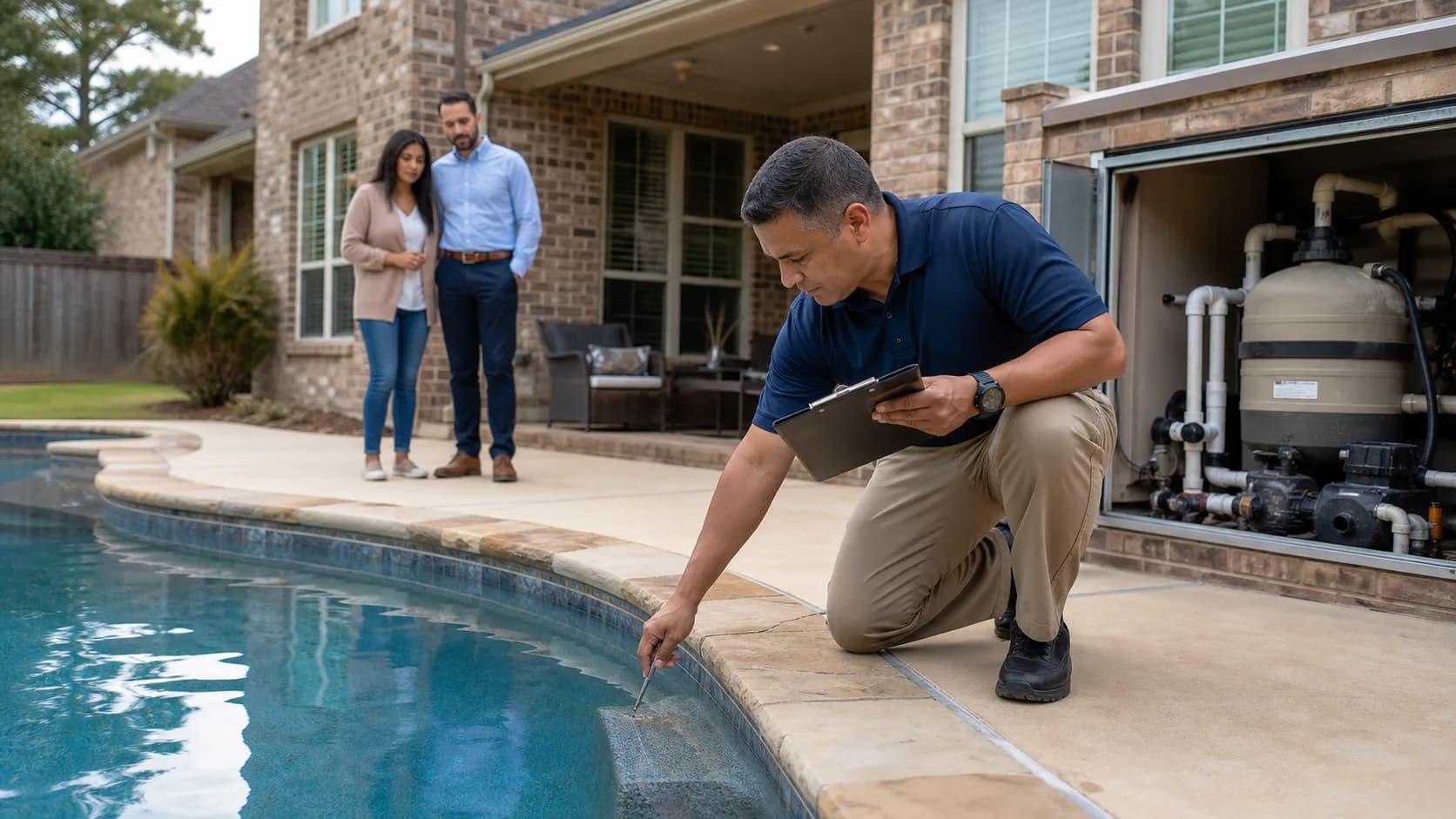
Buying a House With a Pool in DFW: What to Check Before You Close
The pool is often the most expensive system on the property after the roof and the foundation, and it is the one nobody looked at. Here is how to look at it during the option period, while you still have leverage.
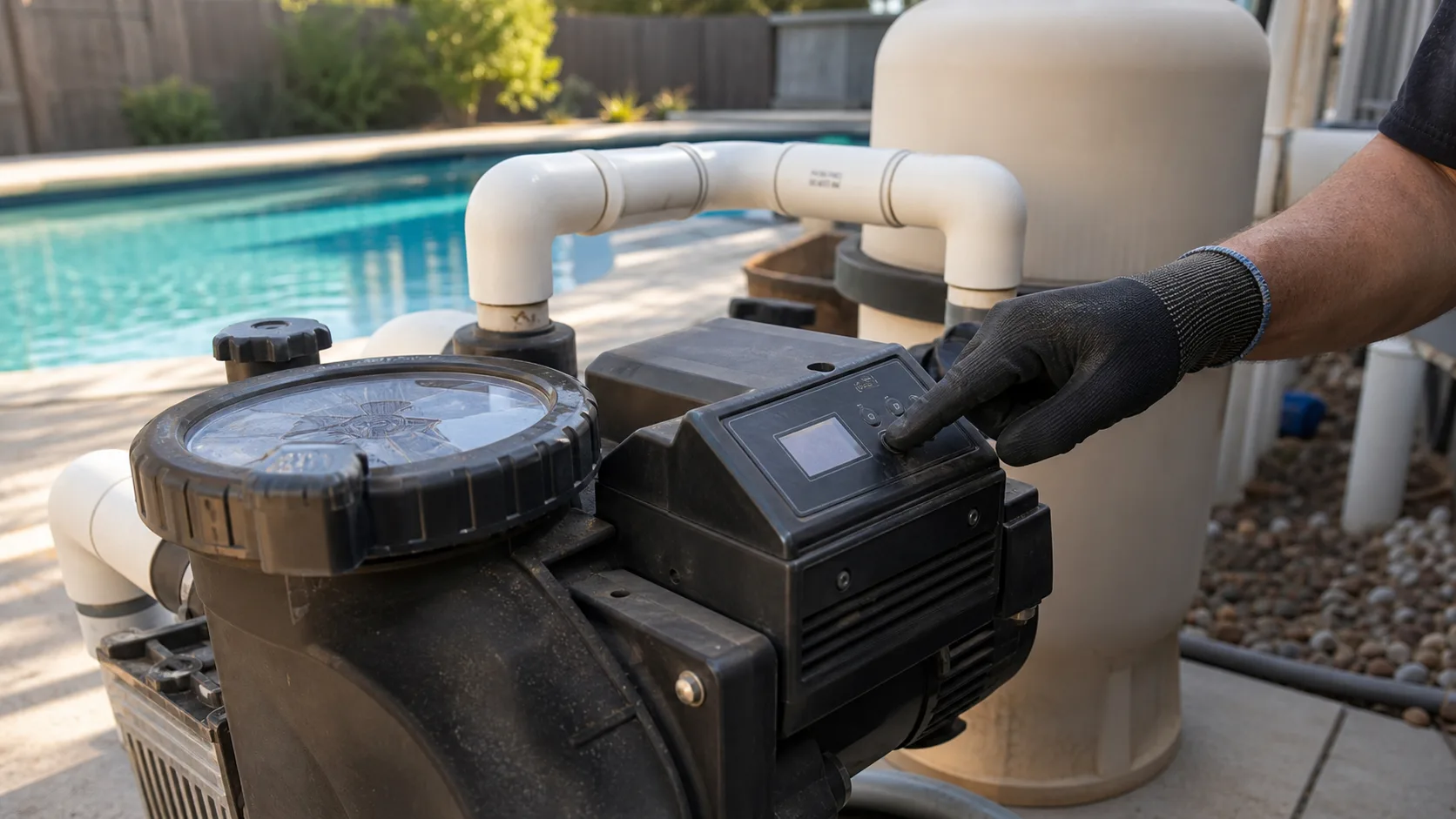
How Long Should You Run a Pool Pump? (North Texas Edition)
Ask ten people and nine say eight hours. That number answers the wrong question. What your pool needs is a volume of water moved, and hours are just how you buy it.