Is the Water Safe to Swim In? Five Checks

Austin Andrews
Founder, True Texan Pools
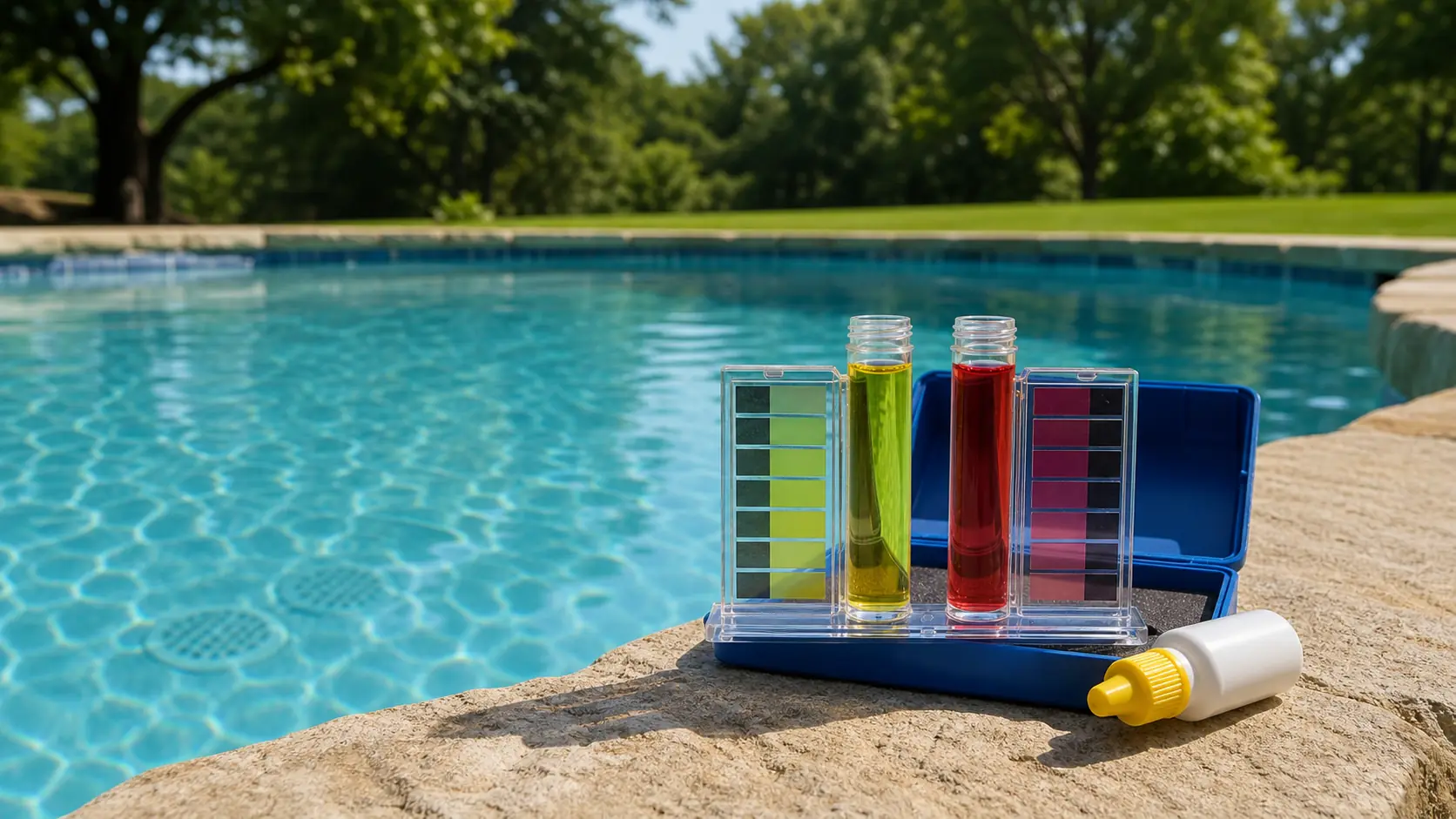
Clear water and safe water are not the same thing, and the first warm weekend of the year is when that distinction costs people. A pool can look immaculate and be carrying no working sanitizer at all, and it can look slightly hazy and be perfectly fine. Here are the five checks that actually answer the question, in the order that matters, plus the specific cases where the answer is no regardless of what the test says.
The reason this question is worth a full article rather than a sentence is that the two things people naturally judge water by, how it looks and how it smells, are both unreliable. A pool with zero free chlorine can be crystal clear for days before anything grows. And a strong chlorine smell means the opposite of what everybody assumes.
The five checks, in order
1. Can you see the bottom?
The main drain covers at the deep end should be clearly visible from the deck. This is the first check because it is both a water quality signal and a rescue one: if you cannot see the bottom of the pool, you cannot see somebody on it.
Cloudy water also means the sanitizer is working against a load it may not be winning against. Cloudy water covers the six causes and the order to check them.
2. Is there free chlorine, at the right level for your pool?
The central check, and the one that is most often done wrong. Free chlorine is what sanitizes. The target is not a fixed number: it depends on your cyanuric acid level, because stabilizer binds most of your chlorine into a slowly released reserve.
The working target is roughly 7.5 percent of your cyanuric acid, with about 5 percent as the floor. At 40 ppm CYA that is around 3 ppm of free chlorine. At 80 ppm it is 6 ppm. A pool holding 2 ppm at 80 ppm CYA is not adequately sanitized even though the strip looks reassuring, and that is exactly the pool that goes green a week later. The cyanuric acid guide covers the ratio in full.
Use a drop-based kit rather than strips for this. Strips are adequate for noticing that something has moved, and not for a decision about whether people get in.
3. What is the pH?
Target 7.4 to 7.6. Two reasons it matters here rather than as a comfort issue.
First, chlorine effectiveness falls as pH rises. The same free chlorine reading sanitizes substantially less at 8.0 than at 7.4, so a high-pH pool with an acceptable chlorine number is weaker than it appears. Second, pH outside range irritates eyes and skin, which is what people then blame on the chlorine.
4. Does it smell of chlorine?
Counter-intuitively, a strong chlorine smell is a bad sign rather than a good one. Clean, properly sanitized water has very little odor. That sharp swimming-pool smell comes from chloramines, which form when chlorine combines with sweat, urine, sunscreen, and organic matter. Chloramines are spent chlorine, not working chlorine, and they are also what irritates eyes.
So a pool that smells strongly of chlorine is usually a pool that needs more chlorine, not less. The fix is shocking, at dusk so sunlight does not destroy the dose before it works.
5. Does anything feel wrong underfoot?
Slick or slimy walls and steps mean a biofilm is establishing even if the water is clear, and that is an early algae warning that precedes any visible tint. Run a hand along the shaded wall at the waterline. It should feel like a clean surface, not a slippery one.
Do not rely on the smell test or the eye test alone
Every one of the failure modes on this page is invisible. A clear pool with no chlorine, a well-chlorinated pool at pH 8.2, and a pool holding 3 ppm against 100 ppm of stabilizer all look identical from the deck. If somebody is getting in and you have not tested this week, test now. It takes two minutes.
When the answer is no, regardless of the readings
| Situation | Why | How long |
|---|---|---|
| You cannot see the bottom | Both a contamination signal and a rescue hazard | Until clarity is restored |
| Free chlorine is zero | The pool is not sanitized at all | Until chlorine is restored and holding |
| Immediately after shocking | Chlorine is far above normal range | Until it falls back into normal range, usually overnight to a day |
| After heavy rain or runoff | Chlorine and stabilizer diluted, organics and dust washed in | Until tested, corrected, and rebalanced |
| A diarrheal incident in the pool | Cryptosporidium tolerates normal chlorine levels | Follow public health guidance. This is not a one hour fix |
| A broken or missing drain cover | Entrapment hazard, unrelated to water quality | Until it is replaced |
| The pump has not run for days in summer | Still water is unsanitized water regardless of the last reading | Until circulation is restored and chemistry confirmed |
| Anyone in the household has an open wound or is ill | Recreational water illness risk runs both directions | Judgment, but err toward waiting |
The one that surprises people: crypto
Cryptosporidium is a parasite that is unusually tolerant of chlorine and can survive in properly chlorinated water for days. That is why a fecal incident involving diarrhea is treated as a serious event by public pools rather than as something to shock away in an hour, and why it is the leading cause of recreational water illness outbreaks associated with pools. In a backyard pool the practical response is to close the pool and follow current CDC guidance on hyperchlorination rather than to improvise.
The everyday prevention is unglamorous and effective: nobody swims with diarrhea, rinse off before getting in, and take small children on regular bathroom breaks rather than waiting to be asked.
The first swim of the year, specifically
In North Texas the first swim usually happens in April, on a warm weekend, in water that has spent the winter on a light maintenance schedule. Four things to confirm before anybody gets in.
- Chlorine against stabilizer, tested with a proper kit rather than assumed from the winter routine. Cold-water pools consume very little chlorine, which means a winter reading tells you nothing about a warming one.
- The barrier. Collin County clay moves through a wet winter, and a gate that latched perfectly in September may not now. Test every gate closes and latches on its own from any angle. Layered drowning prevention covers the full audit.
- Drain covers, intact and secured.
- The water temperature. Genuinely relevant in April, when the air is 85 and the water is 68. Cold water shock is a real physiological response, and the pool being safe chemically does not make it pleasant.
Spring startup covers getting the pool from its winter state to its season state, and it is a job best done in February rather than on the morning somebody wants to swim.
Testing properly
- Take the sample from elbow depth, away from the return jets and away from the steps, where the water is representative rather than freshly dosed.
- Test before adding anything, not after.
- Use a drop-based kit for chlorine and pH. Strips are for noticing change, not for decisions.
- Test cyanuric acid quarterly. It only moves in one direction, so it does not need weekly attention, and every chlorine decision depends on it.
- Twice a week from May through September. Once a week is a spring and autumn interval.
The chemistry guide covers all the targets and the order to correct them in.
A reasonable rule for a household
If nobody has tested the water in the last seven days and it is summer, the honest answer to is it safe is that nobody knows. That is not the same as unsafe, and it is a good enough reason to spend two minutes with a test kit before a weekend rather than after it.
How we answer this every week
Every visit on weekly serviceends with dated photographs and the day’s readings, which exists precisely so a homeowner who was at work can answer this question without guessing. Free chlorine and pH every visit, with alkalinity, cyanuric acid, and calcium hardness on a longer cycle.
If the pool is not clear right now, that is the thing to fix first and it should be treated as urgent rather than as a scheduling matter, for the visibility reason at the top of this page. A recovery is priced by condition, and chemical balancing is the standalone option if the water is clear and the numbers have drifted.
The reasonable household rule, if you want one line to remember: if nobody has tested the water in the last seven days and it is summer, the honest answer to is it safe is that nobody knows. That is not the same as unsafe. It is a good enough reason to spend two minutes with a test kit before the weekend rather than after it.
Frequently Asked Questions
How can I tell if my pool water is safe to swim in?
Five checks. You can clearly see the main drain covers on the bottom. Free chlorine is present at roughly 7.5 percent of your cyanuric acid level. pH is between 7.4 and 7.6. The water does not smell strongly of chlorine. And the shaded wall at the waterline does not feel slick. Appearance alone is not enough, because a pool with zero free chlorine can stay crystal clear for days.
Why does my pool smell strongly of chlorine?
Because it needs more chlorine, not less. Properly sanitized water has very little odor. That sharp swimming-pool smell comes from chloramines, which form when chlorine combines with sweat, urine, sunscreen, and organic matter. Chloramines are spent chlorine rather than working chlorine, and they are also what irritates eyes. The fix is shocking, at dusk so sunlight does not destroy the dose.
How long after shocking a pool can you swim?
Until free chlorine falls back into its normal range for your pool, which is usually overnight to a day depending on the dose and the sunlight. Test rather than guessing at a number of hours, because the right answer depends on how much was added to how many gallons and what the level was beforehand.
Can you swim in a pool after heavy rain?
Not until it has been tested and corrected. Heavy rain dilutes chlorine and stabilizer, drops pH and alkalinity, and washes dust, pollen, and organic material into the water, so the pool comes out of a storm with less sanitizer and more to sanitize. Empty the baskets, brush, test, correct pH first, then shock at dusk the same evening.
Why is a diarrheal incident treated so seriously in a pool?
Because Cryptosporidium is unusually tolerant of chlorine and can survive in properly chlorinated water for days, which is why it is the leading cause of recreational water illness outbreaks associated with pools. It is not something to shock away in an hour. Close the pool and follow current CDC hyperchlorination guidance rather than improvising.
Is a pool safe to swim in if it is slightly cloudy?
Treat cloudiness as a reason to test rather than as an automatic no, but do not swim in water where the bottom is not visible. Beyond the water quality signal, it is a rescue hazard: a person on the floor of a cloudy pool cannot be seen from the deck. Cloudiness is usually a filtration or chemistry problem rather than a sanitizer one, and it is worth diagnosing rather than shocking blindly.
Ready to stop thinking about your pool?
True Texan Pools keeps your water swim-ready year-round across Plano and all of DFW. Clear pricing, no contracts, and a photo report after every visit. Austin handles every job personally.
Keep reading
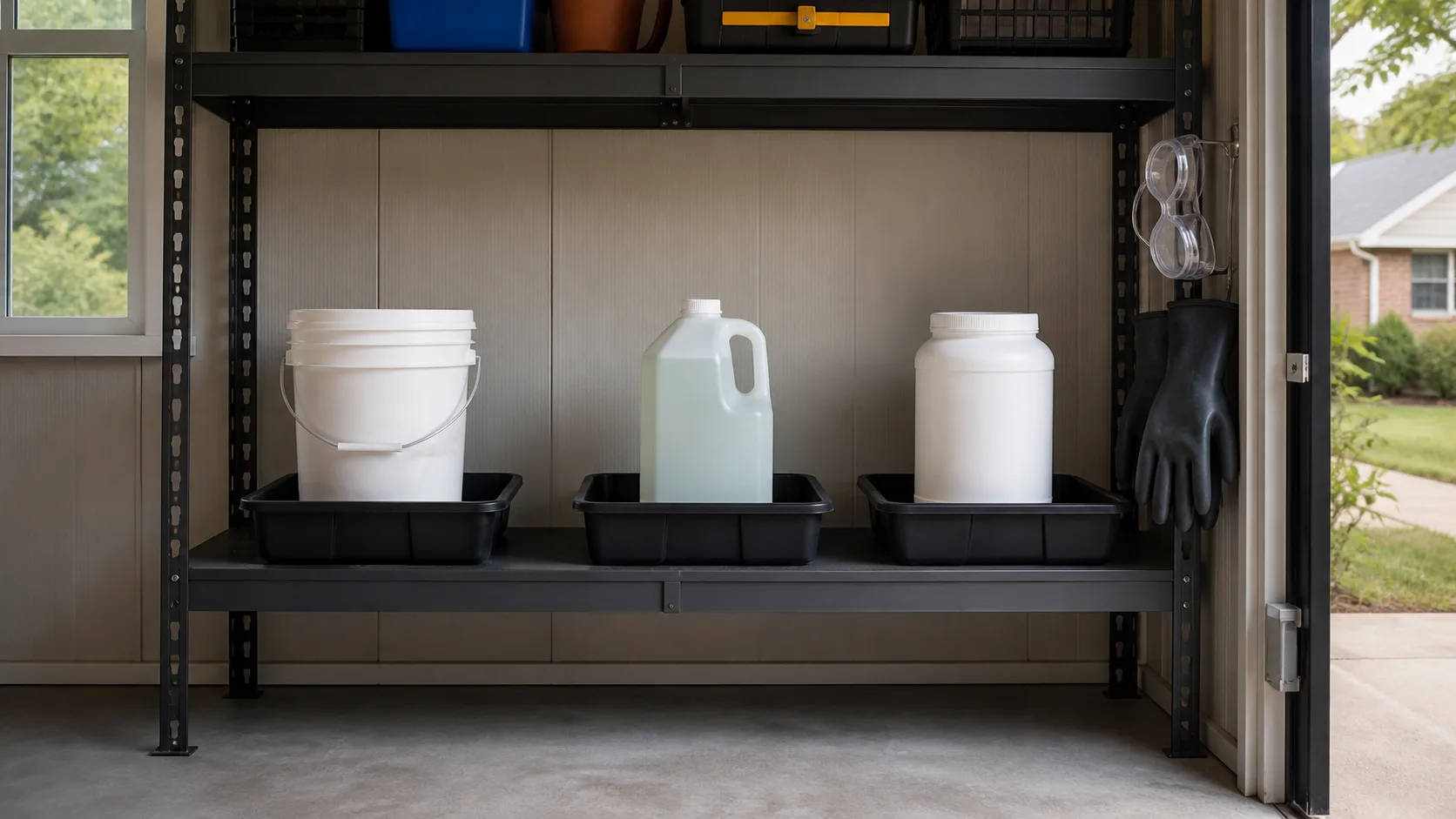
Pool Chemical Safety: The Three Mixes That Hurt People
The chemicals that keep a pool safe are, on the shelf, the most dangerous things most homeowners keep at home. Three combinations cause almost every serious injury, and good storage makes all three impossible.
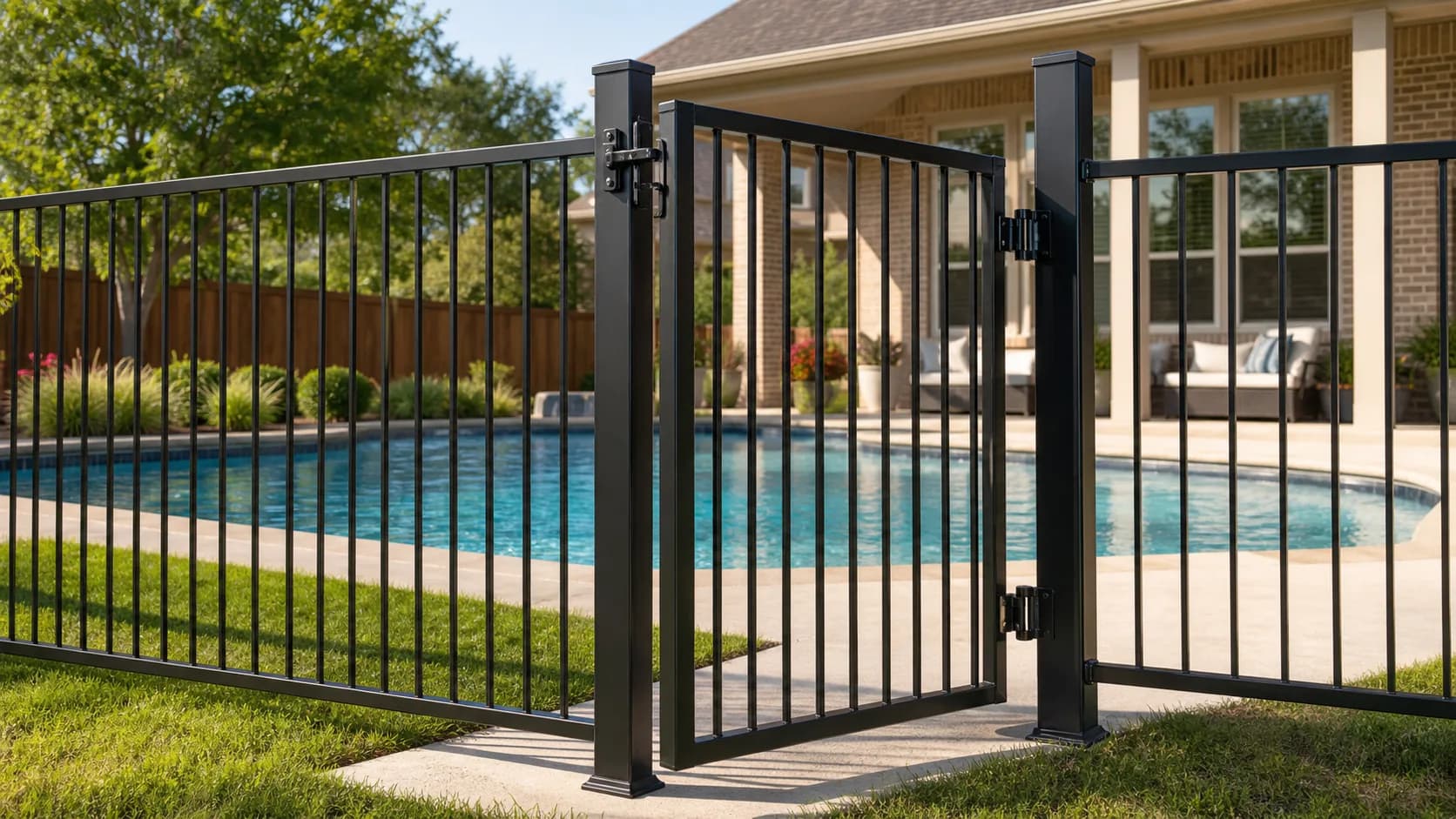
Texas Pool Fence Law: What Actually Applies to Your Backyard
Almost every article on Texas pool fence law cites a statute that does not apply to single-family homes. Here is what actually governs your backyard pool, and the barrier checklist that matters more than the law does.