How Much Does Pool Cleaning Cost in Plano, TX? (2026 Pricing Guide)

Austin Andrews
Founder, True Texan Pools
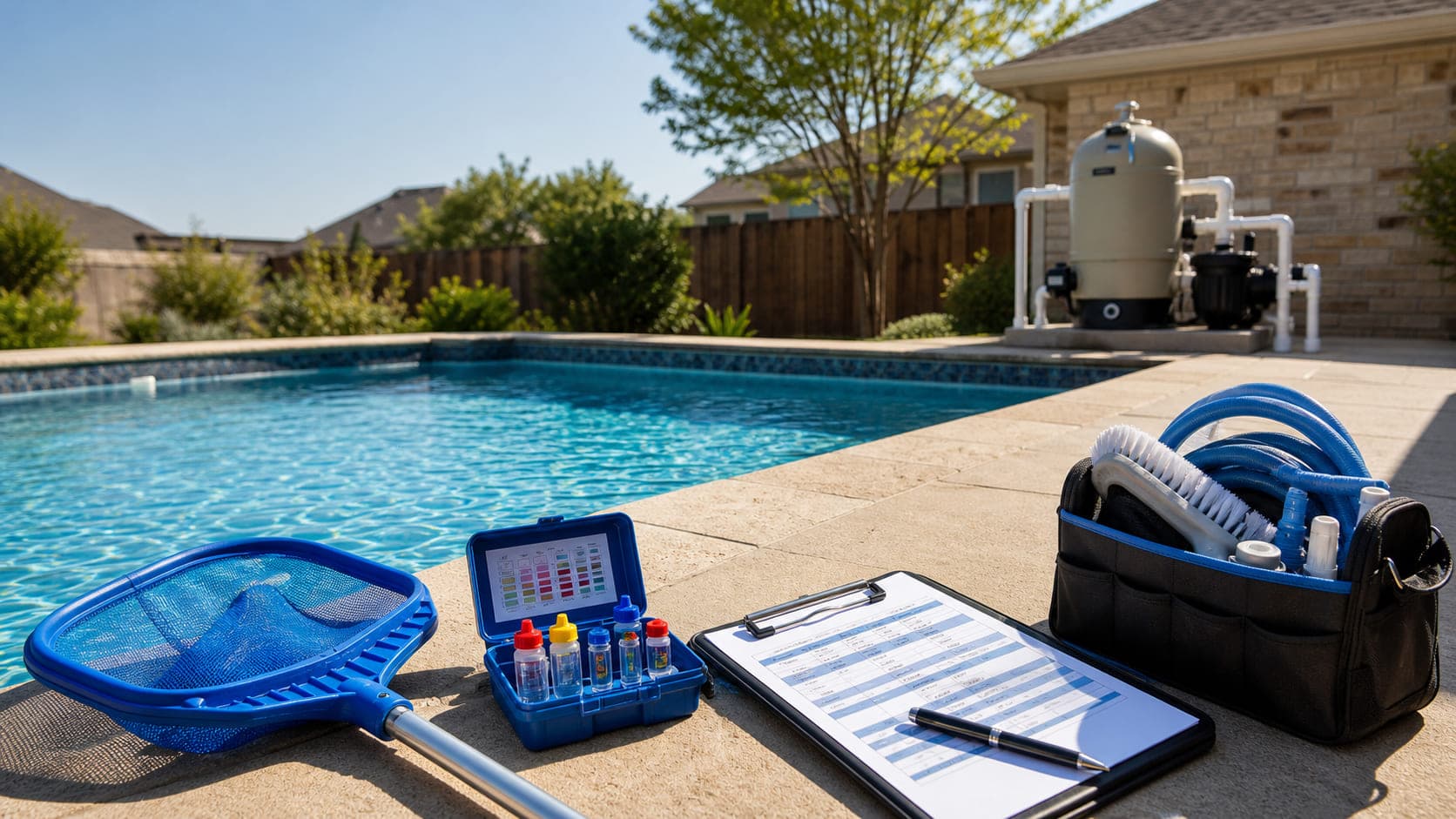
If you have spent any time searching for pool cleaning prices in Plano, you have probably noticed something frustrating: almost nobody publishes a number. You fill out a form, you wait for a callback, and only then does someone tell you what it costs. I think that is backwards. So here is a straight answer to what pool service actually costs in Plano and the wider Dallas-Fort Worth area in 2026, and exactly what makes the price go up or down.
What weekly pool service costs in Plano
Weekly full-service maintenance is the most common arrangement for DFW homeowners, and for good reason. The Texas heat burns through chlorine and grows algae fast, so most pools need eyes on them every week from spring through fall. Across Plano, Frisco, Allen, McKinney, and the surrounding suburbs, published and quoted rates for weekly full service generally fall in this range:
| Pool size | Typical monthly rate | What that usually means |
|---|---|---|
| Small | $120 to $160 / mo | Up to about 10,000 gallons, roughly 12 x 24 ft |
| Medium | $150 to $200 / mo | 10,000 to 20,000 gallons, the most common DFW size |
| Large | $200 to $250+ / mo | 20,000+ gallons, water features or spas add to the work |
At True Texan Pools our weekly maintenance starts at $120 per month for a small pool, $150 for a medium pool, and $225 and up for a large pool. That price is all-in: chemicals, testing and balancing, skimming, brushing, vacuuming, basket and filter checks, a full equipment inspection, and a photo report after every single visit. No separate chemical surcharge, no per-visit add-ons hiding in the fine print.
Why the wide range?
The gap between a $149 and a $250 monthly quote usually comes down to one thing: whether chemicals are included. Some companies advertise a low base rate and then bill chemicals separately, which can add $30 to $60 a month. Always ask whether a quote is all-inclusive before you compare it to another.
What a weekly visit should include
Price only means something when you know what you’re getting for it. A genuine full-service weekly visit covers all of the following, every time:
- Water testing and chemical balancing. Chlorine, pH, alkalinity, and stabilizer checked and corrected so the water stays safe and clear.
- Skimming and surface cleaning. Leaves, bugs, and debris off the surface and out of the skimmer and pump baskets.
- Brushing walls, steps, and floors to knock loose the algae and buildup a vacuum can’t reach on its own.
- Vacuuming the floor to pull out settled dirt and debris.
- Equipment inspection. A quick check of the pump, filter pressure, and visible plumbing so small problems get caught before they become repairs.
- A photo report. You should be able to see exactly what was done and the chemical readings for that day, without having to be home.
One-time cleans and green pool recovery
Not every pool needs a weekly plan. Sometimes you just bought a house with a neglected pool, which is a good deal easier to budget for if you looked at the pool before closing, or you came back from vacation to find the water has turned. This is where pricing shifts from a flat monthly rate to a condition-based quote, because the labor and chemicals scale with how bad the water is.
| Condition | What it looks like | Typical cost |
|---|---|---|
| Clear | Clear water, just needs a deep reset and balance | $150 to $275 |
| Cloudy | Cloudy or off-color with light algae | $200 to $340 |
| Green | Visibly green with heavy algae | $280 to $455 |
| Severe | Black or swamp water, can’t see the bottom | Custom, may need drain or acid wash |
The reason a green pool costs more is simple. Clearing algae takes multiple rounds of shock, hours of running the filter, repeated brushing, and often a filter cleaning afterward because all that dead algae has to go somewhere. A swamp pool that you can’t see the bottom of sometimes makes more sense to drain, acid wash, and refill than to treat chemically. We assess those on-site rather than guessing at a number. If you’re staring at a green pool right now, our green-to-clean recovery guide walks through exactly what is happening and how it gets fixed.
Filter cleaning and other add-ons
A few services sit outside the weekly plan because they happen on their own schedule:
- Filter cleaning: $125 to $150+ per visit. Cartridge and DE filters need a deep clean every three to six months. A clogged filter quietly raises your energy bill and leaves the water cloudy, so this isn’t optional maintenance.
- Equipment inspection: priced per visit. If a pump, filter, or valve is acting up, we check it, diagnose what is actually wrong, and give you an honest assessment of your options before you spend a dime.
- Storm and emergency cleanups: after a North Texas storm dumps a load of leaves and branches into your pool, a one-time recovery clean gets it back.
Plano’s pools are older, and that changes the math
Plano did most of its growing in the 1970s, 80s and 90s, decades before Frisco and Prosper filled in. That one fact separates a Plano quote from a quote three exits north, and it cuts both ways.
- The equipment is on its third or fourth generation. A pool built in 1988 has been through multiple pumps and probably a filter or two, often replaced piecemeal by different companies over thirty years. Single-speed pumps are still common here in a way they simply aren’t on newer builds. That matters now, because federal efficiency standards have closed off the cheap like-for-like swap, so the next pump failure on an older Plano pool is a bigger decision than it used to be. We work through it in repair or replace.
- The surface is on borrowed time, or past it. Plaster runs 7 to 12 years, so a pool from the late 80s is on its second or third finish and a good number are overdue. Replastering in DFW runs roughly $6,000 to $15,000. It’s a capital item rather than a service item, but a failing surface changes the service too: rough, etched plaster holds algae and takes more brushing to keep clean.
- The trees have had forty years to grow. Established Plano neighborhoods carry mature oak and pecan canopy directly over the water, which is the heaviest sustained debris load in the county. Frisco pools sit in open yards. This is the clearest single reason a Plano quote can exceed a Frisco quote for an identical pool.
- The pools themselves are simpler, and that saves you money. An 80s or 90s Plano build is far less likely to carry an attached spa, a raised water feature, or a tanning ledge than a 2015 build. Fewer surfaces, less plumbing, one body of water instead of two. On the service line item specifically, an older pool is often the cheaper pool.
The practical upshot for budgeting: on an older Plano pool, the monthly rate is the small number and the equipment is the large one. If your pump, filter, heater, and surface all date to the same decade, they will also reach the end of their lives in roughly the same decade. Our equipment lifespan guide covers what to expect and when, and the full cost of owning a pool here puts the monthly service rate in the context of everything else the pool asks for in a year.
Plano’s watering rules, and what they mean for a pool
This is worth getting from the city rather than from a search result, because the aggregator sites that rank for it are wrong about Plano specifically. We checked the City of Plano’s own watering guidelines in August 2026, and these are its terms.
- Twice a week maximum, April 1 to October 31. Even-numbered addresses water Mondays and Thursdays. Odd-numbered addresses water Tuesdays and Fridays. Addresses ending in zero, and HOA common areas, follow the even schedule. Several national directory sites publish a weekend schedule for Plano. That isn’t what the city says.
- No sprinklers between 10am and 6pm, the hottest hours of the day.
- Hand-held and soaker hoses are exempt, up to two hours on any day, for foundations and landscaping. Low-flow drip irrigation may run as needed.
- Filling a pool doesn’t require a variance. The city states this plainly on the same page. A variance is the mechanism for watering new landscaping outside the schedule, and pools sit outside that process entirely.
That last point is the one that saves Plano pool owners a phone call, and it’s frequently reported the other way around. What it doesn’t do is settle the question during a declared drought stage. Plano’s drought and emergency response plan is a separate ordinance that tightens outdoor water use as conditions worsen, so if a stage is in effect, check the current restrictions rather than assuming the ordinary rules still apply. We aren’t going to guess at what each stage permits.
For a pool, the practical relevance is topping off. A North Texas pool loses roughly half an inch a day to summer evaporation, close to a thousand gallons a week on a 15 by 30 pool, which is water you’re buying whether anyone services the pool or not. Our leak or evaporation guide covers telling normal loss from the kind that means something is wrong.
What drives your price
If you want to predict your own quote before you call anyone, these are the factors that move the number:
1. Pool size
More gallons means more chemicals and more surface area to brush and vacuum. This is the single biggest factor in a weekly rate.
2. Surroundings and tree cover
A pool under heavy oak and pecan canopy, which is common in established Plano neighborhoods, collects far more debris than an open backyard. More debris means more time per visit.
3. Features and equipment
Spas, water features, saltwater systems, and automation all add surfaces and systems to maintain. They’re worth having, but they do add to the work.
4. Current condition
Starting condition only matters for the first visit. A pool that has been neglected needs a recovery clean before a normal weekly plan makes sense, and that first reset is priced separately.
The cheapest quote is rarely the cheapest pool
I have taken over plenty of pools from companies that won the job on a rock-bottom price and then cut corners to make the margin work: skipped brushing, thin chemicals, a quick skim and gone. The water looks fine for a few weeks, then it turns, and now you’re paying for a $300 recovery on top of the monthly bill. Price for the work that keeps the pool stable, not just the lowest line item.
Why we publish our prices
Most Plano pool companies make you call before they reveal a number. We do the opposite. You can see exactly where our weekly, recovery, and filter pricing starts right on our homepage, adjust it for your pool size, and know roughly what you’re signing up for before anyone shows up at your door. No cancellation fees, and a Swim-Ready Guarantee that means if your pool isn’t swim-ready after our visit, we come back and fix it at no charge.
Price is only one piece of the decision, though. If you’re weighing a few companies, our guide on how to choose a pool service company in Plano covers the other questions worth asking before you hire.
If you want a firm number for your specific pool, the fastest path is a quick call. I will ask a few questions about size and condition and give you a real quote on the spot, no consultation runaround.
Frequently Asked Questions
How much does weekly pool service cost in Plano?
Weekly full-service pool maintenance in Plano typically runs from about $120 to $250 per month depending on pool size, with most standard residential pools landing between $150 and $200 per month. That price usually includes chemicals, cleaning, and equipment checks.
Why won’t most pool companies show their prices?
Most pool companies require a phone call or form before quoting because pricing varies by pool size and condition, and because a consultation gives them a chance to sell. The downside for homeowners is that comparison shopping becomes difficult. True Texan Pools publishes clear starting prices so you know roughly what to expect before anyone shows up.
Is pool service cheaper monthly or per visit?
A monthly weekly-service plan is almost always cheaper per visit than booking one-time cleans. Recurring service keeps the water balanced so each visit is faster, while a neglected pool needs more labor and chemicals to recover, which costs more.
Why does a Plano pool quote differ from a Frisco one?
Mostly age and trees. Plano built out decades earlier, so its pools carry older equipment, surfaces nearer the end of their life, and mature oak and pecan canopy that drops far more debris. Plano pools are also simpler, with fewer spas and water features, which pulls the service rate back down.
Do I need a permit to fill a pool in Plano?
No variance is required to fill a pool, which the City of Plano states directly in its watering guidelines. The twice-weekly schedule and the 10am to 6pm sprinkler ban apply to irrigation, not to pools. A declared drought stage is governed separately, so check the current stage before a large fill.
Does an older pool cost more to maintain?
Not usually on the monthly rate, since older Plano pools tend to be simpler shapes without spas or tanning ledges. The cost shows up as capital instead. Equipment installed in the same decade tends to fail in the same decade, so budget for the pump, filter, and surface rather than the weekly visit.
Work it out for your pool
All toolsFree, instant, and no email needed to see the answer.
Ready to stop thinking about your pool?
True Texan Pools keeps your water swim-ready all year, across Plano and the rest of DFW. Clear pricing, a photo report after every visit, and Austin doing every job himself.
Keep reading
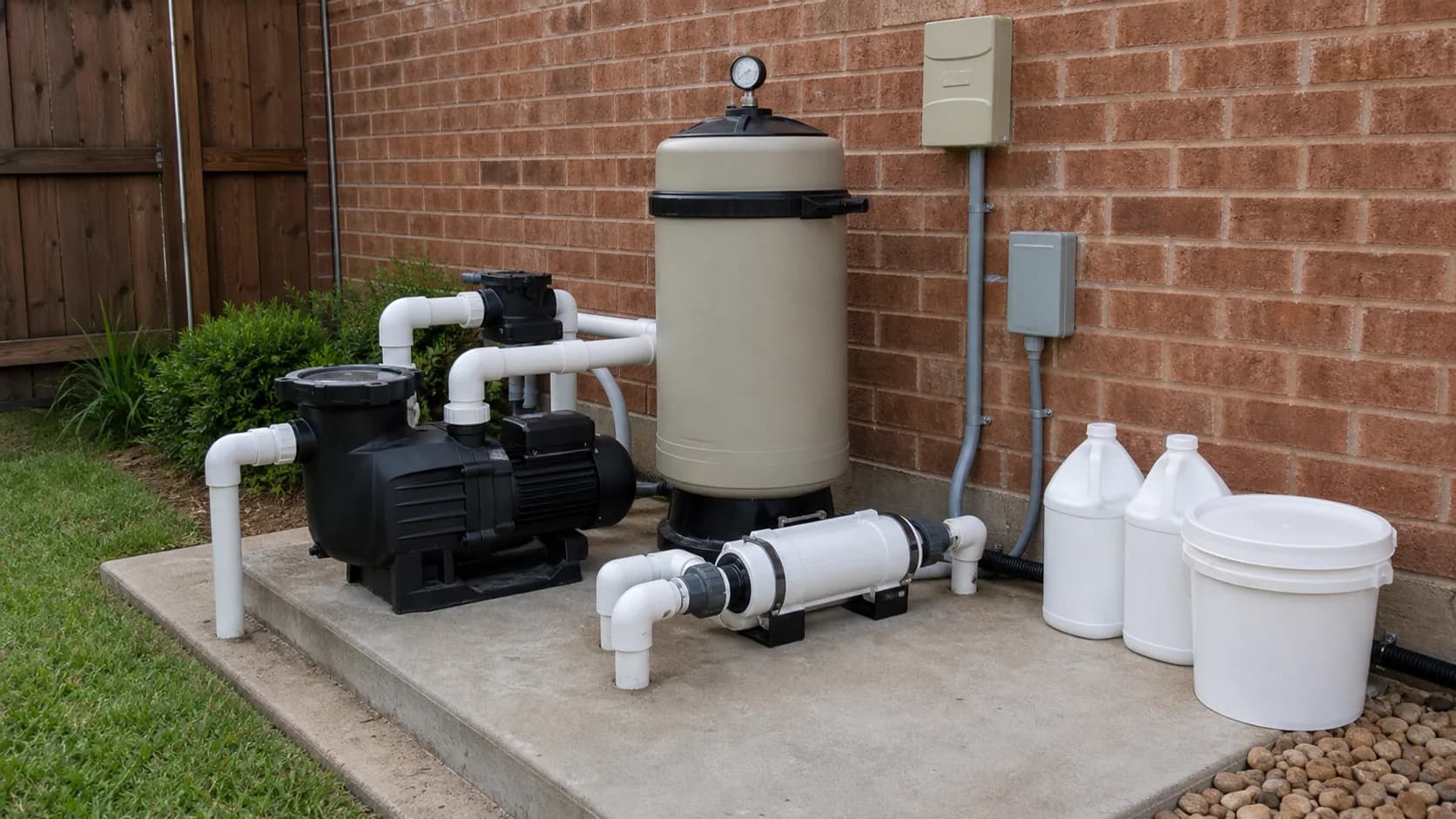
What Your Monthly Pool Bill Actually Covers, and What It Does Not
Three quotes at $135, $165, and $210 look like a clear decision until you find out they’re written in three different billing models. Here is how to compare them properly.
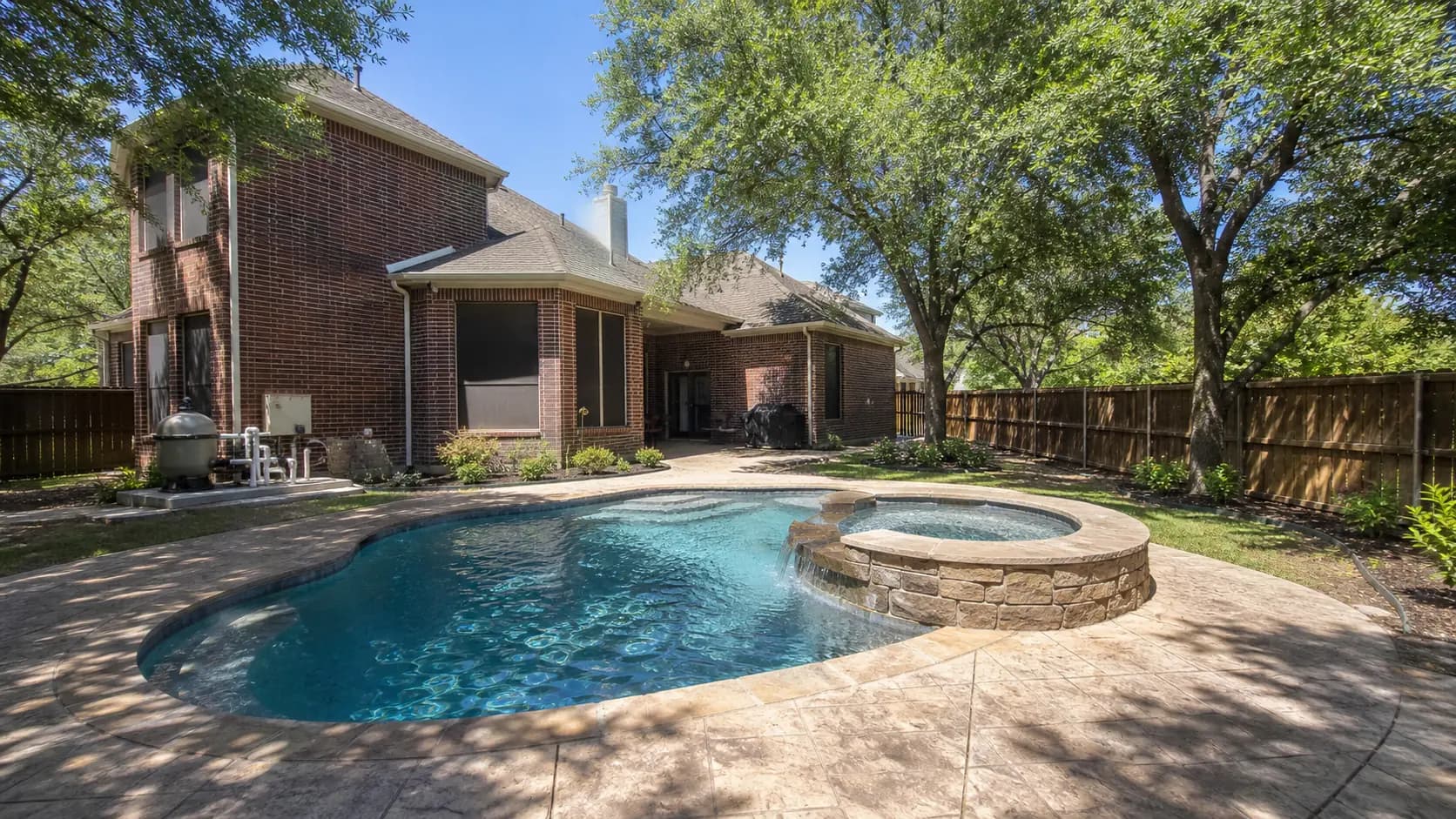
Pool Cleaning Cost in Allen, Texas
Allen built out through the 1990s and 2000s, so its pools are old enough that the plaster is due and young enough that the trees have grown into real shade. Both move the price, in opposite directions.