Pool Pump Will Not Prime: Nine Things to Check

Austin Andrews
Founder, True Texan Pools
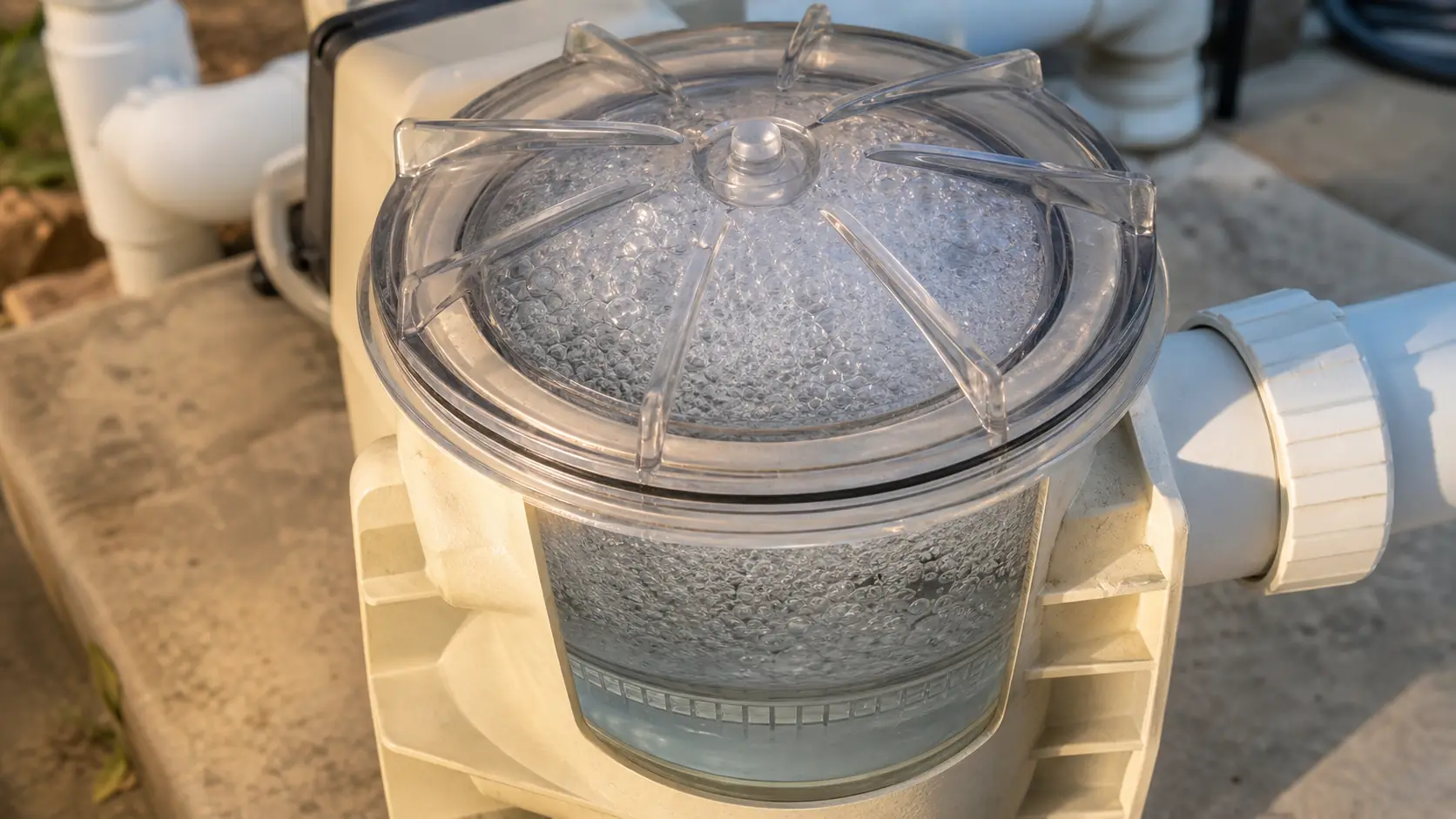
A pump that will not prime is almost never a broken pump. It is a suction-side air leak, and the whole diagnosis is a process of walking backward from the pump toward the pool until you find where air is getting in instead of water. Nine causes, in the order to check them, from the free ones to the ones that need somebody. Do them in order and most people never reach the bottom of the list.
Priming means filling the pump and the pipe leading to it with water and expelling the air. A centrifugal pump can move water but cannot move air, so if air keeps arriving faster than it can be pushed out, the pump spins uselessly and the pool stops circulating.
Which gives you the one sentence that organizes the entire diagnosis: the problem is upstream of the impeller. Everything from the skimmer and main drain, through the suction plumbing and valves, to the pump lid and its o-ring, is in scope. The filter, the heater, the returns, and the cell are not, no matter what they look like.
Before anything else
Do not leave the pump running while you work through this. The shaft seal is cooled and lubricated by the water passing through it, and a dry pump destroys that seal in a few minutes, turning a free fix into a repair. Switch it on to test, watch, and switch it off again.
Check these nine things, in this order
1. The water level
The single most common cause and the easiest to miss, because a pool that looks fine can be two inches low. The water must cover the skimmer throat. Below that, the skimmer gulps air with every ripple and feeds it straight to the pump.
Top up to mid-skimmer and try again. In a North Texas summer a pool loses close to a thousand gallons a week to evaporation on a 15 by 30, so this happens on its own within days if the autofill has failed or was switched off.
2. Both baskets
Skimmer basket first, then the pump basket. A packed skimmer basket starves the pump; a packed pump basket does the same thing closer in. Both take ten seconds to check and are frequently the whole answer, particularly during October leaf drop.
3. The pump lid and its o-ring
The most common genuine air leak on any pool. The lid sits under vacuum while the pump runs, so a poor seal pulls air continuously without ever leaking a drop of water.
- Take the lid off and look at the o-ring. If it is flattened, cracked, dry, or stretched so it will not sit in its groove, replace it. They are inexpensive and they are consumables.
- Lubricate it with a silicone-based pool lubricant. Never petroleum jelly, which degrades the rubber.
- Check the sealing surface on the pot for grit or a nick, and wipe it clean.
- Seat the lid squarely and hand tighten. Cross-threading a plastic lid is easy and expensive.
Our Texas sun is hard on these. UV dries an o-ring out well before its published life, which is why they fail earlier here than the manual suggests.
4. The valves
Photograph them, then work through them. Somebody may have closed one after a filter clean, an actuator may have stopped halfway, or a three-way may be sitting between positions, which is the worst case because it looks open.
Try priming with the main drain alone and then with the skimmer alone. If it primes on one and not the other, you have just localized the fault to that line, which is genuinely useful information.
5. The drain plugs
Most pumps have one or two threaded plugs at the bottom of the pot, used to drain it before a freeze. They back off with vibration, and a loose plug is a textbook air leak. Remove, wrap with fresh thread tape, and reseat snugly rather than brutally.
6. The pump pot and lid for cracks
Look at the clear lid against the light for a radial crack, and along the top of the pot for a split. Both are common after a hard freeze and both leak air rather than water when the pump is under vacuum. Post-freeze inspection covers what else to look at while you are there.
7. Unions and fittings on the suction side
Every union between the pool and the pump is a candidate. Check the o-ring inside each and that each is hand-tight. Glued joints occasionally develop hairline failures, which shows up as a persistent stream of fine bubbles you cannot otherwise account for.
8. A blockage in the suction line
Different symptom, same complaint. If the pump primes, runs, and then loses suction with no visible air, you may have a partial obstruction: a toy, a plug left in from a freeze procedure, or a wad of leaves in the skimmer throat below the basket. This produces high vacuum and weak flow rather than a churning basket full of bubbles.
9. The impeller
Last, because it needs the pump opened. Debris wrapped around an impeller reduces its ability to move water enough that it never clears the air. The tell is a pump that sounds like it is working normally but produces almost no flow, with the basket full of water rather than bubbles.
Bubbles tell you where to look
A steady stream of fine bubbles in the pump basket usually means a leak at the lid, an o-ring, or a union. Large intermittent gulps of air usually mean the skimmer is drawing air because the level is low or the weir is stuck. A basket that fills with water and then slowly empties as the pump runs points at a leak further out along the suction line. If the pump primes and holds but the return jets are fizzing, that is the same fault at a smaller scale, and air bubbles from the returns works through it.
How to actually prime it, once the cause is fixed
- Switch the pump off at the breaker.
- Take the lid off and fill the pot completely with a hose. On a long or high suction run, give it a couple of minutes with the hose running to fill more of the pipe.
- Clean, lubricate, and seat the o-ring, then hand tighten the lid.
- Open the air relief on the filter, if it has one, so trapped air can escape.
- Switch on and watch the basket. Water should establish within thirty seconds to a couple of minutes.
- Close the air relief once water comes out of it rather than air.
- If it has not primed after two minutes, switch off. Running longer will not help and may cost you the seal.
The North Texas cause the national guides leave out
A hairline freeze split in suction plumbing is a genuinely local addition to this list, and it is easy to miss because the pipe is under vacuum, so it pulls air in rather than pushing water out. The concrete stays dry, the pipe looks intact, and the pump behaves exactly as if the lid o-ring were bad.
Suspect it if the problem began after a hard freeze, if you have replaced the o-ring and the symptom persists, or if you can see fine bubbles with no other explanation. Sight along every run of exposed suction pipe, including the underside, and run a dry finger along it. A freeze split is often felt before it is seen.
Diagnosis at a glance
| What you observe | Most likely cause | Where to look |
|---|---|---|
| Fine bubbles constantly in the basket | Air leak at a seal | Lid o-ring, drain plugs, unions |
| Large gulps of air at intervals | Skimmer drawing air | Water level, stuck weir door |
| Primes, then loses it after minutes | Small air leak | O-ring, then unions, then a freeze split |
| Never primes at all | Blockage, closed valve, or a large leak | Valves, baskets, suction line |
| Basket full of water, almost no flow | Impeller obstruction | Open the wet end |
| High vacuum, weak flow, no bubbles | Partial blockage | Skimmer throat, suction line |
| Problem started after a freeze | Split suction pipe or cracked pot | Every exposed pipe, plus the pot and lid |
| Motor hums, does not turn | Not a priming problem at all | Capacitor or motor, and that is electrical work |
When to stop and call somebody
- The motor hums, trips the breaker, smells hot, or will not turn. That is electrical and it is not a priming fault.
- You have worked the whole list and it still pulls air, which usually means the leak is in buried plumbing.
- The pump ran dry for any length of time, in which case the shaft seal needs inspecting whatever it sounds like now.
- The pot or the housing is cracked, which is a wet end replacement rather than a repair.
- It is a persistent seasonal problem, which usually means an undersized or badly laid-out suction line rather than a component.
If it turns out to be the pump rather than the plumbing, repair or replace covers the decision and what pool repairs cost in DFW covers the numbers. And if the pool is losing water as well as prime, run the bucket test, because the two symptoms may share one cause.
Circulation is the one thing a pool cannot do without. A pump that has been off for three days in a Texas summer is a pool that is already on its way green, so this is one of the few problems genuinely worth escalating quickly. An equipment inspection will find a suction leak with a proper vacuum test rather than by elimination.
Frequently Asked Questions
Why will my pool pump not prime?
Almost always a suction-side air leak rather than a failing pump. Air enters only between the pool and the pump impeller, so the filter, heater, and return lines are not suspects. The common causes in order are a low water level, packed skimmer or pump baskets, a dried or unseated pump lid o-ring, a backed-off drain plug, a valve sitting between positions, and a split in suction plumbing.
Can running a pool pump dry damage it?
Yes, quickly. The shaft seal is cooled and lubricated by water passing through it, and a dry pump destroys that seal within a few minutes, turning a free fix into a repair. Switch the pump on to test, watch it, and switch it off again. If it has not primed after about two minutes, stop and go back to the diagnosis.
What do bubbles in the pump basket tell me?
Where to look. A steady stream of fine bubbles usually means a leak at the lid, an o-ring, or a union. Large intermittent gulps of air usually mean the skimmer is drawing air because the water level is low or the weir door is stuck. A basket that fills with water and then slowly empties as the pump runs points at a leak further out along the suction line.
Can a freeze cause a pump to stop priming?
Yes, and it is the cause national guides leave out. A hairline freeze split in suction plumbing pulls air in rather than pushing water out, because that side runs under vacuum, so the concrete stays dry and the pipe looks intact. Suspect it if the problem started after a hard freeze or if replacing the lid o-ring changed nothing. Sight and feel along every exposed suction pipe, including the underside.
What if the pump primes but loses it after a few minutes?
That pattern means a small air leak rather than a blockage. Check the lid o-ring first, then the drain plugs, then every union on the suction side, then the pipe itself. A pump that never primes at all points more toward a blockage, a closed valve, or a large leak.
When should I call somebody about a pump that will not prime?
When the motor hums, trips the breaker, smells hot, or will not turn, which is electrical rather than a priming fault. When you have worked the whole list and it still pulls air, which usually means buried plumbing. When the pot or housing is cracked. And when the pump ran dry for any length of time, in which case the shaft seal needs inspecting whatever it sounds like now.
Ready to stop thinking about your pool?
True Texan Pools keeps your water swim-ready year-round across Plano and all of DFW. Clear pricing, no contracts, and a photo report after every visit. Austin handles every job personally.
Keep reading
Chlorine Reads Fine and the Pool Still Went Green
Three parts per million of free chlorine, and the walls still feel slick. The problem is not the chlorine number, it is the number you are reading it against.
Is My Pool Leaking or Just Evaporating? The Bucket Test
There is a definitive test for this, it costs nothing, and it takes 24 hours. Here is how to run it, and how the pattern of the loss tells you which part of the system to suspect.