Air Bubbles From the Pool Returns: Where to Look

Austin Andrews
Founder, True Texan Pools
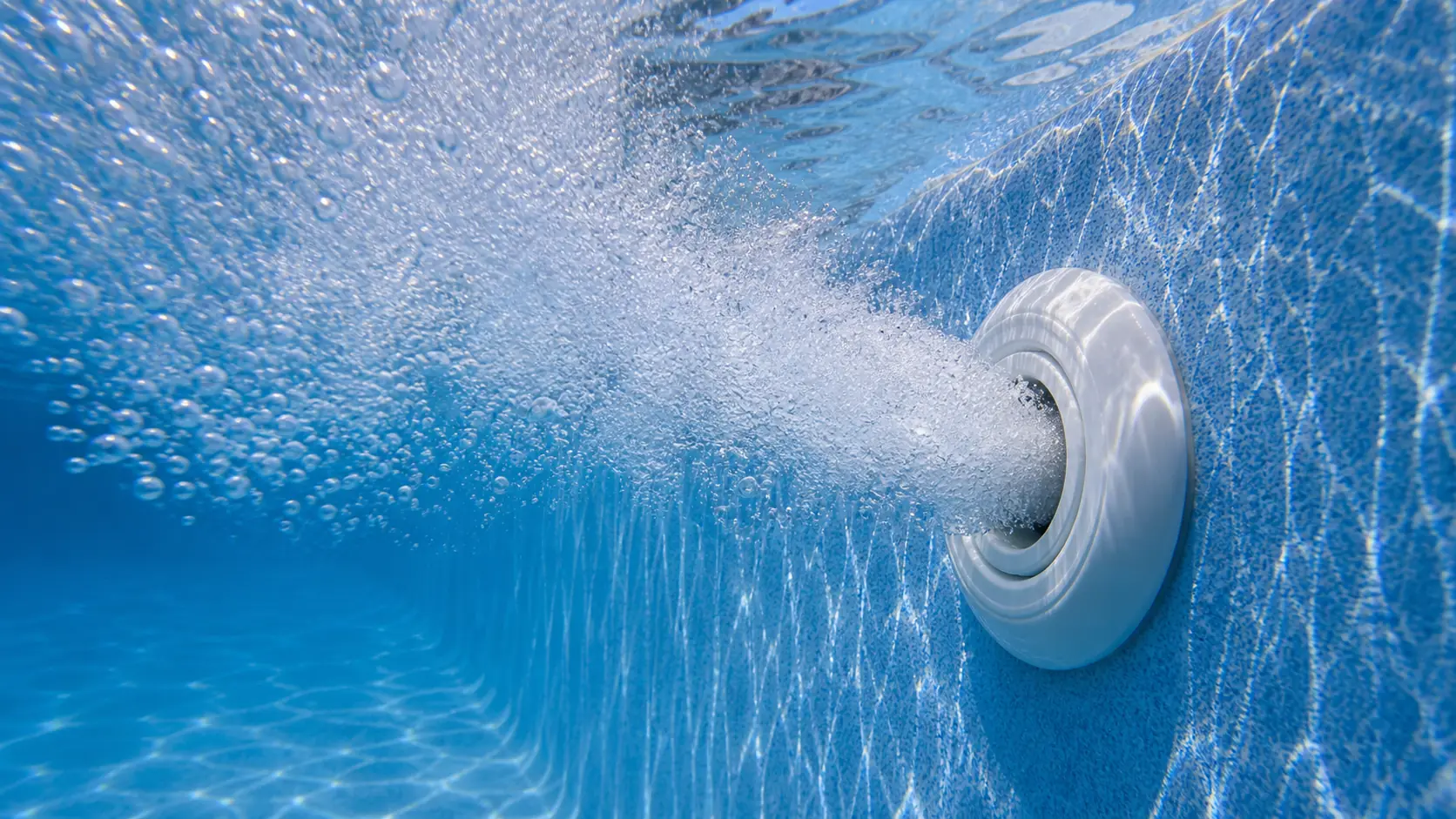
Bubbles coming out of the return jets mean air is getting into the system, and air only gets in on the suction side, between the pool and the pump impeller. That single fact eliminates the filter, the heater, the salt cell, and the return plumbing from the investigation entirely, which is most of the diagnosis. Here is how to read the bubbles, where to look, and why this is worth fixing rather than living with.
This is the milder cousin of a pump that will not prime. Same cause, smaller leak. If yours will not prime at all, go to the won’t-prime diagnostic, which covers blockages as well. If it primes and runs but the returns are fizzing, you are in the right place.
The one rule that organizes everything
A pool is a loop with a pump in the middle. Water is pulled from the pool to the pump under vacuum, and pushed from the pump back to the pool under pressure.
A hole on the pressure side leaks water out. A hole on the suction side pulls air in. That is why air bubbles are always a suction-side story, and why the filter, heater, cell, and return lines are not suspects no matter how convenient it would be if they were. Equipment 101 walks the loop in order if you want the whole picture.
One genuine exception
A short burst of bubbles for a minute after the pump starts, or right after a filter clean, is just trapped air being purged. That is normal. What is not normal is bubbles that persist for the whole run, or that appear where they were not there before.
Read the bubbles first
| What you see | Most likely cause | Where to look first |
|---|---|---|
| Fine, steady stream from the returns, constant | A seal leaking a small amount of air continuously | Pump lid o-ring, then drain plugs, then unions |
| Large gulps at intervals, with a slurping noise at the skimmer | The skimmer is drawing air | Water level, then the weir door |
| Bubbles that worsen at higher pump speed | A leak that opens up under higher vacuum | Suction side plumbing and fittings |
| Bubbles plus falling filter pressure | Restricted suction, air being pulled past the restriction | Baskets, valves, water level |
| Bubbles that started right after service | Something was disturbed and not reseated | Whatever was last opened, usually the lid or a union |
| Bubbles that started after a hard freeze | A hairline split in suction plumbing | Every run of exposed suction pipe, plus the pump pot |
| Bubbles only when the cleaner runs | The cleaner's suction line or its connection | The cleaner hose, its fitting, and the dedicated line |
Check these, in this order
1. Water level
Genuinely the most common cause and the easiest to overlook, because a pool two inches low still looks completely normal. The water has to cover the skimmer throat. Below that, the skimmer takes a gulp of air with every ripple.
In a North Texas summer this happens on its own within days: half an inch a day of evaporation is ordinary, which on a 15 by 30 pool is close to a thousand gallons a week. Top up to mid-skimmer and see whether the problem simply goes away. If the level keeps dropping, run the bucket test, because you may have two symptoms and one cause.
2. The skimmer weir door
The hinged flap in the skimmer opening. It is supposed to float and swing freely. If it has stuck open, the skimmer draws from a wider band of surface and takes air with it; if it has stuck shut, flow is restricted. Both are ten second fixes and both are frequently the answer.
3. Both baskets
Skimmer basket, then pump basket. A packed basket restricts flow, which raises vacuum, which makes every marginal seal on the suction side start pulling air. Restriction and air leaks compound each other, which is why this is worth clearing before hunting for a leak.
4. The pump lid and its o-ring
The most common genuine air leak on any pool, because the lid sits under vacuum and a poor seal there pulls air without ever leaking a drop of water.
- Take the lid off, inspect the o-ring, and replace it if it is flat, cracked, dry, or no longer sits in its groove. They are consumables, and our sun ages them faster than the manual assumes.
- Lubricate with a silicone-based pool lubricant, never petroleum jelly.
- Wipe the sealing surface on the pot clean of grit, and check it for a nick.
- Seat the lid squarely and hand tighten only.
5. The drain plugs
The threaded plugs at the base of the pump pot, used to drain it before a freeze. They vibrate loose, and a loose plug is a textbook air leak. Remove, apply fresh thread tape, reseat snugly.
6. The valves
A three-way valve sitting between positions is the worst case, because it looks open. Move each one fully to its intended position. On automated systems, watch each actuator complete its travel rather than assuming it did.
A useful test: close the main drain and run on skimmers only, then reverse it. If the bubbles appear on one configuration and not the other, you have narrowed the fault to that line, which is real progress.
7. Unions and pipe on the suction side
Check the o-ring inside every union between pool and pump, and that each is hand-tight. Then sight along every run of exposed suction pipe, including the underside, and run a dry finger along it looking for a hairline. In North Texas, add the specific case of a freeze split, which pulls air without ever wetting the concrete because the pipe is under vacuum. Post-freeze inspection covers what else to look for.
8. The cleaner line, if you have one
A suction-side cleaner adds a whole extra length of hose, a fitting, and often a dedicated suction port to the vacuum side of the system. A cracked hose section or a poor connection at the wall fitting introduces air exactly like any other suction leak. Test by disconnecting the cleaner and plugging the port.
Finding a leak you cannot see
With the pump running, work slowly along the suction side with a little shaving cream or liquid soap around each joint and fitting. Where air is being drawn in, it gets sucked into the gap and you will see the foam dimple or disappear. It is a crude test and it works, and it is far cheaper than replacing parts by elimination.
Why to fix it rather than live with it
Plenty of people watch a fizzing return jet for a season. Four reasons not to.
- Flow. Air in the impeller reduces the volume of water actually moved, so your daily turnover is less than the schedule implies and the pool is under-filtered.
- Your gauge stops meaning anything. Filter pressure with air in the system does not compare with your clean baseline, so the number you use to decide filter cleaning is no longer reliable. Filter cleaning depends entirely on that number.
- Salt systems stop generating. Most cells have a flow switch, and marginal flow with air in it can trip it, so the pool quietly stops making chlorine while everything appears to be running.
- It gets worse. A small air leak becomes a pump that loses prime, and a pump that runs dry destroys its shaft seal in minutes. Today it is an o-ring. Next month it is a repair.
The sequence, condensed
- Top the pool up to mid-skimmer and observe.
- Free the weir door, empty both baskets.
- Replace and lubricate the pump lid o-ring, reseat the lid squarely.
- Reseal the drain plugs with fresh thread tape.
- Set every valve fully, and test skimmer-only against drain-only.
- Check every suction-side union, then sight and feel along every exposed suction pipe.
- Disconnect the cleaner and plug its port to rule it out.
- Use the foam test on anything remaining.
Most pools stop fizzing somewhere in the first four steps.
Where to stop
- You have worked the whole list and it still pulls air, which usually means the leak is in buried plumbing and needs a proper vacuum test.
- The pump pot or lid is cracked, which is a wet end replacement rather than a repair.
- The pump has been losing prime as well, in which case the shaft seal should be inspected whatever it sounds like now.
- The motor hums, trips the breaker, or smells hot. That is electrical and it is a different problem entirely.
An equipment inspection will find a suction leak with a proper vacuum test rather than by swapping parts, and repair costs in DFW covers what the plumbing work runs if it turns out to be pipe rather than a seal. Before booking anybody though, spend the five dollars on a lid o-ring and a tube of silicone lubricant. On most pools that is the whole repair, and it is the cheapest thing on the pad by a wide margin.
Frequently Asked Questions
What causes air bubbles to come out of pool return jets?
Air entering on the suction side, meaning anywhere between the pool and the pump impeller. Everything after the pump runs under pressure and pushes water out rather than pulling air in, so the filter, heater, salt cell, and return plumbing are not suspects. The usual causes in order are a low water level, a stuck skimmer weir, a packed basket, and a pump lid o-ring that has dried out.
Are air bubbles in a pool return dangerous?
Not to swimmers, but they are worth fixing. Air in the impeller reduces the volume of water actually moved, so your daily turnover is less than the schedule implies. It also makes your filter pressure gauge unreliable against its clean baseline, and on a salt pool marginal flow can trip the flow switch and stop chlorine generation entirely while everything appears to run.
Is it normal to get bubbles when the pump first starts?
Yes. A short burst of bubbles for a minute after startup, or right after a filter clean, is just trapped air being purged from the system. What is not normal is bubbles that persist for the whole run, or that appear where they were not there before.
How do I find a suction side air leak I cannot see?
With the pump running, work slowly along the suction side applying a little shaving cream or liquid soap around each joint and fitting. Where air is being drawn in, it gets pulled into the gap and the foam visibly dimples or disappears. It is crude, it works, and it is far cheaper than replacing parts by elimination.
Can a freeze cause air bubbles in a pool?
Yes, and it is a specifically North Texas cause. A hairline freeze split in suction plumbing pulls air in rather than pushing water out, because that side of the system is under vacuum, so the concrete stays dry and the pipe looks intact. Suspect it if the problem began after a hard freeze or if replacing the lid o-ring made no difference.
What is the difference between bubbles in the returns and a pump that will not prime?
The same cause at different scales. Bubbles mean a small air leak the pump is coping with. A pump that will not prime means air is arriving faster than the pump can expel it, or something is blocked. Both are diagnosed on the suction side, but a pump that will not prime is more urgent, because a pump running dry destroys its shaft seal in minutes.
Ready to stop thinking about your pool?
True Texan Pools keeps your water swim-ready year-round across Plano and all of DFW. Clear pricing, no contracts, and a photo report after every visit. Austin handles every job personally.
Keep reading
Chlorine Reads Fine and the Pool Still Went Green
Three parts per million of free chlorine, and the walls still feel slick. The problem is not the chlorine number, it is the number you are reading it against.
Is My Pool Leaking or Just Evaporating? The Bucket Test
There is a definitive test for this, it costs nothing, and it takes 24 hours. Here is how to run it, and how the pattern of the loss tells you which part of the system to suspect.