Pool Light Replacement Cost, and When It Is Worth Converting to LED

Austin Andrews
Founder, True Texan Pools
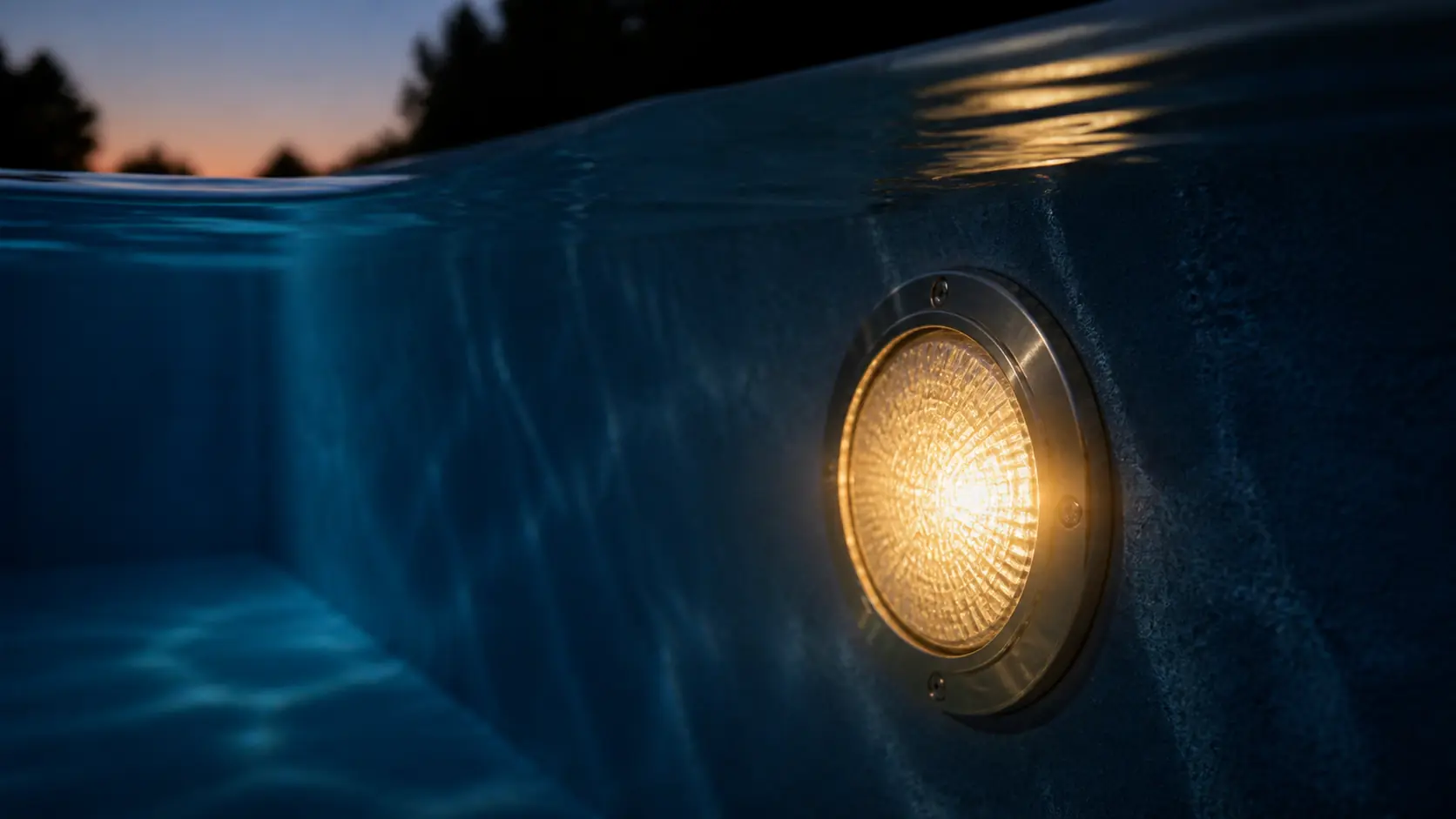
A pool light that has been out for two summers is the most commonly deferred repair in the backyard, and usually for a good reason: nobody knows what it will cost, and anything involving electricity and water sounds expensive. The realistic range is $450 to $1,500 for a color LED replacement on a typical Collin County pool. Here is what determines where in that range you land, what is genuinely a safety issue rather than an inconvenience, and why the answer changes completely if your pool is already being drained.
Pool lights sit in the category of equipment nobody thinks about until it fails, along with the things covered in pool equipment 101. Unlike a pump, a dead light does not stop the pool working, which is exactly why it stays dead.
How a pool light is put together
Understanding the parts explains the price, because the difference between a $200 job and a $2,500 job is which part failed.
- The niche is the housing cast into the pool wall. It holds the fixture and is permanently part of the shell.
- The fixture is the sealed light assembly that sits in the niche, held by a single screw at the top, with a long cord coiled behind it.
- The cord and conduit run from the niche through a pipe in the wall to a junction box on the deck, above water level.
- The junction box and circuit, including the GFCI protection, live at the deck or the equipment pad.
The crucial detail for cost is that the cord is deliberately long, coiled in the niche. A technician can unscrew the fixture, pull it out of the water, and set it on the deck with the power off, all with the pool full. That is why most light work does not require draining anything.
What it costs
| Job | Typical cost | Notes |
|---|---|---|
| Diagnosis and reset of a tripping circuit | $100 to $200 | Often folded into the repair if you proceed |
| Bulb replacement, older incandescent fixture | $150 to $350 | Only worth it if the fixture is sound and you are not converting |
| Gasket and lens reseal | $150 to $300 | The fixture flooded but is otherwise fine |
| Color LED fixture replacement | $450 to $1,500 | The common job. Fixture is most of the cost, labor is one to two hours |
| White LED fixture replacement | $350 to $900 | Cheaper than color, and plenty of pools do not need color |
| Junction box or deck wiring repair | $300 to $900 | Electrician territory, priced by what is found |
| New conduit run or niche repair | $1,500 and up | Requires the pool empty. Do it during a resurface or not at all |
| Adding a light where none exists | $2,500 and up | Core drilling a shell and running new conduit is major work |
Why fixtures cost what they do
People are routinely surprised that the part is $400 to $900. A pool light fixture is a sealed, water-rated, corrosion-resistant assembly with a long factory-terminated cord, built to sit permanently submerged in chlorinated water. The cord alone is a significant portion of the manufacturing cost, and it is sold in specific lengths so the fixture reaches your particular junction box. This is also why buying a fixture online with the wrong cord length is a common and annoying mistake.
Is it the bulb, the fixture, or the circuit?
Some of this you can narrow down yourself before calling anyone, which is worth doing because it changes who you should call.
| Symptom | Likely cause | Who fixes it |
|---|---|---|
| Light simply does not come on, nothing trips | Bulb or failed LED driver | Pool service |
| GFCI trips the moment you switch it on | Water in the fixture, damaged cord, or a wiring fault | Electrician, and leave it off |
| Light works but is dim, yellowed, or hazy | Flooded lens or a clouded gasket | Pool service |
| Colors stick, will not cycle, or the wrong color | Controller sync issue on a color LED | Pool service |
| Visible water inside the lens | Failed gasket, fixture flooded | Pool service |
| Light flickers with other equipment | Circuit or voltage problem | Electrician |
| Breaker off and nobody knows why | Somebody turned it off for a reason | Find out before turning it back on |
A GFCI that trips is not being fussy
Ground fault protection on a pool light exists because a fault in a submerged 120 volt fixture can energize the water. When the GFCI trips, it has detected current going somewhere it should not, and that somewhere is potentially the pool. Do not reset it repeatedly, do not swim, and do not let anybody tell you it is a nuisance trip. Turn the breaker off and get it diagnosed.
This is not a theoretical hazard. The CPSC’s Don’t Swim with Shocks guidance names faulty underwater lighting first among the electrical hazards it is concerned about, and it is specific about which pools worry it most: older ones, where the underwater fixtures have degraded with age and may never have been protected by a GFCI at all. That describes a lot of the pools in Plano and Richardson. It belongs with the other stop-swimming conditions in is your pool water safe to swim in.
The case for converting to LED
Most pools built here before roughly 2010 have an incandescent fixture, typically 300 or 500 watts. A modern LED replacement draws somewhere in the region of 30 to 70 watts for equal or better light output.
| Incandescent | LED | |
|---|---|---|
| Typical draw | 300 to 500 watts | 30 to 70 watts |
| Bulb life | About 1 to 2 seasons of regular use | Many years |
| Bulb cost when it goes | $40 to $120 plus labor each time | Fixture replaced as a unit, rarely |
| Color | White only, unless a lens is fitted | Color and effects standard on most |
| Voltage | Commonly 120 volt | Commonly low voltage, which is safer |
| Heat in the niche | Considerable | Minimal |
The running cost difference is genuine but small in absolute terms, because a pool light runs a few hours an evening rather than continuously. Run four hours a night through the season and a 500 watt fixture costs something on the order of $40 to $60 a year in electricity against roughly $5 for the LED. What actually pays for the conversion is not the power, it is not replacing a bulb and paying a service call every year or two.
The secondary argument is safety. Older 120 volt fixtures are legal where they were installed to code, but low-voltage LED is a better arrangement in a wet environment, and depending on what is being replaced and how, an electrician may tell you the circuit needs to be brought up to current requirements as part of the work. That is not an upsell, that is how electrical codes work when a circuit is modified.
Do it while the pool is empty
Everything above assumes the fixture comes out on its cord with the pool full, which covers the great majority of light jobs. The exceptions all involve the parts you cannot reach through the water: a corroded or damaged niche, a blocked or broken conduit, or a cord that will not pull because something in the wall has collapsed.
Those jobs need the pool drained, and draining a pool in Collin County clay is not a casual undertaking, for the reasons in draining a pool here. Which produces a simple rule: if you are already having the pool resurfaced, deal with the light in the same window even if it currently works. Adding a light, replacing a niche, or running new conduit costs a fraction of what it does as a standalone job with a drain attached. The rest of that same-window checklist is in the resurfacing guide.
What to ask when you get a quote
- Is the niche and conduit sound? The one thing that turns this from a $700 job into a $3,000 job, and it should be checked before a fixture is ordered.
- What cord length, measured how? The fixture has to reach the junction box with the coil intact. This gets guessed and then gets returned.
- Is the replacement low voltage or 120 volt? And if the answer is 120 volt, why.
- Does it work with my existing switch or automation? Color LED fixtures cycle colors by counting power interruptions, so they need to be compatible with whatever controls them or you get the wrong color permanently.
- Who is doing the electrical portion? Fixture swaps are pool service work. Junction boxes, circuits, and anything that trips a GFCI are an electrician’s. A company that blurs that line is worth a second opinion.
- What is the warranty on the fixture and on the labor? Separately, because they are usually different.
Austin’s Tip
If your light is out and you are not sure you care, price the LED conversion anyway and then think about the safety argument rather than the ambience one. A lit pool at night is visible from the house. An unlit one is a dark rectangle in a yard where children and dogs move around after sunset, and that is a real part of the layered approach described in drowning prevention layers.
Where we stop and an electrician starts
We pull and replace fixtures, and we will tell you honestly whether what you have is a fixture problem or a circuit problem. We do not do the circuit. The junction box, anything that trips a GFCI, and any new or upgraded line are licensed electrical work, and who holds that license is one of the eleven questions we suggest asking any pool company in how to choose a pool service. A company willing to blur that line on a submerged 120 volt fixture is telling you something about the rest of its work.
Within that boundary the summary is simple. Most dead lights are a fixture swap done with the pool full, at $450 to $1,500 for color LED. A tripping GFCI is a stop-everything problem, not a reset. Converting from incandescent pays for itself in service calls avoided rather than in electricity. And anything touching the niche or the conduit should be timed to a drain that is already happening, because in this soil the drain is the expensive and risky part of the job, not the light.
Frequently Asked Questions
How much does it cost to replace a pool light?
In the Dallas area, a color LED fixture replacement typically runs $450 to $1,500 installed, and a white LED $350 to $900. A bulb replacement in an older incandescent fixture is $150 to $350. The fixture itself is most of the cost; labor is normally one to two hours. Jobs that involve the niche, the conduit, or deck wiring cost considerably more because they can require the pool to be drained.
Do you have to drain a pool to replace the light?
Almost never. The fixture sits in a niche in the wall held by a single screw, with a deliberately long cord coiled behind it, so a technician can shut the power off, unscrew it, and lift it onto the deck with the pool full. Draining is only needed when the niche itself, the conduit, or a cord that will not pull is the problem, and in Collin County clay that is a job to combine with a resurfacing rather than schedule on its own.
Why does my pool light trip the GFCI?
Because it has detected current going somewhere it should not, which in a submerged fixture potentially means the water. Common causes are a flooded fixture, a damaged cord, or a wiring fault. Do not reset it repeatedly and do not swim. Turn the breaker off and get an electrician to diagnose it. This is one of the few pool problems that is genuinely dangerous rather than merely expensive.
Is converting a pool light to LED worth it?
Usually, though not for the reason people expect. An LED draws roughly 30 to 70 watts against 300 to 500 for the incandescent fixture it replaces, but a pool light only runs a few hours an evening, so the electricity saving is modest. What pays for the conversion is not replacing a bulb and paying a service call every year or two, plus color capability and a low-voltage fixture that is a better arrangement in a wet environment.
Can I buy a pool light fixture online and have someone install it?
You can, and the common mistake is cord length. The fixture has to reach your particular junction box with its coil intact, and cords are sold in specific lengths. Get the length measured before ordering, confirm the voltage matches your existing circuit, and check that a color fixture is compatible with whatever switch or automation controls it, since color LEDs cycle by counting power interruptions.
How long do LED pool lights last?
Many years of normal use, against roughly one to two seasons for an incandescent bulb. The failure mode is usually the seal rather than the diodes: water gets into the fixture through an aged gasket and the unit floods. That is why fixtures are replaced as a sealed assembly rather than opened and repaired, and why a hazy or water-filled lens is worth acting on before it fails completely.
Ready to stop thinking about your pool?
True Texan Pools keeps your water swim-ready all year, across Plano and the rest of DFW. Clear pricing, a photo report after every visit, and Austin doing every job himself.
Keep reading
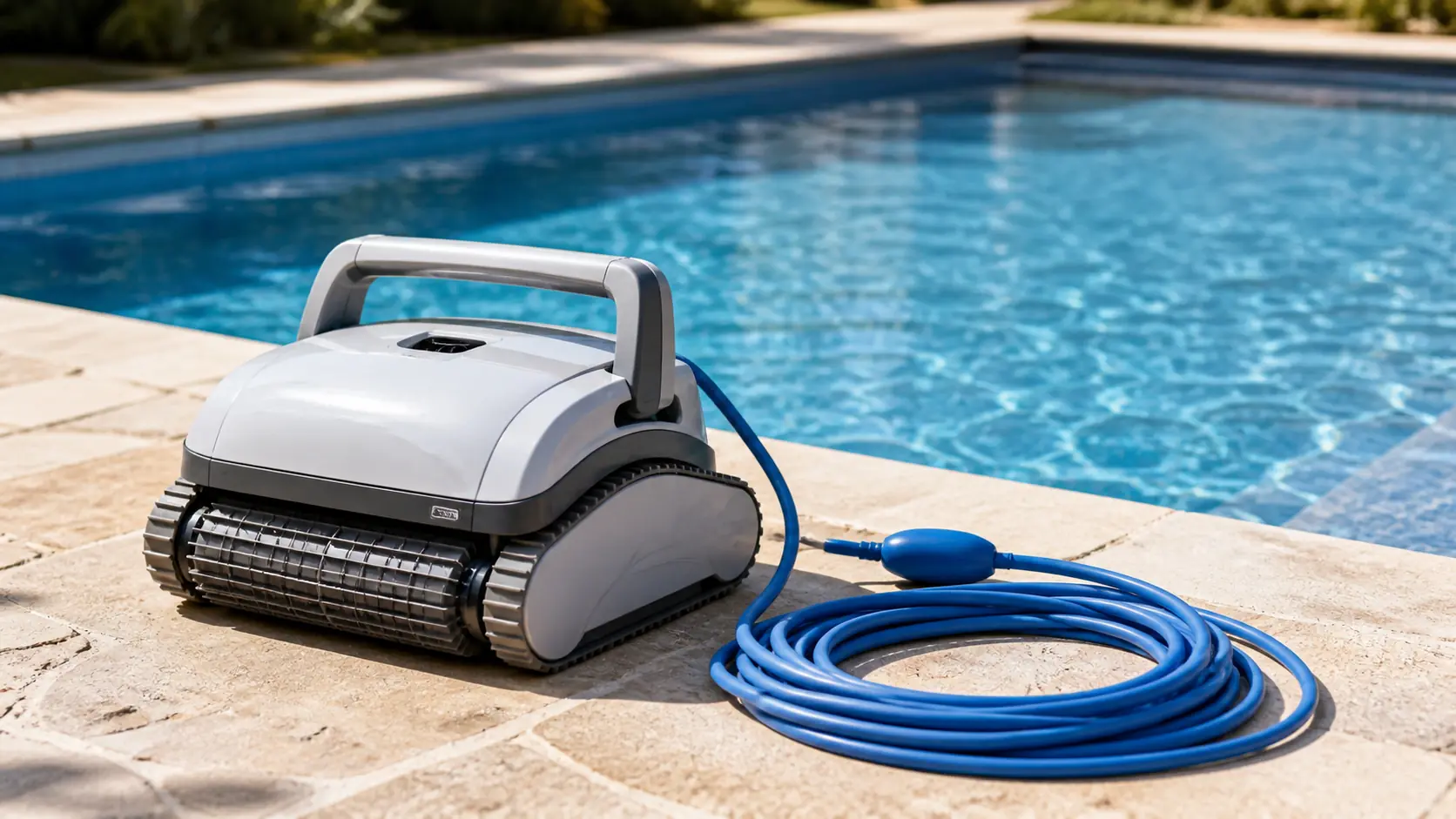
Robotic, Suction, or Pressure: Which Pool Cleaner Suits Your Pool
Three kinds of cleaner exist and the right one depends on your plumbing and your debris, not on the review you read. There is also a question underneath: what does a cleaner actually replace?
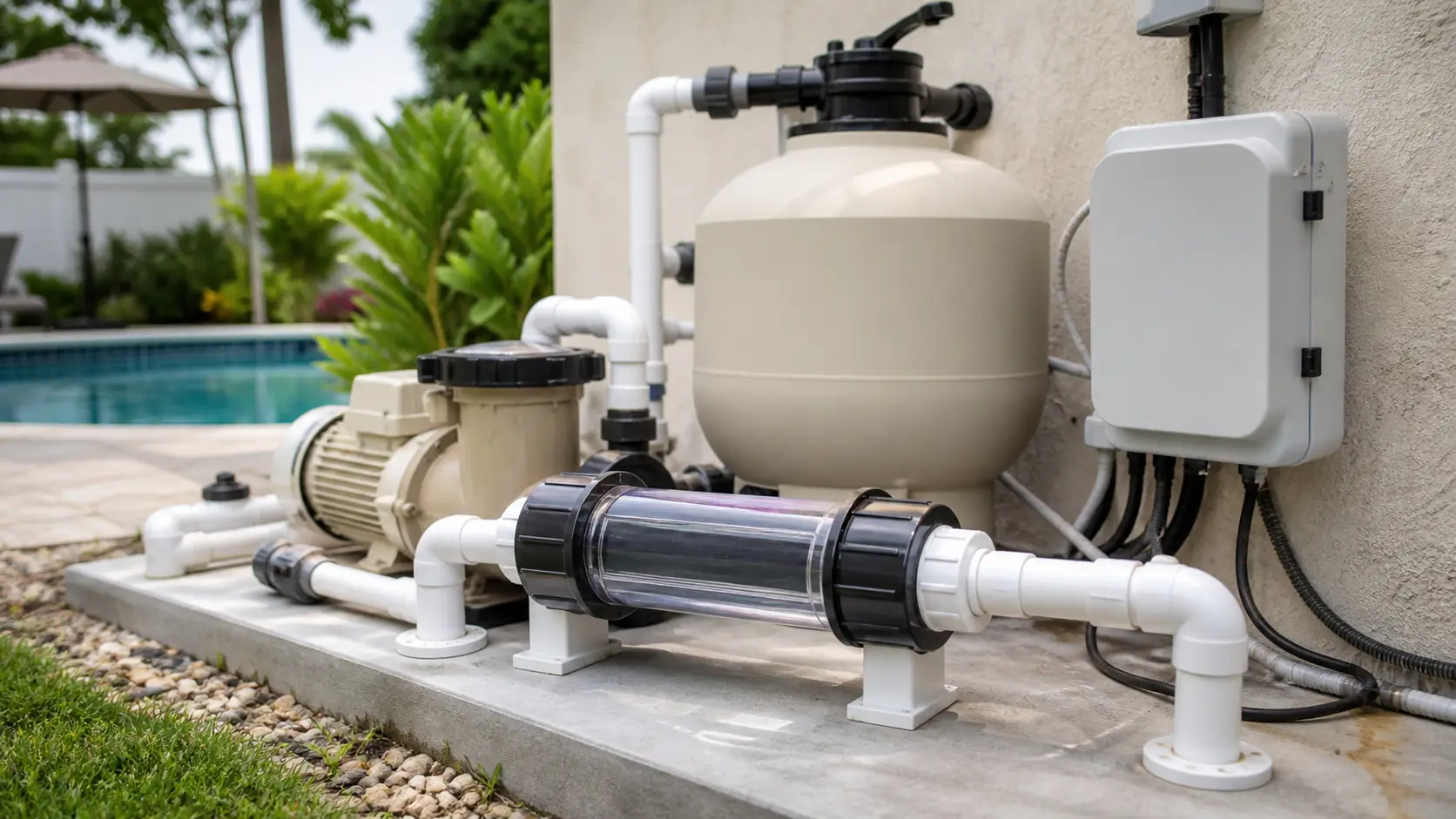
What It Costs to Convert a Pool to Salt Water in Texas
The hardware goes on in an afternoon. What changes permanently is what your water does to your equipment and your plaster, and that is the part that decides whether it was a good idea.