Salt Cell Lifespan and What Replacement Costs

Austin Andrews
Founder, True Texan Pools
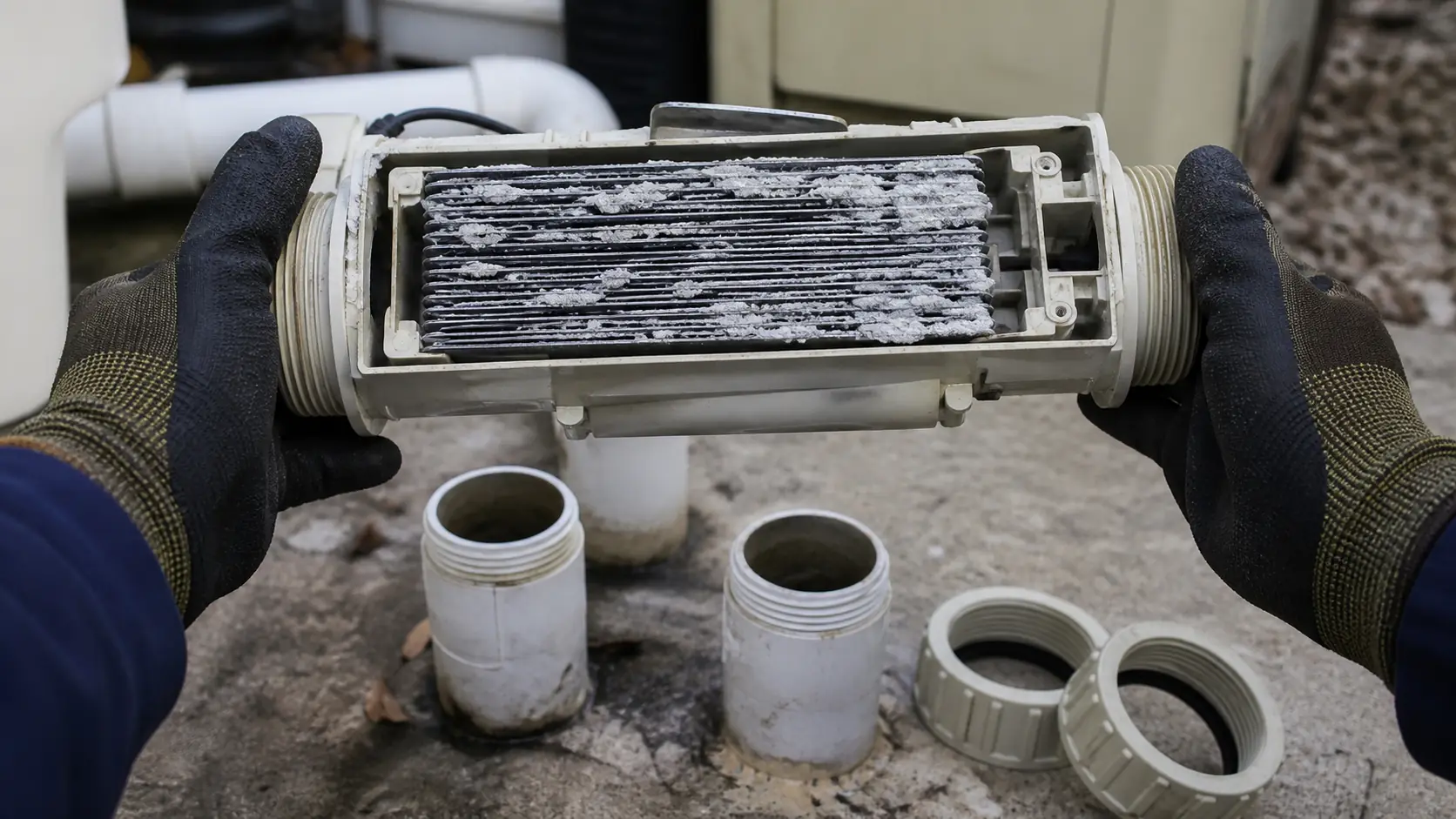
A salt cell is not a permanent part of a salt pool, it is a consumable with a three to six year life and a $600 to $1,000 installed replacement cost. Nobody mentions that at installation, which is why the bill arrives as a shock rather than as a scheduled item. Here is what actually wears out, the two North Texas conditions that shorten it, how to tell a dying cell from a chemistry problem, and how to get the long end of that range instead of the short one.
Salt pools get sold on a genuine advantage: the water is gentler, the chlorine is produced continuously rather than in doses, and you are not carrying jugs. All of that is true. What gets left out is that you have replaced a recurring chemical cost with a recurring hardware cost, and hardware costs arrive in lumps.
What a cell actually is, and what wears out
The cell is a short housing plumbed into the return line, holding a stack of parallel titanium plates coated with a precious metal oxide. Passing a low-voltage current through salted water at those plates converts chloride into chlorine, which sanitizes the pool and then reverts to chloride. That is why the salt is not consumed and why you rarely add any.
The coating is what is consumed. Every hour of generation erodes it slightly, and once enough of it is gone the cell cannot produce chlorine at its rated output no matter what the control box is set to. This is wear, not failure, and it is why the honest way to think about cell life is in generating hours rather than in calendar years.
Why the range is three to six years and not a single number
Two identical cells on two identical pools will not last the same time, because life is driven by hours of generation. A pool run at 30 percent output on a shaded lot will comfortably outlast the same cell on a full-sun pool run at 80 percent, and the difference can genuinely be years. The published range is not vagueness, it is the spread between those two owners.
The two things that shorten a cell in North Texas
1. Scale, which our water delivers for free
Chlorine generation raises pH locally right at the plate surface, and high local pH is exactly the condition under which calcium comes out of solution. So a salt cell is, by design, the most scale-prone spot in the entire system. Now add water that arrives moderately hard from the tap and gets steadily harder in the pool, because evaporation concentrates calcium and nothing removes it.
Scale between the plates does two things: it insulates them, so output falls, and it makes the cell work harder for the same result, so the coating erodes faster. Most cells have a reverse polarity cycle that sheds some scale automatically, and in our water that is frequently not enough on its own. What hard water does to a whole pool covers the wider effect.
2. Running output higher than necessary
This is the self-inflicted one and it is extremely common. An owner finds chlorine low, raises the output percentage, and never lowers it. The pool is fine, so nothing prompts a reconsideration, and the cell spends years generating at a rate it did not need.
The right way round: get the pool’s chlorine demand under control first, then set output to the lowest percentage that holds your target. If you need 80 percent year round, something else is wrong, usually cyanuric acid that has drifted out of range or a pump schedule too short for the season, because a cell only generates while water is flowing through it.
Reading the symptoms: dying cell or something else?
| Symptom | Most likely cause | The wrong response |
|---|---|---|
| Reports low salt, test shows salt is fine | An aging or scaled cell reading inaccurately | Adding salt, which then leaves the pool genuinely over-salted |
| Chlorine low despite high output setting | Worn coating, scale, or CYA out of range | Raising output further |
| Generates nothing in December and January | Cold water cutoff, working as designed | Assuming the cell has failed |
| Inspection light on, no generation | Scale, or genuinely at end of life | Ignoring it for a season |
| Flow error with the pump clearly running | Failed flow switch, or genuinely low flow from a dirty filter | Replacing the cell |
| Visible white crust between the plates | Scale, which is cleanable | Buying a new cell before trying an acid wash |
The first row is worth dwelling on, because it costs people money twice. A cell estimates salinity from the current it draws, and a worn or scaled cell draws differently, so it reports low salt when nothing is wrong with the salt. The owner adds salt. The reading improves briefly. Repeat that a few times and you have a genuinely over-salted pool, which corrodes fittings and can only be corrected by replacing water.
The rule: confirm salinity with an independent test before adding anything. If an independent test says the salt is in range and the cell says it is not, believe the test.
Cleaning a cell properly
Before replacing, clean it. A scaled cell frequently recovers most of its output, and cleaning is a twenty minute job.
- Turn the system off at the breaker and unscrew the cell from its unions.
- Look at the plates in daylight. Light flaky deposits will often come off with a hose alone. Try that first, because every acid wash costs coating.
- If it needs acid, mix it correctly. Roughly four parts water to one part muriatic acid, in a plastic container, and always acid into water rather than water into acid. Our chemical safety guide covers handling.
- Soak briefly, not indefinitely. A few minutes until the fizzing stops. Acid attacks the coating as well as the scale, so a long soak trades cell life for cleanliness.
- Rinse thoroughly, reinstall, and restart. Never scrape between the plates with anything metal or hard. That removes coating directly.
If a proper clean does not restore output, the cell is at the end of its life and no amount of further acid will change that.
Frequent acid washing is a symptom, not a routine
If your cell needs acid every couple of months, the scale is the problem and the cell is the victim. Look upstream: pH drifting high, alkalinity high, calcium hardness well above range, or a saturation index sitting positive. Fixing the water is cheaper than replacing cells, and a sequestrant on a schedule is reasonable ongoing maintenance on our fill water.
What replacement actually costs
- Cell only, roughly $600 to $1,000 installed for a typical residential unit, varying with size and brand.
- Aftermarket cells cost less and vary considerably in how long they last. Sometimes a fair trade, sometimes a shorter replacement cycle that costs more per year.
- Control board or power supply is a separate failure and often a similar order of cost, which is why the age of the whole system matters to the decision.
The useful way to hold this number is annualized. A cell at the middle of that range, divided across four or five years, is a modest but real monthly figure, and it belongs in the replacement reserve alongside the pump, the cartridges, and eventually the plaster. Our cost of ownership breakdown does that arithmetic, and equipment lifespan in Texas heat covers why our climate pushes each item toward the short end of its range.
Cell and board at once, or one at a time?
If the system is well past its own life and both are marginal, replacing the whole unit is often better value than two separate visits. If the board is healthy and the cell is simply worn, replace the cell. The question worth asking a technician is which component was actually tested, rather than which one was assumed.
Getting six years instead of three
- Keep the saturation index near neutral. This does more for cell life than anything else you can do, because it stops scale forming in the first place.
- Hold cyanuric acid in the salt pool range, 60 to 80 ppm. Too low and UV destroys your chlorine so the cell runs harder. Too high and you need more chlorine to achieve the same effect, so the cell runs harder again. The CYA guide covers the ratio.
- Run the lowest output that holds your target, and revisit the setting seasonally rather than once.
- Give the pump enough hours. A cell only generates while water flows, so a short schedule forces a higher output percentage to compensate. Longer and slower is better for the cell and cheaper in electricity.
- Inspect twice a year rather than waiting for a warning light, and clean only when it actually needs it.
- Keep salinity in range with a real test, not with the cell’s own estimate.
Our salt water maintenance guide covers the weekly side of this, which is more than most owners are told at installation.
Is a salt system still worth it here?
For most people, yes, but the reason should be the water rather than the money. Salt pools feel better to swim in, do not need someone carrying chlorine, and hold a more stable residual. The five-year cost comparison against a chlorine pool is closer than the sales pitch suggests once the cell replacement is in the arithmetic, and salt versus chlorine over five years works it through with local numbers rather than national ones.
Where we come in
Cell inspection and cleaning is part of weekly service, and the honest position on replacement is that we would rather clean a cell twice and buy you another season than sell you a cell that had one in it. When one is genuinely finished we will say so, and show you the plates.
If your system is reporting something you do not trust, an equipment inspection tests the cell, the board, the flow switch, and the actual salinity separately, which is the only way to tell those four apart.
The one habit worth taking away: put the cell in your budget the day the system is installed, not the day it dies. A consumable you planned for is a purchase. The same consumable unplanned is the reason people conclude salt pools are expensive, when what actually happened is that nobody told them the cell was a wear item.
Frequently Asked Questions
How long does a salt cell last?
Three to six years, and the spread is not vagueness. Cell life is driven by hours of generation rather than by calendar years, so a pool run at 30 percent output on a shaded lot comfortably outlasts the same cell on a full-sun pool run at 80 percent. Replacement typically runs $600 to $1,000 installed, which annualized is a real monthly line that no service quote includes.
Why does my salt system say low salt when the salt is fine?
Usually because the cell is aging or scaled. A cell estimates salinity from the current it draws, and a worn or scaled cell draws differently, so it reports low salt when nothing is wrong with the salt. Adding salt in response leaves the pool genuinely over-salted, which corrodes fittings and can only be corrected by replacing water. Confirm with an independent test before adding anything.
Why is my salt cell not generating chlorine in winter?
Most cells stop generating in cold water, typically somewhere around the mid 50s, to protect themselves. That is a design feature rather than a fault, and it means a salt pool in a North Texas January is frequently making no chlorine at all while its owner assumes it is. Test with a kit and add liquid chlorine directly, and do not raise the output percentage, because it is not a percentage problem.
What shortens a salt cell's life?
Two things here. Scale, because chlorine generation raises pH right at the plate surface, which is exactly where calcium drops out of solution, and our water gets harder every season. And running output higher than necessary, which is the self-inflicted one: cell life is consumed by generating hours, so a system left at 80 percent year round buys cells at nearly twice the rate of the same pool at 40.
Should I clean my salt cell or replace it?
Always clean first. A scaled cell frequently recovers most of its output, and cleaning is a twenty minute job. If a proper clean does not restore output, the cell is at the end of its life and no amount of further acid will change that. If it needs acid every couple of months, the scale is the problem and the cell is the victim: fix the water chemistry instead.
Do I have to replace the whole salt system when the cell goes?
Usually not. If the control board is healthy and the cell is simply worn, replace the cell. If the system is well past its own life and both are marginal, replacing the whole unit is often better value than two separate visits. The question worth asking a technician is which component was actually tested rather than which one was assumed.
Ready to stop thinking about your pool?
True Texan Pools keeps your water swim-ready year-round across Plano and all of DFW. Clear pricing, no contracts, and a photo report after every visit. Austin handles every job personally.
Keep reading
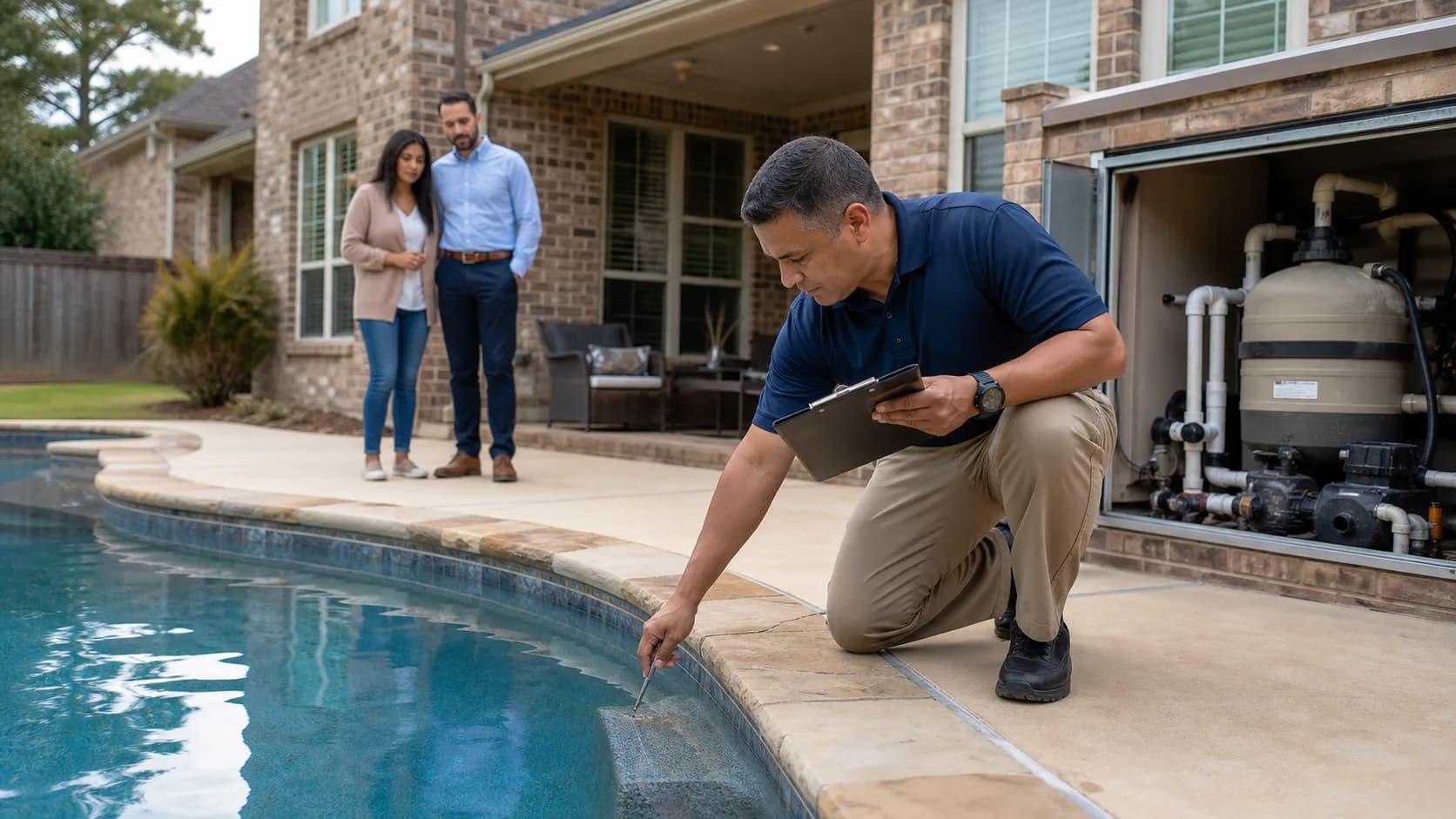
Buying a House With a Pool in DFW: What to Check Before You Close
The pool is often the most expensive system on the property after the roof and the foundation, and it is the one nobody looked at. Here is how to look at it during the option period, while you still have leverage.
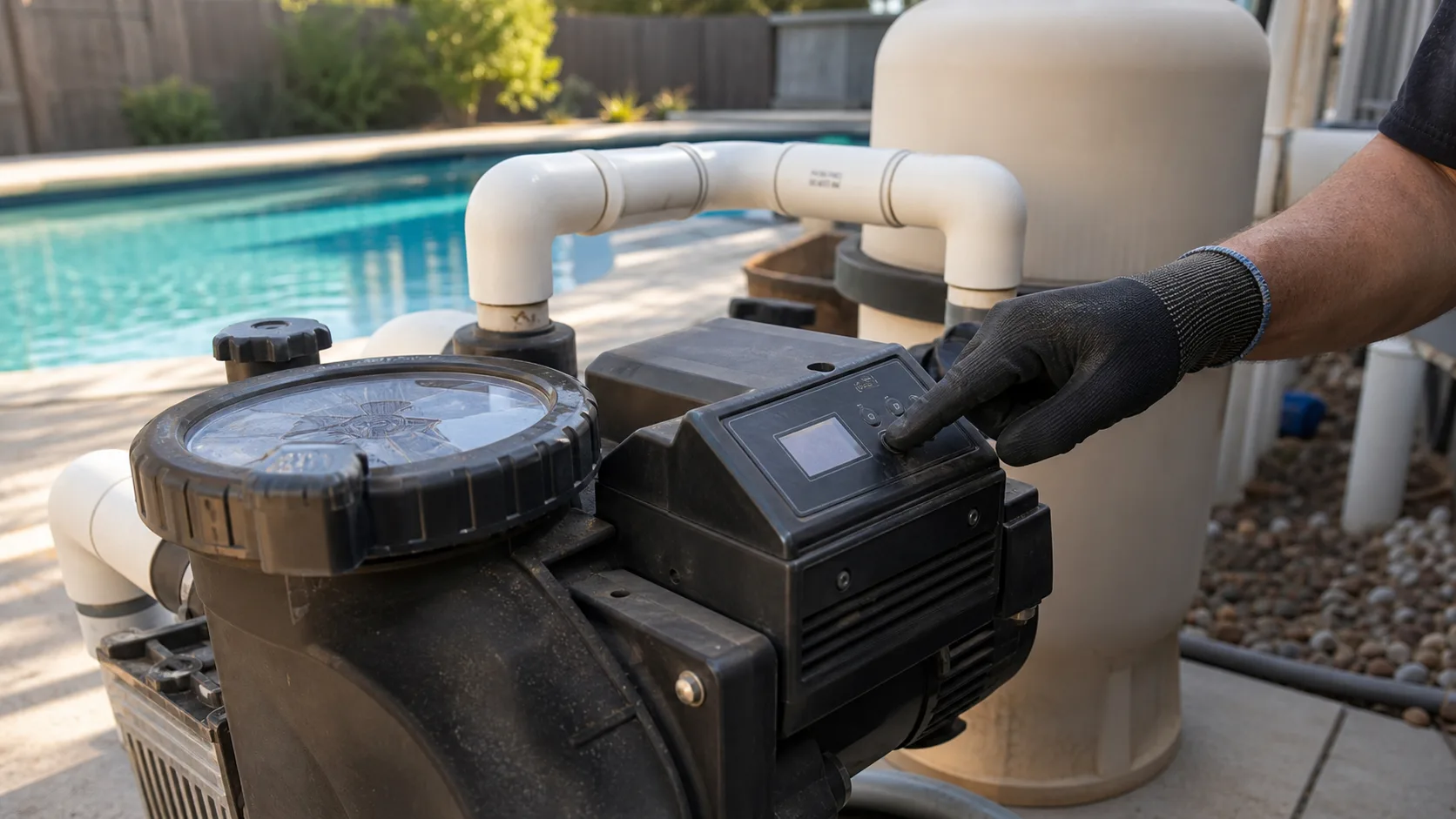
How Long Should You Run a Pool Pump? (North Texas Edition)
Ask ten people and nine say eight hours. That number answers the wrong question. What your pool needs is a volume of water moved, and hours are just how you buy it.