Getting a Second Opinion on a Pool Repair Quote

Austin Andrews
Founder, True Texan Pools
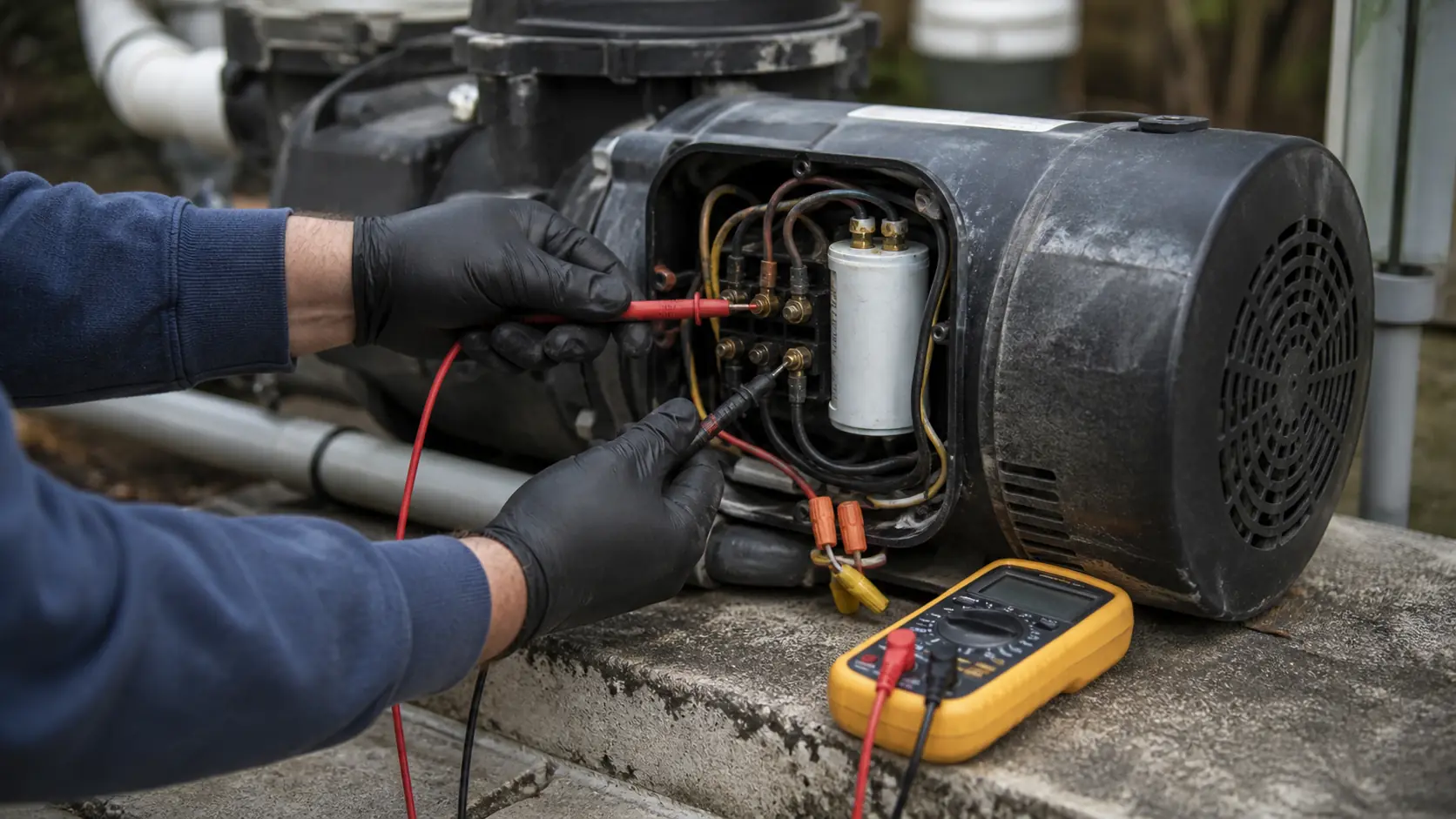
Getting a second opinion on a pool repair is normal, nobody reasonable is offended by it, and it is worth doing far more often than people do it. The difficulty is that a second quote is only useful if it is quoting the same job, and most homeowners have no way to tell whether it is. Here is how to read the first quote properly, what to give the second company so the comparison means something, and the four situations where a second opinion is close to mandatory.
Two things make this trade hard to judge from the outside. Most of a pool system is buried or inside a housing, so you cannot see the evidence for a diagnosis. And routine residential pool cleaning is not a licensed trade in Texas, so there is no state board setting a standard for who gets to diagnose your equipment. Neither of those makes the trade dishonest. Both mean the burden of asking good questions sits with you.
First, read the quote you already have
Before calling anybody else, put five questions to the company that gave you the first quote. A good company answers all five without irritation, and the answers frequently make a second opinion unnecessary.
- What was the symptom, and what test confirmed the cause? The important word is test. Pressure was low and the basket was clear so I checked X is a diagnosis. It is probably the pump is not.
- What is the part and what is the labor? You are entitled to the split. Access dominates pool labor, and this is the line that reveals it.
- What happens if I do nothing for a month? The honest answer separates real urgency from manufactured urgency. A worn cell can wait. A pump running dry cannot.
- How old is the component and what is left in it? A repair on a component near the end of its life is a different proposition, and realistic lifespans in Texas heat is the reference for that.
- What is the warranty on the part and separately on the labor? They are usually different lengths, and the labor warranty is the one that matters.
Ask to be shown the failed part
Not as an accusation, and it changes the conversation. A leaking shaft seal, a scaled cell, a torn DE grid, a cracked pump lid, and a split pipe are all visible things. A technician who is comfortable showing you the evidence is telling you something useful, and so is one who is not. Photograph whatever you are shown.
When a second opinion is genuinely worth the trouble
| Situation | Why | How urgent |
|---|---|---|
| The quote is over roughly a thousand dollars | The cost of a second visit is small against the number in question | Worth the delay in nearly every case |
| Replacement recommended with no diagnostic test | Replacement is the safe recommendation for a technician who is unsure | Yes, before buying anything |
| You are told it is urgent but you observed no symptom | Real urgency is usually visible: no flow, a leak, a dead pump | Ask what happens in a month first |
| The diagnosis was reached by elimination | Common with heater control boards, and expensive to get wrong | Yes |
| The quote covers several unrelated items at once | Bundled work is hard to compare and easy to inflate | Ask for it itemized before going elsewhere |
| It follows a whole-system recommendation | Replacing a pad wholesale is sometimes right and often premature | Yes, and ask which components were individually tested |
| The pool is currently down in July | Time pressure is real and it also suppresses questions | Get it running, then reassess the bigger work |
How to get a second opinion that is actually independent
This is the part people get wrong, and it is the difference between a useful second opinion and an echo.
- Do not lead with the first diagnosis. Describe the symptom you observed, not the conclusion you were given. Confirmation is a powerful pull even on an honest technician, and once somebody has heard it is the control board, that is where they start looking.
- Do not share the first price. A number anchors a quote, in both directions.
- Give them the same information the first company had. When it started, what you observed, what changed recently, whether there has been a freeze, and photographs of the pad and the labels.
- Ask for their diagnosis in writing, with the reasoning. Then compare reasoning against reasoning rather than price against price.
- Afterward, tell each what the other said and listen to the response. A technician who can explain why the other conclusion is wrong, in mechanical terms, is demonstrating something. One who simply asserts it is not.
Reading two quotes that disagree
A big gap usually means different work rather than different honesty. Four common reasons.
- Different scope. One is replacing the motor, the other the whole pump. Both reasonable, and one lasts longer.
- Different parts. A manufacturer cell against an aftermarket one, or a basic pump against a premium variable speed unit. Ask for the model number in both cases.
- Different amounts of replumbing. Fitting a new pump into old plumbing sometimes means cutting and reworking, and sometimes does not. This is frequently the whole gap.
- Different warranties. A cheaper job with 30 days of labor cover against a dearer one with a year is not the same purchase.
If two diagnoses genuinely conflict, get a third. Two out of three agreeing is the practical resolution, and it costs less than being wrong on a heater. What repairs actually cost in DFW gives you a sense of whether either number is in the normal band at all.
Rule out the cheap causes yourself first
Four symptoms in this trade are routinely quoted as the expensive thing when the cheap thing is the cause. A pump that will not prime, quoted as a pump, when it is usually a suction-side air leak. Low return flow, quoted as a pump, when it is usually a loaded filter. A heater that will not fire, quoted as a control board, when flow or gas supply is the cause. And a salt system reporting low salt, quoted as salt, when the cell is near end of life. Fifteen minutes with those four articles saves more money than any negotiation.
What to have ready before either visit
This shortens both visits and makes both quotes better.
- Photographs of every component and every label, with the model and serial numbers legible. Sunlight bleaches those labels, so do this before it does.
- The symptom, dated, with what you actually observed rather than what you concluded.
- The filter pressure now and, if you know it, the clean baseline.
- Recent water test results.
- Whether there has been a hard freeze recently, since freeze damage frequently does not appear until the system is pressurized again.
- The age of the pool and of the equipment, if you know it.
Equipment 101 covers naming everything on the pad, which is what makes the rest of this possible.
When not to bother
Second opinions cost time and, in July, they cost pool downtime. Skip it when:
- The repair is small and the diagnosis is visible, such as a cracked lid or a leaking union.
- The pool is down in peak summer and the fix is modest. Get it running.
- You were shown the failed part and it is obviously failed.
- The company has serviced the pool for years and the recommendation matches a trend you have watched together.
Where we stand on this
We quote diagnosis first, explained before anything is spent, with the part and the labor separated and the reasoning written down. That format exists partly so you can take it to somebody else, which is the point: a quote you cannot show to a competitor is not a quote, it is a pitch.
We will also give second opinions on other companies’ quotes, and the honest disclosure is that we will sometimes tell you the first quote was right, which happens more often than this article’s framing might suggest. An equipment inspection is the mechanism. If the underlying situation is that you have lost confidence in whoever is servicing the pool rather than in one quote, what to do when a pool company stops performing is the more useful article.
One closing thought about how to use all of this. The goal of a second opinion is not to find a cheaper price, it is to find out whether the first company was describing your pool or describing a category. You can usually tell from a single answer: ask what test confirmed the cause. A company that ran one will tell you what it showed. A company that did not will tell you what usually goes wrong on pools like yours.
Frequently Asked Questions
Is it rude to get a second opinion on a pool repair?
No, and any company that treats it as an insult has told you something useful. A quote that cannot be shown to a competitor is not a quote, it is a pitch. Reasonable companies expect it on larger jobs and write their quotes so the comparison is possible, with the part and the labor separated and the reasoning attached.
When is a second opinion on a pool repair worth getting?
Four situations. Any quote above roughly a thousand dollars, where a second visit costs little against the number in question. Any replacement recommended without a diagnostic test. Any urgency you did not observe yourself. And any diagnosis reached by elimination rather than by testing, which is common with heater control boards and expensive to get wrong.
Why are two pool repair quotes so different?
Usually because they are quoting different work rather than because one is dishonest. Common causes are different scope, such as a motor against a whole pump, different parts, such as a manufacturer cell against an aftermarket one, different amounts of replumbing to fit a new unit into old pipework, and different warranty lengths. Ask each what is included before concluding anything about either.
What should I ask a pool technician before accepting a quote?
What was the symptom and what test confirmed the cause, what is the part and what is the labor, what happens if I do nothing for a month, how old is the component and what is left in it, and what is the warranty on the part and separately on the labor. A good company answers all five without irritation, and the answers often make a second opinion unnecessary.
Is there a licensing board I can check a pool repair company against in Texas?
Not for routine residential pool service, which is not a licensed trade in Texas. There is no state board setting a standard for who may diagnose your equipment, which is exactly why the burden of asking good questions sits with the homeowner. Practical checks are the quality of the written diagnosis, willingness to show you the failed part, and a labor warranty in writing.
Which pool problems get misdiagnosed most often?
Four. A pump that will not prime, quoted as a pump when it is usually a suction-side air leak. Low return flow, quoted as a pump when it is usually a loaded filter. A heater that will not fire, quoted as a control board when flow or gas supply is the cause. And a salt system reporting low salt, quoted as salt when the cell is near the end of its life. All four have a cheap thing to check first.
Ready to stop thinking about your pool?
True Texan Pools keeps your water swim-ready year-round across Plano and all of DFW. Clear pricing, no contracts, and a photo report after every visit. Austin handles every job personally.
Keep reading
Your Pool Company Stopped Showing Up. Here Is What to Do.
The visits stopped, the invoices did not, and nobody is returning your calls. There is an order to doing this that keeps both your leverage and your water, and most people get it backwards.

How to Choose a Pool Service Company in Plano (10 Questions)
The pool service market in Plano is full of rotating technicians, vague pricing, and long contracts. Here are the 10 questions that separate a great pool company from a frustrating one.