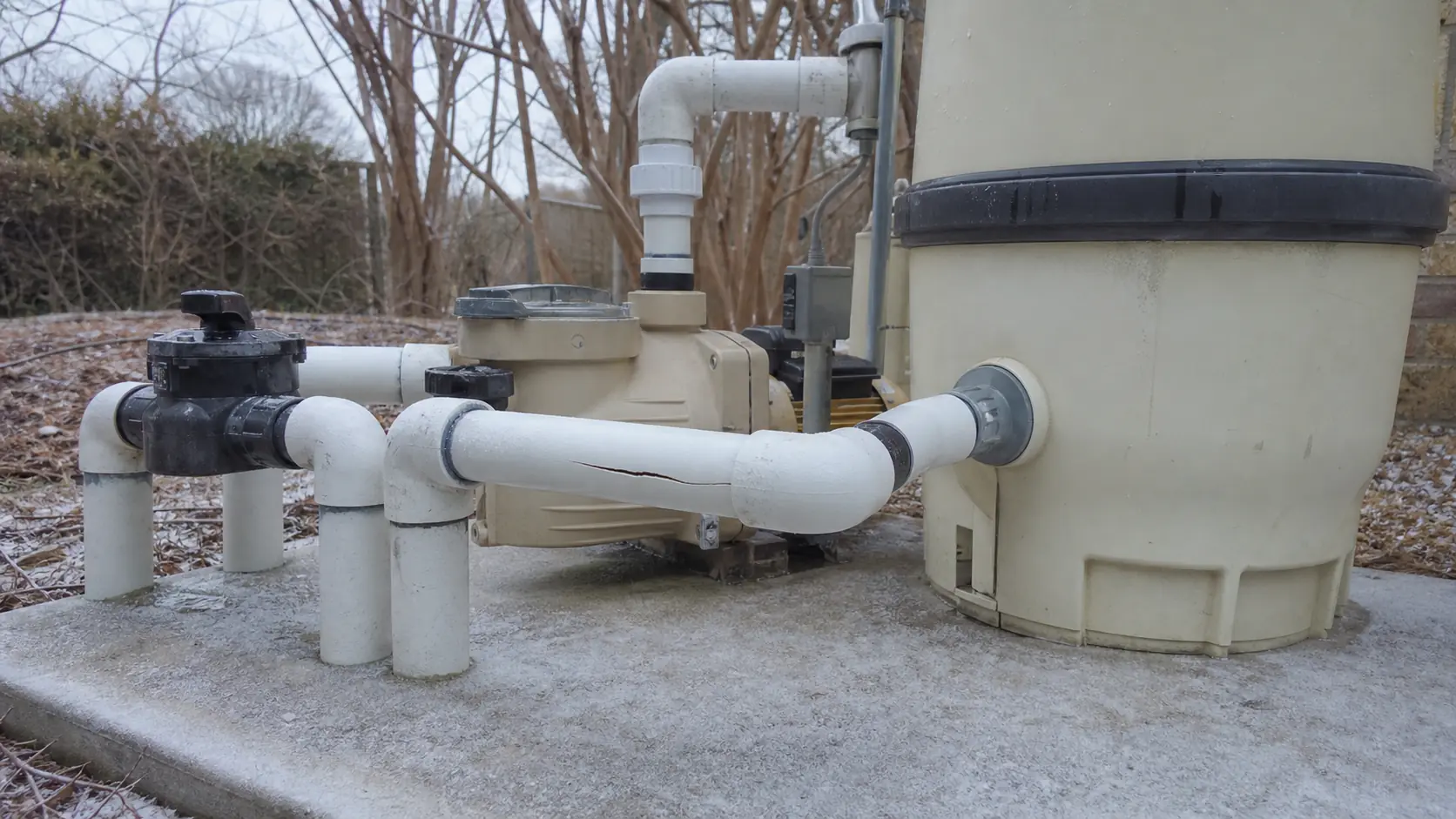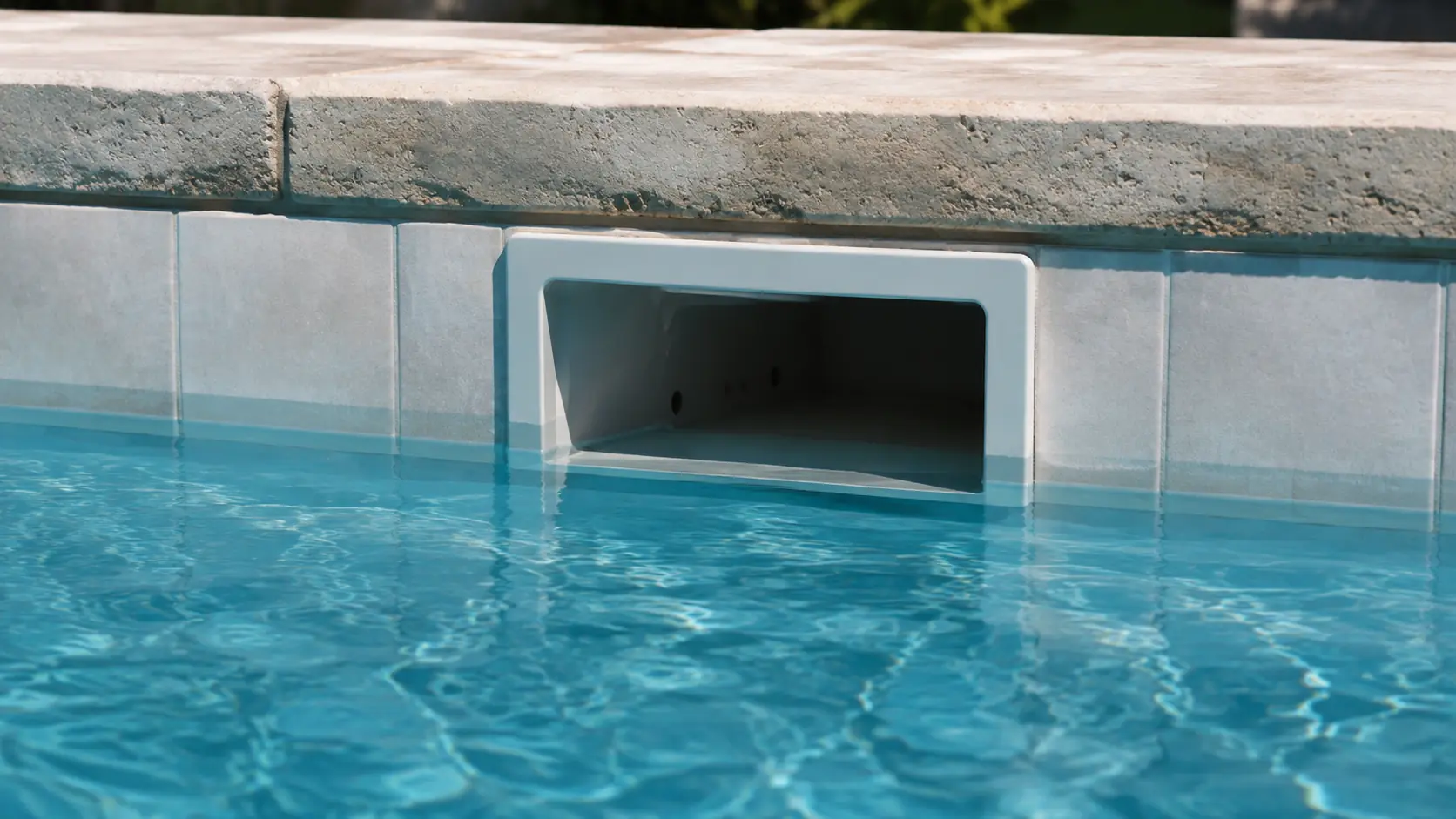
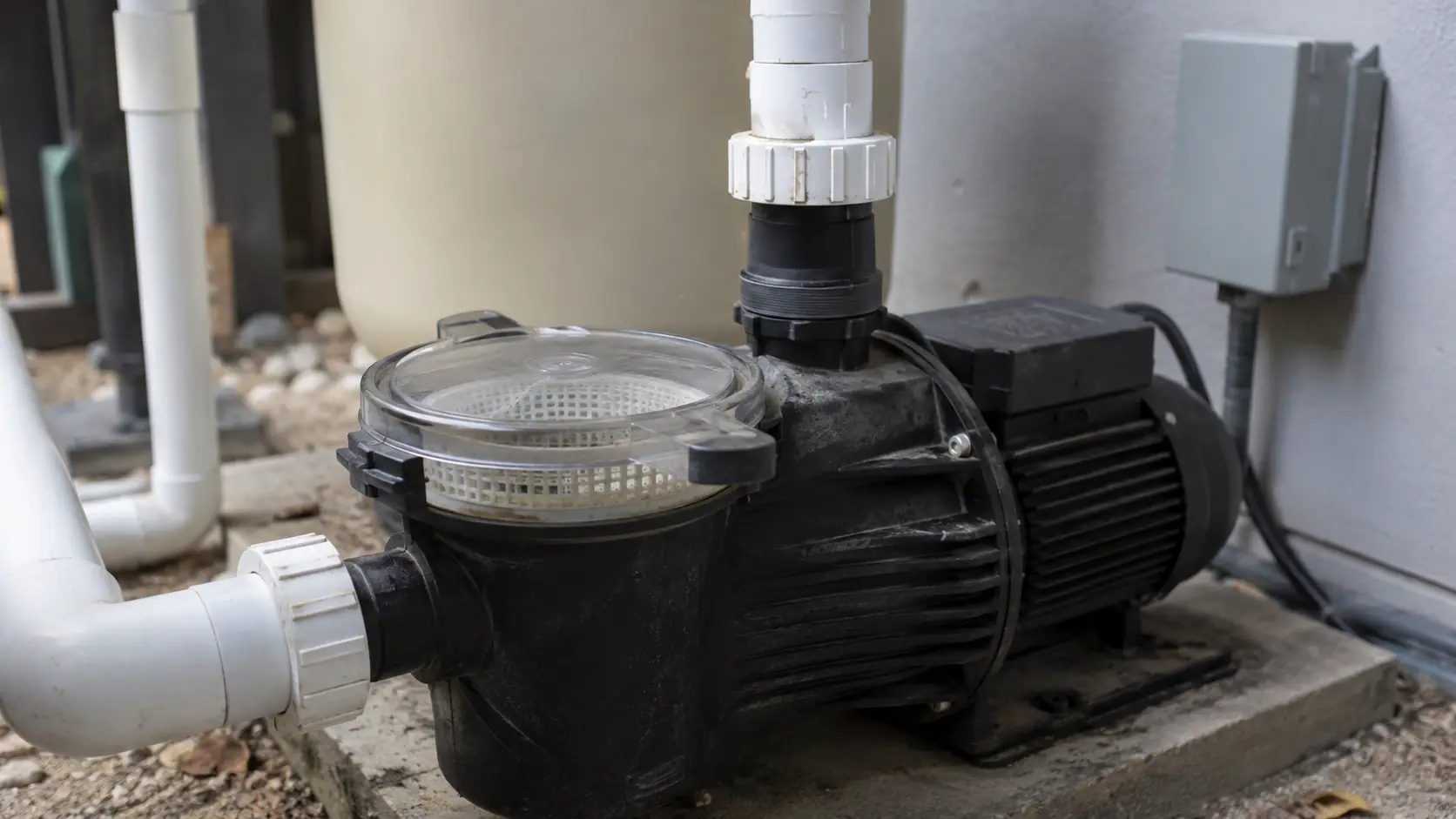
A loud pool pump is three different problems wearing the same costume, and they are not close in price. A screech is a motor wearing out. A sound like gravel in a blender is water, and usually free to fix. A rattle is often something that fell against the housing. Telling them apart takes about a minute and decides whether you are buying a part, a motor, or nothing at all.
Start by ruling out the version of this that costs nothing. A pump on a hard surface with no vibration pad transmits ordinary running noise into the deck and the house wall. Plenty of pumps reported as suddenly loud are the same pump the owner has always had, heard for the first time from a quiet room. If the noise is a steady drone at one pitch and nothing else has changed, that is a pump working.
Match the noise to the cause
Stand at the pad with the system running and listen for ten seconds. Almost every pump noise falls into one of these.
| What you hear | Most likely cause | Where the problem is |
|---|---|---|
| Screech, whine, or metallic grinding | Motor bearings | The motor. Gets worse, never better. |
| Gravel, marbles, or a growl that surges | Cavitation, the pump starved of water | The suction side: level, skimmer, basket, valve, or line. |
| Rattle or knock at a fixed rhythm | Debris in the impeller, or a loose mounting bolt | The wet end or the base. |
| Loud hum, motor does not turn | Start capacitor, or a seized shaft | The motor. Switch it off now. |
| Buzzing or clicking from the panel, not the pump | A relay or contactor | The automation, not the pump at all. |
| Sudden roar after a service visit | A valve left in the wrong position, or a lid not seated | Usually a two-minute fix. |
The one-minute triage
Before diagnosing anything, run these four checks in order. They cost nothing and they settle most cases.
- Look at the water level. If it sits at or below the bottom of the skimmer mouth, the pump is drinking air and everything else on this page is a symptom. Top it up and listen again.
- Look through the pump lid. A basket that is full, or a basket half full of water with air churning above it, tells you this is a flow problem.
- Change the suction, one valve at a time. Close the skimmer valve and open the main drain, or the reverse, so the pump always has one line fully open. Never close both, which starves the pump completely. A noise that changes pitch or disappears when you move a valve is water. A noise that ignores the valve entirely is metal.
- Touch the motor housing, carefully. Hot enough that you cannot keep a hand on it, combined with noise, is a motor working against something. Note it and shut down.
A humming pump that will not turn should be switched off
If the motor hums but the shaft does not rotate, it is drawing current and going nowhere, and the heat has nowhere to go either. Minutes of that can take a repairable capacitor fault and turn it into burned windings, which is a replacement rather than a repair. Kill the breaker and diagnose it cold.
Screeching and grinding: bearings
Bearings carry the motor shaft. When the grease dries out or water gets into them they first whine, then screech, then grind, and the progression usually runs over a season rather than a day. The sound is constant, it is unaffected by valves, and it often starts loudest on a cold morning and settles as the motor warms.
Two things cause it here. One is age and heat: a motor mounted on a west-facing pad, running through a Texas summer, lives a hard life. The other is water, and that one is preventable. A weeping shaft seal drips down into the bearing on its way out, which is why the leak and the noise so often show up in the same season. If you have both, the pad-versus-shell leak article covers finding the seal before it takes the motor with it.
Bearings can be pressed out and replaced. Whether that is the right call depends on the age and type of the pump rather than on the noise, and that comparison is set out in repair or replace. What is not in question is the direction: a screeching bearing never recovers.
A sound like gravel: cavitation
Cavitation is the pump trying to move more water than the suction side can deliver. Low pressure at the impeller boils the water into vapor bubbles, and those bubbles collapse violently against the impeller a fraction of a second later. It sounds exactly like pumping gravel, because that is roughly what is happening to the metal.
The causes are all upstream of the pump, and they run in this order of frequency:
- Water level below the skimmer weir. Overwhelmingly the most common, and the most seasonal.
- A packed skimmer or pump basket. A basket full of leaves is a closed valve with extra steps.
- A valve partly closed, often left that way after somebody vacuumed.
- A collapsed or blocked suction line, or a skimmer with a stuck weir door.
- A pump too large for the plumbing. Genuinely common on pools where a bigger pump was fitted as an upgrade. The pipe cannot feed it, so the pump complains for the rest of its life.
Cavitation is not merely noisy. It erodes the impeller, runs the motor hot, and costs you flow at the same time. If your pump is also failing to hold prime, the diagnostic continues in why the pump will not prime, and if air is arriving at the returns as well then air in the returns is the closer match.
Rattling and knocking: debris and mounting
A rhythmic rattle that keeps time with the motor is usually something small that got past a broken basket and is now living in the impeller: a pebble, an acorn cap, a piece of plastic. Turn the system off at the breaker, open the pump lid, and check the basket for a crack, because a cracked basket is how debris gets past in the first place.
A duller knock or buzz that comes and goes is often the pump itself moving. Mounting bolts back off over years of vibration, and a pump sitting on a cracked pad amplifies into the concrete. Tightening the bolts and setting the pump on a rubber pad is an afternoon and it is the one repair on this page a homeowner can finish alone.
Why pumps get loud in a North Texas August
There is a seasonal pattern to this that has nothing to do with pumps aging faster in the summer. A pool here loses roughly half an inch of water a day to evaporation in peak heat, which on a fifteen by thirty pool is about 140 gallons a day. Miss a week of topping up in July and the water is below the skimmer weir, the skimmer starts gulping air, and a pump that was quiet in May sounds like it is dying.
The same weeks are the ones with the heaviest debris and the fastest basket loading, and the National Weather Service Fort Worth office describes our summers as the dry half of a bimodal wet spring and fall, dry summer and winter pattern, so the evaporation is not offset by rain the way it is in a wetter climate. Before assuming a mechanical fault in August, fill the pool to the middle of the skimmer mouth and listen again. The seasonal care that prevents this whole conversation is in pool care in a Texas heat wave.
Austin’s Tip
Record ten seconds of the noise on your phone, standing in the same spot, and date the file. Pump noises change slowly enough that memory is useless, and two clips a month apart tell you whether a bearing is progressing or whether you have been listening to the same pump the whole time. It is also the single most useful thing you can hand a technician.
What each one tends to cost
| Cause | What it takes | Rough scale |
|---|---|---|
| Low water, blocked basket, closed valve | Ten minutes and a hose | Free |
| Debris in the impeller, cracked basket | Clear it, replace the basket | Parts only |
| Loose mounts, no vibration pad | Bolts and a pad | Parts only |
| Start capacitor | Part plus a call-out | The cheap repair |
| Bearings | Motor teardown, or a new motor | The decision point |
| Seized motor or burned windings | Replacement | A new pump, and it will be variable speed |
That last row is worth knowing before it happens. The federal efficiency standards for dedicated-purpose pool pump motors mean the replacement for a dead single-speed pump is generally a variable speed unit now, whatever your preference. That is not the bad news it sounds like on a pool that runs long hours in our heat, and the running-cost arithmetic is in the variable speed post. Part prices for the rest of the table are in DFW repair costs.
When the noise is the last warning
Stop running the pump and get somebody out for any of these: a hum with no rotation, a burning smell, a breaker that trips when the pump starts, visible water tracking into the motor, or a grinding noise loud enough to hear from the house. All five are electrical or terminal, and continuing to run a pump through any of them converts a repair into a replacement, sometimes within a day.
Everything else on this page will wait a week. The useful habit is simply to listen at the pad once in a while, because a pump gives a season of warning before it fails and almost nobody is standing there to hear it. That listen is thirty seconds of a weekly visit, and it is why a pump that gets checked tends to be replaced on a Tuesday in March rather than on the Friday of a holiday weekend.