Pool Cleaning Cost in McKinney, Texas

Austin Andrews
Founder, True Texan Pools
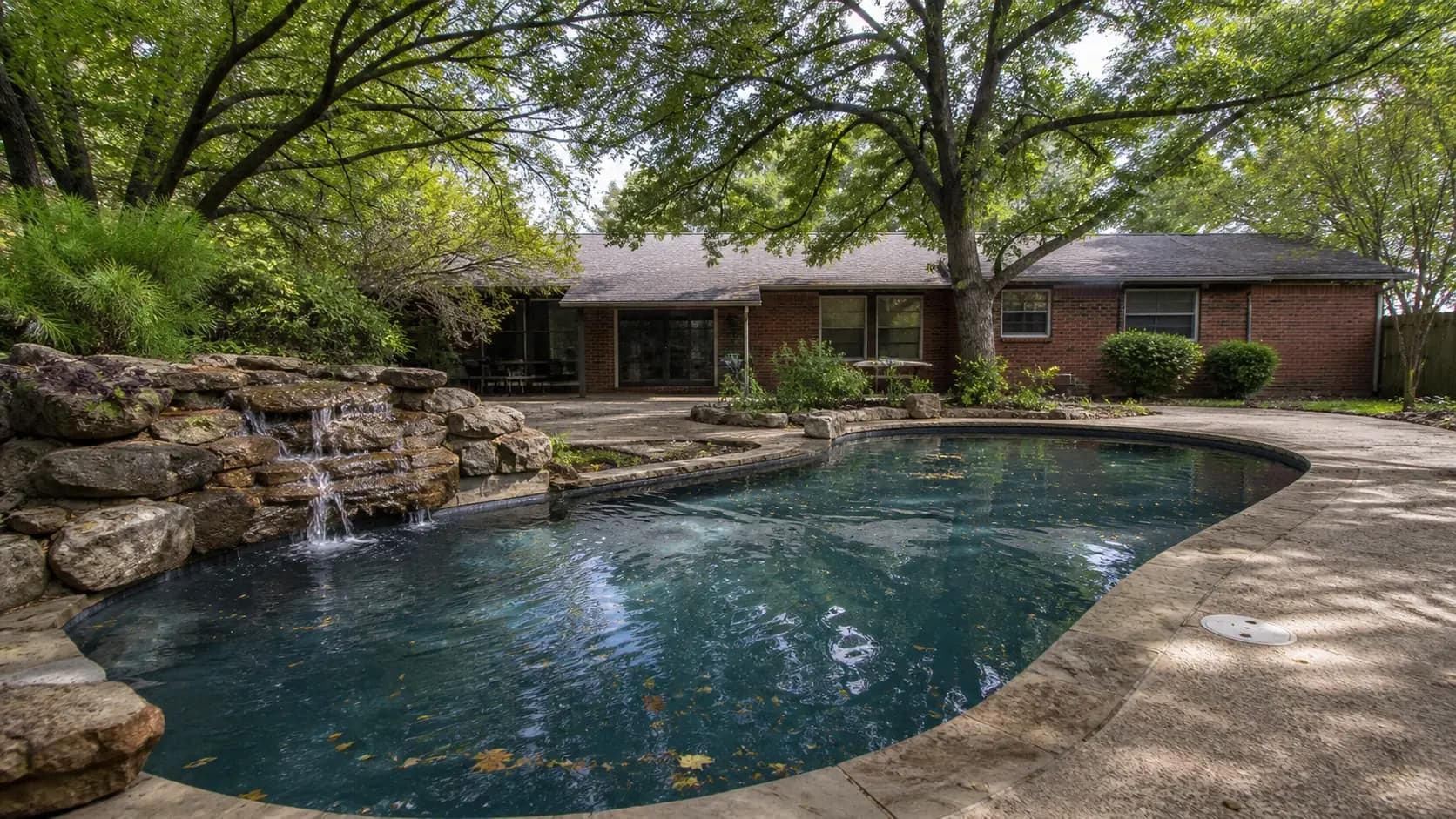
McKinney is really two pool markets wearing one name. West and north of US 75 the builds are recent, the yards are open, and the equipment is modern. East and south, around the older neighborhoods, the pools are two and three decades old under a heavy pecan and post oak canopy. Those two pools cost different amounts to service for reasons that have nothing to do with which company you call, and here is what actually drives each number.
Directory sites publish DFW estimates in the region of $123 to $139 a month, or about $27 a visit, and local operators publish rates from roughly $120 up past $215. Those numbers are a market floor and ceiling rather than a quote, because in McKinney the two things that actually move a price are trees and equipment age, and neither is in a directory estimate.
The two McKinneys
| Established neighborhoods | Newer builds | |
|---|---|---|
| Typical pool age | 20 to 35 years | Under 20 years |
| Tree canopy | Heavy pecan, post oak, live oak | Young, often minimal |
| Debris load per visit | High, and severe in October | Low |
| Sun exposure | Partial shade, lower chemical demand | Full sun, higher chemical demand |
| Typical equipment | Older pumps, some single speed, tab chlorination | Variable speed, cartridge, often salt |
| Surface | Frequently at or past its resurfacing window | Original finish with years left |
| Where the money goes | Labor, repairs, and eventually resurfacing | Chemicals and a cell every few years |
Read the last row. In an established McKinney neighborhood the pool costs more in labor and capital. In a newer one it costs more in chemicals. Both are real, and it is why a single published rate for the whole city would be misleading in one direction or the other.
Tree load, which is McKinney’s defining variable
Mature canopy is genuinely lovely and genuinely expensive at the pool. Pecan is the local problem child: it drops small leaflets that pass straight through a skimmer basket into the pump, then hulls and nuts in autumn that sink immediately, and it does all this over a long season rather than a short one. Post oak and live oak add their own contributions at different times of year, including the catkins in spring that people frequently mistake for algae.
What that does to a service visit:
- Skimming goes from three to five minutes to fifteen or more.
- Baskets fill between visits rather than at them, which starves the pump for days at a time.
- Organic material that sinks consumes chlorine as it decomposes and stains plaster if it sits.
- The filter loads far faster, which pushes filter cleaning toward the three month end of the three-to-six month interval.
None of that is optional work, and it is the honest reason a heavily treed McKinney pool is quoted above an equivalent Frisco pool. If a company quotes your shaded, mature-canopy pool at the same rate as an open new-build, one of the two prices is wrong.
The one upgrade that pays for itself under a canopy
Skimmer socks during peak drop, and a leaf canister in the suction line if you run a suction-side cleaner. Both are inexpensive, both stop material reaching the pump basket, and both mean the pump is not running restricted for six days between visits. Take them off once the drop finishes, because they restrict flow the rest of the year.
Equipment age, and the resurfacing window
A meaningful share of established McKinney pools are now 25 to 35 years old, and that puts them past the second replacement cycle on nearly everything.
Plaster
Traditional marcite plaster runs 7 to 12 years and is described as the most replaced surface in this market. DFW replastering commonly runs $6,000 to $15,000, roughly $6.50 to $8.00 per square foot. A thirty year old pool is on its second or third finish, and if it has never been redone, it is overdue rather than lucky. Rough, gritty plaster underfoot, visible aggregate, and staining that will not brush out are the tells.
Pumps
Older McKinney pools are the most likely in the county to still be running a single-speed pump, and that is usually the single largest controllable line in the running cost. Power draw falls with roughly the cube of pump speed, so slowing down and running longer moves the same water for a fraction of the electricity. The Texas math on variable speed covers the arithmetic, including the fact that there is no Oncor rebate here to wait for.
Plumbing
Thirty years of Collin County clay movement works on rigid PVC, on shell-to-fitting joints, and on the deck. Older pools leak more often here, and not because they were built badly. Clay soil and your pool covers the mechanism, and leak detection costs covers when paying a specialist is warranted.
McKinney water
McKinney is supplied by the North Texas Municipal Water District, whose treated water is moderately hard. Fill water is not the problem by itself. The problem is that calcium only ever accumulates: evaporation removes water and leaves the minerals, every top-off brings more in, and nothing in normal maintenance takes any of it back out.
On an older pool that matters more than on a new one, because decades of top-offs have been concentrating minerals the whole time. If a pool has never had a partial water exchange, its calcium hardness is usually well above range, and the visible symptoms are the white band on the tile and a gas heater that has quietly lost efficiency. Hard water and your whole pool covers the system, and calcium scale on tile covers removal.
On local rules, McKinney sets and enforces its own water conservation schedule and the drought stage in effect changes, so check the City of McKinney’s current guidance directly before filling a new pool or running a large partial exchange. Topping off to replace evaporation is generally treated differently from irrigation across NTMWD member cities, and a new fill usually requires a permit.
What actually changes your McKinney quote
- Pool size. The biggest single driver anywhere.
- Tree load. The biggest local driver, and the one most often ignored in a phone quote.
- Spa and water features. A spa is a second body of water with its own chemistry.
- Sanitizer type. Salt lowers the recurring chemical line and adds a cell replacement every three to six years at roughly $600 to $1,000.
- Starting condition. A pool taken over after a neglected winter starts with a recovery, not a monthly rate.
- Access. Genuinely relevant on older lots with narrow side gates and no direct hose bib at the pad.
What sits outside the monthly rate
- Filter deep cleans, typically $125 to $150 here, and needed more often under a canopy.
- Repairs and parts, quoted per job. Repair costs in DFW covers the common ones.
- Salt cell replacement, roughly $600 to $1,000 installed every three to six years.
- The first visit on a neglected pool.
- Resurfacing, which on an older McKinney pool is the item most worth budgeting for now.
What it really costs to own a pool in Collin County annualizes all of it alongside electricity and water.
If you are buying an older McKinney pool
The two findings that change the price of the house are a shell or plumbing leak and a plaster surface at the end of its life. Neither is covered by a standard Texas home inspection unless you ask for a pool inspection specifically. What to check before you close covers the option period, and your first thirty days covers what happens after.
Our McKinney pricing
The bands are published on the weekly pool service page: $120 a month for a small pool, $150 for a medium one, $225 and up for a large one, chemicals in, no contract. The McKinney-specific caveat is the one this whole article turns on. A pool under mature pecan is more work every single week than the same pool in an open yard, so heavy canopy moves a quote up a band. We would rather tell you that in March than discover it together in October.
Our McKinney service page has the coverage detail. We also publish costs for Plano, Frisco, and Allen, and if you are weighing doing it yourself, the DIY comparison has both columns.
Frequently Asked Questions
How much does pool cleaning cost in McKinney, Texas?
Directory sites estimate roughly $123 to $139 a month for DFW, or about $27 a visit, and published local operator rates run from about $120 to $220. Ours are $120 a month for a small pool, $150 for a medium one, and $225 and up for a large one, chemicals included. In McKinney specifically, tree load and equipment age move a quote more than anything a directory estimate accounts for.
Why do heavily shaded McKinney pools cost more to service?
Debris. Mature pecan drops small leaflets that pass straight through a skimmer basket into the pump, then hulls and nuts in autumn, over a long season. Post oak and live oak add their own. Skimming goes from three to five minutes to fifteen or more, baskets fill between visits and starve the pump, and the filter loads fast enough to push cleaning toward the three month end of the interval.
Is my older McKinney pool due for resurfacing?
Possibly. Traditional marcite plaster runs 7 to 12 years and is the most replaced surface in this market, so a pool of 25 or 30 years is on its second or third finish and one that has never been redone is overdue rather than lucky. The tells are rough gritty plaster underfoot, visible aggregate, and staining that will not brush out. DFW replastering runs roughly $6,000 to $15,000.
Do older pools leak more in McKinney?
Yes, and not because they were built badly. Collin County expansive clay swells when wet and shrinks when dry every year, and three decades of that movement works on rigid PVC, on shell-to-fitting joints, and on the deck. Freeze damage compounds it, since a joint already stressed by movement is the one that splits on a hard night and often does not leak until spring.
Is McKinney water hard enough to affect a pool?
Yes. McKinney is supplied by the North Texas Municipal Water District, whose treated water is moderately hard. The fill water is not the problem by itself: calcium accumulates and never leaves, so on a thirty year old pool that has never had a partial water exchange, decades of top-offs put hardness well above the recommended 200 to 400 ppm range, showing up as tile scale and a heater that has lost efficiency.
What is not included in a monthly pool service rate?
Filter deep cleans at typically $125 to $150, needed more often under a canopy. Repairs and parts quoted per job. Salt cell replacement at roughly $600 to $1,000 installed every three to six years. The first visit on a neglected pool, which is recovery work rather than weekly work. And resurfacing, which on an older McKinney pool is the item most worth budgeting for now.
Ready to stop thinking about your pool?
True Texan Pools keeps your water swim-ready year-round across Plano and all of DFW. Clear pricing, no contracts, and a photo report after every visit. Austin handles every job personally.
Keep reading
What Your Monthly Pool Bill Actually Covers, and What It Does Not
Three quotes at $135, $165, and $210 look like a clear decision until you find out they are written in three different billing models. Here is how to compare them properly.

How Much Does Pool Cleaning Cost in Plano, TX? (2026 Pricing Guide)
Most Plano pool companies hide their prices behind a phone call. Here is exactly what weekly service, one-time cleans, and green pool recovery actually cost in 2026, and what drives the number up or down.